Moon Roof vs Sun Roof
The salesperson points up and says, “This one has a moonroof.” You nod, then wonder if that is any different from the sunroof on your last car. You are not alone. Car buyers mix up these terms all the time, and even dealers use them as if they mean the same thing. In most new cars today, they basically do. But the moon roof vs sun roof difference has a real history, and knowing it can help you understand what you are paying for.
This guide covers what each term originally meant, how the meanings blurred, the main roof styles on the market, and the pros and cons of adding one to your next vehicle.
The Original Difference
Back when these features first became common, the difference was clear:
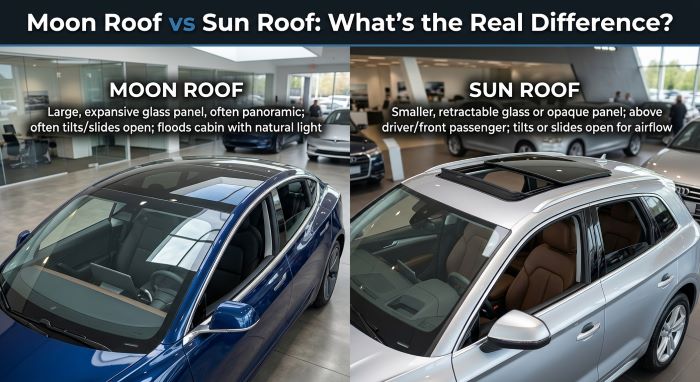
- A sunroof was an opaque panel, usually metal and painted to match the car. It could tilt up or slide back to open the roof to the sky. When closed, it let in no light. Some early sunroofs were removable.
- A moonroof was a glass panel, usually tinted, that let light in even when closed. It typically slid back between the roof and the headliner and came with an interior sliding shade to block the sun when needed.
So the simple rule was this: if you could see through it when closed, it was a moonroof. If you could not, it was a sunroof.
Where the Name “Moonroof” Came From
The word “moonroof” was a marketing term. Ford introduced it in the early 1970s, with the glass roof option on the Lincoln Continental Mark IV. The idea was that drivers could look up through the glass and see the moon and stars at night. The name caught on, and other carmakers started using it too.
Moon Roof vs Sun Roof Today
Over the years, solid metal sunroofs nearly disappeared. Glass panels became the norm because buyers liked the extra light. Today, most roofs sold as “sunroofs” are actually what used to be called moonroofs.
That is why the moon roof vs sun roof question can be confusing. Many automakers now use “sunroof” as the general term for any opening roof panel, and some still say “moonroof” for glass versions. A few brands use both terms for different trim levels. The best way to know what you are getting is to look at the roof yourself, or ask whether it is glass, whether it opens, and whether it has a sunshade.
| Traditional Sunroof | Moonroof | |
|---|---|---|
| Panel material | Opaque metal, painted to match | Tinted glass |
| Lets in light when closed | No | Yes |
| Interior shade | Not needed | Usually included |
| How it opens | Tilts, slides, or removes | Usually tilts and slides inside the roof |
| Common today | Rare | Very common |
Common Types of Car Roofs
Whatever the name, opening roofs come in several styles.
Pop-Up Roof
A simple manual panel that tilts up at the back to let air in. It does not slide. These are common on older cars and aftermarket installs.
Spoiler Roof
The panel tilts up and then slides back along the top of the roof. It works well on smaller cars that do not have space inside the roof for the panel to slide.
Inbuilt or Sliding Roof
The panel slides back between the metal roof and the headliner. This is the most common type on modern sedans and SUVs, and it is what most people picture when they think of a moonroof.
Panoramic Roof
A large glass roof that covers most of the cabin, often in two sections. The front panel usually opens, while the rear panel stays fixed. Panoramic roofs give back-seat passengers a great view and make the cabin feel open and bright. They are now a popular option on SUVs and electric vehicles.
Top-Mount Roof
The panel slides along tracks on top of the outside of the roof. This design is common on some European cars and lets larger openings fit cars with little headroom.
Removable Panels
T-tops and targa tops have panels you can lift out and store. They give a near-convertible feel. Some modern off-road vehicles have removable roof panels too.
Pros of a Moonroof or Sunroof
- More natural light. A glass roof makes the cabin feel bigger and brighter.
- Fresh air without wind noise. Tilting the panel lets air flow with less buffeting than open windows.
- Better view. Passengers, especially kids, enjoy looking up at trees, buildings, and stars.
- Resale appeal. Many buyers look for this feature, which can make a used car easier to sell.
Cons to Consider
- Cost. A moonroof often adds $800 to $2,000 to a new car’s price, or comes bundled with a pricier trim.
- Less headroom. The mechanism takes up space in the roof, often costing an inch or more of headroom. Tall drivers should test it.
- Added weight. Glass and motors add weight to the top of the car, which can slightly affect handling and fuel use.
- Heat. Even tinted glass lets in some heat. The sunshade helps, but cabins can warm up faster in summer.
- Leaks and repairs. Clogged drain tubes and worn seals can cause water leaks. Motor and track repairs can be costly.
- Noise. Some roofs add wind or rattle noise at highway speeds.
How to Care for Your Roof
Most leaks and failures come from simple neglect. A few habits keep your roof working:
- Clean the drain tubes. Most roofs have small drain holes in the corners. Leaves and dirt can clog them, causing water to back up into the headliner. Clear them with compressed air or a thin flexible wire once or twice a year.
- Wipe the seals. Clean the rubber seals with a damp cloth to remove grit.
- Lubricate the tracks. Use the lubricant your owner’s manual suggests on the tracks and moving parts.
- Open it often. Running the roof now and then helps keep the parts moving freely.
- Close it before washing. Always check that the roof is fully closed before going through a car wash.
Moon Roof vs Sun Roof: Which Should You Choose?
Since true metal sunroofs are rare, most buyers are choosing between a standard sliding glass roof, a panoramic roof, or no roof at all. Here is a quick guide:
| If You Want | Choose |
|---|---|
| Light and fresh air on a budget | Standard sliding moonroof |
| The most open, airy cabin | Panoramic roof |
| Maximum headroom | No roof opening |
| A near-convertible feel | Removable panels or targa top |
| Lowest long-term repair risk | No roof opening |
Common Questions About Moon Roof vs Sun Roof
Is a moonroof the same as a sunroof? Today, mostly yes. Originally, a sunroof was a solid panel and a moonroof was glass. Now the terms are often used for the same feature.
Can you add a sunroof to a car that does not have one? Aftermarket installers can add one, but it means cutting into the roof. That can affect structural strength, cause leaks, and void parts of your warranty. Factory-installed roofs are a safer bet.
Are panoramic roofs safe? They are built to meet the same safety standards as metal roofs. There have been reports of panoramic glass shattering, so check for recalls on any model you are considering.
Does a moonroof hurt fuel economy? The added weight and, when open, extra drag can lower it slightly, but the effect is small for most drivers.
Questions to Ask at the Dealership
Before you sign, ask the salesperson a few direct questions to cut through the moon roof vs sun roof confusion:
- Is the panel glass or solid?
- Does it tilt, slide, or both?
- Does it have a power sunshade?
- Is it a standard feature or part of a pricier package?
- Has this model had any recalls related to the roof?
- How much headroom does it take away compared to the same car without it?
Write down the answers for each car you test drive. When you compare models later, you will know exactly what each roof offers, no matter which name the dealer uses. That simple step takes the guesswork out of the moon roof vs sun roof question.
Final Thoughts
The moon roof vs sun roof debate is mostly about history. A sunroof was once a solid panel, while a moonroof was a glass panel you could see through. Today, nearly every car roof that opens is glass, and the two names are used almost the same way. When shopping, focus on the roof type, the headroom, the price, and how much you will really use it. Once you know the moon roof vs sun roof story, you can skip the confusion and ask the questions that matter.
Key Takeaways
- A traditional sunroof is an opaque metal panel. A moonroof is a tinted glass panel that lets in light even when closed.
- Ford coined the term “moonroof” in the early 1970s with the Lincoln Continental Mark IV.
- Today, most roofs called sunroofs are actually glass moonroofs, and the terms are used almost the same way.
- Common types include pop-up, spoiler, inbuilt sliding, panoramic, top-mount, and removable roofs.
- Benefits include more light, fresh air, and resale appeal. Downsides include cost, less headroom, extra weight, and possible leaks.
- Clean the drain tubes and seals once or twice a year to prevent leaks.
- Aftermarket roof installs can weaken the roof and cause leaks, so factory options are safer.
- Tall drivers s