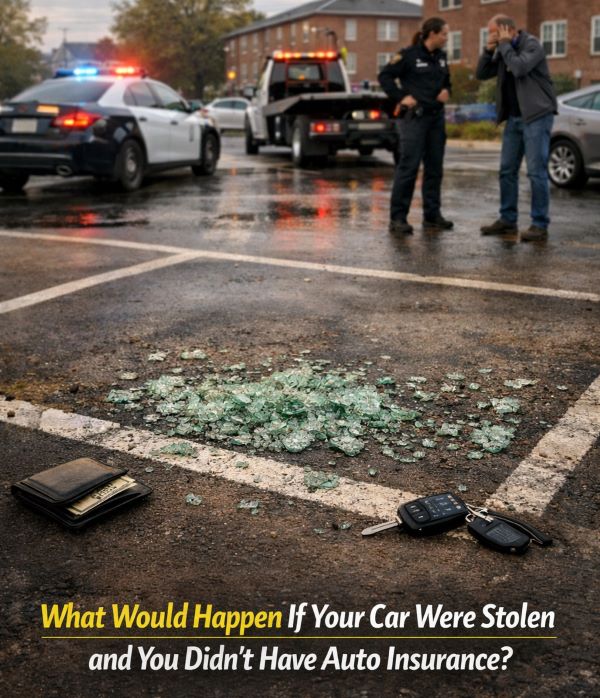
Car theft is stressful enough when you have coverage. Without it, the situation changes significantly, both financially and in terms of what options remain available to you. Understanding what would happen if your car were stolen and you didn’t have auto insurance helps clarify why comprehensive coverage exists in the first place and what steps you would realistically need to take if you found yourself in that exact situation.
The Immediate Financial Loss
The most direct consequence of what would happen if your car were stolen and you didn’t have auto insurance is total financial responsibility for the loss. Without comprehensive coverage, which is the specific type of policy that covers theft, there is no insurer to file a claim with and no payout to offset the value of the vehicle.
This means the full market value of the car, whatever it was worth at the time it was stolen, is simply gone. If you still owe money on an auto loan, this loss becomes significantly more complicated, since the lender still expects payment on the loan regardless of whether you have the vehicle or not.
What Would Happen If Your Car Were Stolen and You Didn’t Have Auto Insurance But Still Owe a Loan
This scenario is the most financially damaging version of the situation. Auto loans are tied to the vehicle as collateral, but the loan itself does not disappear if the car is stolen and uninsured. You remain legally obligated to continue making payments on a vehicle you no longer have and cannot recover.
Lenders typically require comprehensive and collision coverage as a condition of financing specifically to prevent this scenario. If you let coverage lapse after taking out the loan, you are technically in violation of the loan agreement, which can trigger additional consequences including the lender purchasing forced-placed insurance on your behalf at a much higher cost than a standard policy, and billing you for it.
In the worst case, you end up paying off a loan in full for a car that was stolen, with no insurance payout and no vehicle to show for it.
Filing a Police Report Is Still Necessary
Even without insurance, filing a police report immediately after discovering the theft remains an essential step. A police report creates an official record of the theft, which matters for several reasons unrelated to insurance.
It protects you from liability if the stolen vehicle is used in a crime, since a documented theft report establishes that you were not in possession of or operating the vehicle during any later incident. It is also required if you eventually want to remove the vehicle from your registration, deregister it with the DMV, or stop paying any associated property taxes or registration fees tied to a vehicle you no longer have.
Tax Implications and Casualty Loss Deductions
One detail many people are unaware of when considering what would happen if your car were stolen and you didn’t have auto insurance involves taxes. In some circumstances, an uninsured theft loss may qualify as a casualty loss deduction on your federal tax return, though the rules around this have become significantly more restrictive in recent years.
Under current federal tax law, personal casualty losses, including vehicle theft, are only deductible if they occur in a federally declared disaster area, which a typical car theft does not qualify as. This means most people who lose an uninsured vehicle to theft will not be able to claim a meaningful tax deduction for the loss, making the lack of insurance even more financially costly than it might initially appear.
What Happens If the Police Recover the Car
If law enforcement recovers the stolen vehicle, the situation changes but does not necessarily resolve cleanly. Recovered stolen vehicles are frequently damaged, either from the theft itself, from being used in additional crimes, or from being stripped for parts. Without insurance, any repair costs to make the vehicle usable again fall entirely on you.
There is also a real possibility that a recovered vehicle has been impounded and requires payment of towing and storage fees before it can be released back to you, regardless of the vehicle’s condition or your insurance status.
Replacing the Vehicle Without Insurance Coverage
Understanding what would happen if your car were stolen and you didn’t have auto insurance also means understanding what your options are afterward. Without an insurance payout, replacing the vehicle requires either using personal savings, taking out a new auto loan (which becomes more difficult without a vehicle to use as a trade-in or down payment), or going without a car entirely for some period of time.
For people who depend on a vehicle for work, this gap can have cascading financial effects beyond the cost of the car itself, including lost income, increased reliance on rideshare or public transportation, and potential job disruption if reliable transportation is a requirement of employment.
Why Comprehensive Coverage Exists Specifically for This Scenario
Standard liability auto insurance, which is the minimum legally required coverage in most states, does not cover theft. Liability insurance only covers damage or injury you cause to others. Comprehensive coverage is the specific add-on that protects against theft, vandalism, weather damage, and other non-collision losses.
This distinction is important because many drivers carry only liability coverage, often because it satisfies the legal minimum requirement and costs less, without realizing that liability coverage offers no protection whatsoever in a theft scenario. Understanding what would happen if your car were stolen and you didn’t have auto insurance often comes down to understanding that liability-only coverage and “no insurance” produce nearly identical outcomes when it comes to vehicle theft specifically.
Steps to Take If This Happens to You
If you find yourself facing this exact situation, a few steps help limit further financial damage:
- File a police report immediately, providing the vehicle identification number (VIN), license plate, and any tracking information if your car has GPS or a connected app.
- Notify your lender immediately if the vehicle is financed, since most loan agreements have specific requirements about reporting theft and may have provisions for this situation.
- Check whether you have gap insurance, which is a separate product from comprehensive coverage and may cover the difference between what you owe and the vehicle’s value in some circumstances, though this varies significantly by policy and provider.
- Contact the DMV to handle deregistration and stop ongoing registration or property tax obligations tied to a vehicle that no longer exists in your possession.
- Consult a tax professional to determine whether any deduction is available given current, more restrictive federal rules around casualty losses.
Key Takeaways
- What would happen if your car were stolen and you didn’t have auto insurance comes down to full personal financial responsibility for the loss, with no insurer to absorb any part of the cost.
- If you still owe a loan on the vehicle, you remain legally obligated to continue payments even though the car is gone, which is the most financially damaging version of this scenario.
- Filing a police report remains essential even without insurance, both for legal protection and for handling DMV deregistration.
- Federal tax deductions for uninsured theft losses are extremely limited under current law and generally only apply in federally declared disaster areas, which a standard car theft does not qualify as.
- Recovered stolen vehicles often come with additional costs, including repairs and impound or storage fees, all of which fall on the owner without insurance coverage.
- Liability-only insurance, which many drivers carry to meet legal minimums, provides no protection against theft. Comprehensive coverage is the specific policy type required for theft protection.
- Replacing an uninsured stolen vehicle typically requires personal savings or a new loan, since there is no payout to use toward a replacement or as leverage for new financing.
- Lenders often require comprehensive coverage as a loan condition specifically to prevent this scenario, and letting that coverage lapse can violate the loan agreement and trigger additional costs through forced-placed insurance.