Brown Sugar vs White Sugar
Bake two batches of chocolate chip cookies with the same recipe. Use only white sugar in the first and only brown sugar in the second. The first batch comes out thin, crisp, and pale gold. The second comes out thick, soft, chewy, and darker, with a hint of caramel. Same flour, same butter, same oven. The only change was the sugar. That is the clearest way to see the brown sugar vs white sugar difference, and it is why so many recipes call for a mix of both.
This guide explains what makes these two sugars different, how each one behaves in your kitchen, what the nutrition labels really say, and how to swap one for the other when you run out.
What Is White Sugar?
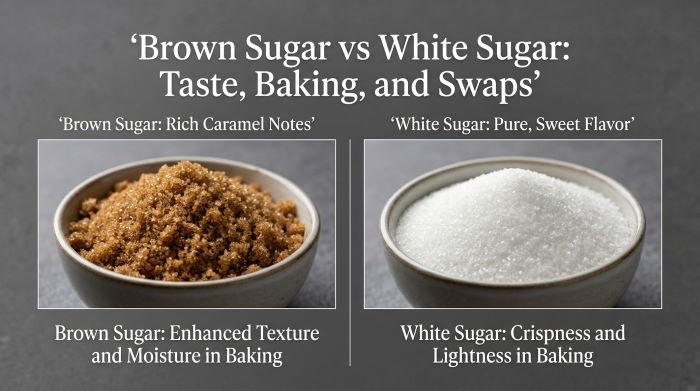
White sugar, also called granulated or table sugar, is almost pure sucrose. It comes from sugarcane or sugar beets. Factories crush the plant, extract the juice, boil it down, and spin it to form crystals. The crystals are then washed and refined to remove the dark syrup called molasses.
The result is a dry, free-flowing sugar with a clean, neutral sweetness. It does not add any flavor beyond sweetness, which is why it shows up in everything from coffee to cake.
What Is Brown Sugar?
Most brown sugar in grocery stores is white sugar with some molasses added back in. That molasses gives brown sugar its color, its soft and damp texture, and its deeper flavor.
There are two main types:
- Light brown sugar has about 3.5% molasses. It has a mild caramel taste and is the most common type in recipes.
- Dark brown sugar has about 6.5% molasses. It tastes stronger, with a richer, almost toffee-like flavor.
Some less refined brown sugars, like muscovado, keep their natural molasses instead of having it added back. They have an even stronger flavor and a stickier texture.
Brown Sugar vs White Sugar at a Glance
| White Sugar | Brown Sugar | |
|---|---|---|
| Main ingredient | Sucrose | Sucrose plus molasses |
| Molasses content | None | About 3.5% (light) to 6.5% (dark) |
| Texture | Dry, loose crystals | Soft, moist, clumps easily |
| Flavor | Clean, neutral sweetness | Caramel, toffee notes |
| Color | White | Light to dark brown |
| Moisture in baking | Less | More |
| Calories per teaspoon | About 16 | About 15 to 17, depending on how it is packed |
| Best for | Meringues, light cakes, crisp cookies, drinks | Chewy cookies, barbecue sauce, oatmeal, gingerbread |
How They Change Your Baking
The brown sugar vs white sugar choice affects more than color. It changes texture, spread, rise, and flavor.
Moisture and Chewiness
Molasses attracts and holds water. That is why brown sugar feels damp and why baked goods made with it stay soft longer. Cookies made with brown sugar turn out chewy and moist. Cookies made with white sugar spread more and bake up crisp.
Many classic cookie recipes use both. The white sugar helps the edges crisp, while the brown sugar keeps the middle soft.
Spread and Rise
Molasses is slightly acidic. When brown sugar meets baking soda, the two react and create gas, which helps baked goods rise. This is one reason recipes heavy in brown sugar often call for baking soda instead of baking powder.
White sugar has no acid, so it does not react with baking soda the same way. It is better at creating a fine, light crumb in cakes and is the only choice for meringues, where its dry crystals help whipped egg whites hold their shape.
Flavor
White sugar lets other flavors shine, like vanilla, citrus, or fresh fruit. Brown sugar adds its own warm notes. It pairs well with cinnamon, ginger, chocolate, nuts, and smoky foods.
Is Brown Sugar Healthier Than White Sugar?
This is the most common question in the brown sugar vs white sugar debate, and the answer is no, not in any meaningful way.
Brown sugar does contain tiny amounts of minerals from molasses, like calcium, potassium, iron, and magnesium. But the amounts are so small that you would need to eat a huge amount of sugar to get any real benefit. That would cause far more harm than good.
Both sugars are almost all sucrose. Your body handles them the same way. Both raise blood sugar, and both count as added sugar. Calories are nearly the same too. Brown sugar has slightly fewer calories by weight because of its water content, but a packed teaspoon can end up with about the same or a little more than white sugar.
The American Heart Association suggests limiting added sugar to about 6 teaspoons a day for most women and 9 teaspoons a day for most men. That limit applies to brown sugar, white sugar, honey, and syrups alike.
If you want to cut back, the color of your sugar does not matter. The amount does.
How to Swap Brown Sugar and White Sugar
You can swap the two one for one by volume in most recipes, but expect changes in texture and taste.
Using White Sugar Instead of Brown
- Your cookies will spread more and turn out crisper.
- Your baked goods will be lighter in color and less moist.
- If the recipe relies on brown sugar’s acid to react with baking soda, it may not rise as well.
To get closer to brown sugar, add 1 tablespoon of molasses per cup of white sugar.
Using Brown Sugar Instead of White
- Your baked goods will be softer, moister, and darker.
- Cakes may come out a bit denser.
- You will taste more caramel flavor.
Always pack brown sugar firmly into the measuring cup unless the recipe says otherwise. Recipes assume packed brown sugar.
How to Make Brown Sugar at Home
Ran out of brown sugar? You can make it in two minutes:
- Add 1 cup of white sugar to a bowl.
- Add 1 tablespoon of molasses for light brown sugar, or 2 tablespoons for dark brown sugar.
- Mix with a fork, or pulse in a food processor, until the color is even.
Use it right away or store it in an airtight container.
How to Store Each Sugar
White sugar keeps almost forever in a dry, sealed container. Brown sugar is trickier because its moisture can evaporate, leaving a hard, rock-like lump.
To keep brown sugar soft:
- Store it in an airtight container or a zip-top bag with the air pressed out.
- Add a terra cotta sugar saver, soaked in water, to the container.
If it already hardened:
- Put a slice of bread or apple in the container overnight. The sugar will pull moisture from it.
- For a quick fix, microwave the sugar in a bowl covered with a damp paper towel for 20 to 30 seconds.
Which Sugar Should You Use?
Here is a quick guide for everyday cooking:
- Coffee and tea: White sugar for a clean taste, brown for a richer one.
- Chewy cookies and brownies: Brown sugar, or a mix with more brown than white.
- Crisp cookies and shortbread: White sugar.
- Meringues and angel food cake: White sugar only.
- Barbecue sauce and glazes: Brown sugar.
- Oatmeal and baked fruit: Brown sugar.
- Lemonade and simple syrup: White sugar.
Common Questions About Brown Sugar vs White Sugar
Is raw sugar the same as brown sugar? No. Raw sugars, like turbinado and demerara, have large golden crystals and a light molasses flavor. They are drier than brown sugar and are often used as a crunchy topping.
Can diabetics eat brown sugar instead of white? Brown sugar affects blood sugar the same way white sugar does. People managing diabetes should follow their doctor’s advice for all added sugars.
Why do recipes say “packed” brown sugar? Brown sugar is soft and fluffy, so the amount in a cup changes a lot depending on how tight it is. Packing it gives a consistent measurement.
Does brown sugar go bad? Not in a way that makes it unsafe. It just gets hard, and you can soften it again.
A Simple Test Batch
If you want to see the brown sugar vs white sugar effect for yourself, bake a small test. Make one tray of cookies with all white sugar, one with all brown sugar, and one with half of each. Taste them side by side. Most people find the half-and-half batch gives the best balance of crisp edges and soft centers, which is why so many classic recipes use both sugars together.
Final Thoughts
The brown sugar vs white sugar question is about flavor and texture, not health. White sugar gives clean sweetness and crisp results. Brown sugar adds moisture, chew, and a warm caramel taste thanks to its molasses. Pick based on what you want your recipe to taste and feel like, and keep in mind that both count the same toward your daily sugar limit. Once you know the brown sugar vs white sugar difference, you can tune any recipe to your liking.
Key Takeaways
- White sugar is refined sucrose with the molasses removed. Brown sugar is sucrose with molasses added back in.
- Light brown sugar has about 3.5% molasses, and dark brown sugar has about 6.5%.
- Brown sugar makes baked goods softer, moister, and chewier. White sugar makes them crisper and lighter.
- Molasses is slightly acidic, so brown sugar reacts with baking soda to help baked goods rise.
- Brown sugar is not meaningfully healthier. Its extra minerals are tiny, and both sugars affect your body the same way.
- You can swap them one for one, but expect changes in texture and flavor.
- Make your own brown sugar by mixing 1 cup of white sugar with 1 to 2 tablespoons of molasses.
- Soften hard brown sugar with a slice of bread overnight or a short trip in the microwave with a damp paper towel.