Diet Coke vs Coke Zero
Both cans say zero sugar. Both have zero calories. Both come from the same company in Atlanta. Yet fans of each will tell you, with total confidence, that the other one tastes wrong. The Diet Coke vs Coke Zero debate has been running for nearly two decades, and it comes down to a handful of real differences: the flavor base, the sweetener blend, and the amount of caffeine. This guide lays out those differences clearly, so you can pick the one that suits your taste and your goals.
What Is the Difference Between Diet Coke and Coke Zero?
The main difference between Diet Coke and Coke Zero is the goal behind each recipe. Coke Zero was designed to taste as close as possible to regular Coca-Cola. Diet Coke was built on its own, lighter flavor profile.
A Quick History
- Diet Coke launched in the United States in 1982. It was the first product to carry the Coca-Cola name other than the original drink, and it quickly became one of the most popular diet sodas in the country.
- Coke Zero arrived in 2005. Coca-Cola created it to reach drinkers, many of them men, who wanted the taste of classic Coke without sugar but did not connect with the “diet” label.
- In 2017, Coke Zero was renamed Coca-Cola Zero Sugar in the US, and the recipe was updated again in 2021 to taste even more like the original.
Is Diet Coke the Same as Coke Zero?
No. They are both sugar-free colas from Coca-Cola, but they use different flavor blends, different sweetener mixes, and different amounts of caffeine. Diet Coke is not simply Coke Zero with a different label, and vice versa.
Diet Coke vs Coke Zero: Ingredients Compared
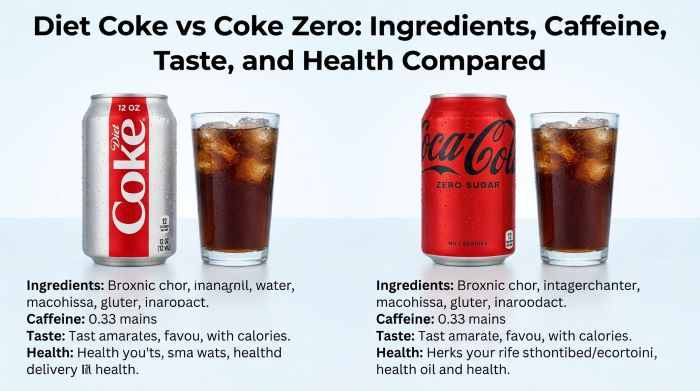
Here are the standard US ingredient lists.
| Diet Coke | Coke Zero Sugar |
|---|---|
| Carbonated water | Carbonated water |
| Caramel color | Caramel color |
| Aspartame | Phosphoric acid |
| Phosphoric acid | Aspartame |
| Potassium benzoate (to protect taste) | Potassium benzoate (to protect taste) |
| Natural flavors | Natural flavors |
| Citric acid | Potassium citrate |
| Caffeine | Acesulfame potassium |
| Caffeine |
Coke Zero Ingredients in Plain Terms
The Coke Zero ingredients include two sweeteners working together:
- Aspartame, a low-calorie sweetener about 200 times sweeter than sugar
- Acesulfame potassium (Ace-K), a zero-calorie sweetener that helps round out the sweetness and reduce aftertaste
It also uses potassium citrate, which helps control acidity and flavor.
Diet Coke Ingredients in Plain Terms
Standard Diet Coke relies on aspartame alone for sweetness. It uses citric acid for a bit of brightness. A version sweetened with Splenda (sucralose) has also been sold in the US for people who prefer to avoid aspartame.
Which Has More Sweeteners?
Coke Zero uses two sweeteners, while standard Diet Coke uses one. That does not necessarily mean Coke Zero tastes sweeter. The blend is designed to taste more like sugar, while Diet Coke’s single-sweetener recipe gives it a lighter, crisper sweetness.
Does Coke Zero Have Aspartame?
Yes. Both drinks contain aspartame. Because of this, both cans carry a warning for people with phenylketonuria (PKU), a rare genetic condition in which the body cannot break down phenylalanine, a part of aspartame.
Diet Coke vs Coke Zero: Nutrition Facts and Caffeine
Nutrition Per 12-Ounce Can
| Nutrient | Diet Coke | Coke Zero Sugar | Regular Coca-Cola |
|---|---|---|---|
| Calories | 0 | 0 | 140 |
| Sugar | 0 g | 0 g | 39 g |
| Carbohydrates | 0 g | 0 g | 39 g |
| Sodium | 40 mg | 40 mg | 45 mg |
| Caffeine | 46 mg | 34 mg | 34 mg |
Regular Coca-Cola figures are approximate and can vary slightly by market.
Do Diet Coke and Coke Zero Contain Sugar?
No. Neither drink contains sugar. Both get their sweetness from low-calorie or zero-calorie sweeteners.
Diet Coke vs Coke Zero: Which Has More Caffeine?
Diet Coke has more caffeine: about 46 mg per 12-ounce can, compared with about 34 mg in Coke Zero Sugar. That makes Diet Coke roughly a third stronger.
Here is how both compare with other drinks:
| Drink | Approximate Caffeine |
|---|---|
| Diet Coke (12 oz) | 46 mg |
| Coke Zero Sugar (12 oz) | 34 mg |
| Regular Coca-Cola (12 oz) | 34 mg |
| Brewed coffee (8 oz) | About 95 mg |
| Black tea (8 oz) | About 47 mg |
Does Diet Coke Have More Caffeine Than Regular Coke?
Yes. Diet Coke has about 12 mg more caffeine per can than regular Coca-Cola. Coke Zero matches regular Coke at about 34 mg.
For healthy adults, the US Food and Drug Administration says up to 400 mg of caffeine per day is generally not linked with harmful effects. That is well above what most people get from a few cans of either soda. People who are pregnant, sensitive to caffeine, or taking certain medications may need less.
Both drinks also come in caffeine-free versions in many stores.
Diet Coke vs Coke Zero: Taste and Flavor
What Coke Zero Tastes Like
Coke Zero is designed to mimic classic Coca-Cola. Many drinkers describe it as rounder, sweeter, and closer to the original, with a smoother finish. The aspartame and Ace-K blend helps soften the aftertaste that some people notice in diet drinks.
What Diet Coke Tastes Like
Diet Coke has its own distinct flavor. Fans often describe it as lighter, crisper, and slightly sharper, with a bright, citrusy edge. It does not try to copy regular Coke, which is exactly why its loyal fans love it.
Why Do They Taste So Different?
The difference between Coke Zero and Diet Coke in taste comes from three factors:
- Different flavor bases. Coke Zero follows the flavor profile of regular Coke, while Diet Coke uses its own recipe.
- Different sweeteners. Coke Zero’s two-sweetener blend tastes closer to sugar. Diet Coke’s single sweetener gives it a lighter feel.
- Different acids. Diet Coke’s citric acid adds brightness, while Coke Zero’s potassium citrate keeps the flavor smoother.
Does Coke Zero Taste More Like Regular Coca-Cola?
For most people, yes. That was the whole point of creating it. If you miss the taste of classic Coke, Coke Zero is usually the closer match.
Diet Coke vs Coke Zero: Health Considerations
Which One Is Healthier?
Nutritionally, the two drinks are almost identical: no calories, no sugar, and similar sodium. The main differences are caffeine and the sweetener blend. Neither offers vitamins, protein, or fiber, so health experts generally view both as occasional drinks rather than healthy choices. Water, sparkling water, and unsweetened tea are better everyday options.
Are the Artificial Sweeteners Safe?
Both aspartame and acesulfame potassium are approved by the FDA and food safety agencies in many other countries.
In July 2023, the World Health Organization’s cancer research agency, IARC, classified aspartame as “possibly carcinogenic to humans,” based on limited evidence. At the same time, the WHO and FAO’s expert committee on food additives reviewed the evidence and kept the acceptable daily intake at 40 mg per kilogram of body weight. By that committee’s example, a 70 kg (154 lb) adult would need to drink more than 9 to 14 cans of diet soda a day, with no other sources of aspartame, to go over that limit. The FDA has said it continues to consider aspartame safe at approved levels.
Some people report headaches after consuming aspartame. If you notice this, it may be worth cutting back or switching to a different drink.
Effects on Blood Sugar
Since neither drink contains sugar, neither causes the blood sugar spike that regular soda does. This makes both popular with people managing diabetes. Research on whether artificial sweeteners affect insulin or gut bacteria over time is still mixed, so people with diabetes may want to talk with their doctor or a dietitian about how much is right for them.
Effects on Your Teeth
Sugar-free does not mean tooth-friendly. Both drinks are acidic, mainly because of phosphoric acid, and acid can wear down tooth enamel over time. To protect your teeth:
- Drink through a straw
- Avoid sipping slowly over many hours
- Rinse your mouth with water afterward
- Wait about 30 minutes before brushing
Can They Cause Bloating?
Yes, for some people. The carbonation can cause gas and bloating, especially if you drink quickly or have a sensitive stomach.
Can You Drink Them Every Day?
For most healthy adults, a can a day is unlikely to cause harm, based on current safety limits. Still, moderation matters. If diet soda is replacing water for most of your day, it is worth cutting back.
Diet Coke vs Coke Zero for Weight Management
Are Diet Coke and Coke Zero Good for Weight Loss?
Swapping regular soda for a zero-calorie version can help cut calories. Each 12-ounce can of regular Coke has about 140 calories, so switching just one can a day saves nearly 1,000 calories a week.
That said, research on diet drinks and weight is mixed. Some observational studies link diet soda with weight gain, though they cannot show cause and effect. Clinical trials suggest that replacing sugary drinks with diet versions can modestly support weight loss, especially when combined with other healthy habits.
Which Is Better for Weight Management?
Neither has an advantage here. Both have zero calories and zero sugar. Choose the one you enjoy most, and focus on your overall diet and activity.
Which Is Better for People Avoiding Sugar?
Both are equally sugar-free. If you want the taste of classic Coke without the sugar, Coke Zero is the closer match. If you prefer a lighter, crisper soda, Diet Coke may suit you better.
Price, Availability, and Popularity
Price and Availability
In most US stores, the two drinks are priced the same and sold in the same sizes, from cans and bottles to fountain drinks. Both come in several flavors and caffeine-free versions, though the exact lineup changes by season and region. Outside the US, Coke Zero is often easier to find, while Diet Coke is sold under the name Coca-Cola Light in some countries.
Which Is More Popular?
Diet Coke remains one of the best-selling sodas in America. In Beverage Digest’s 2025 rankings of US carbonated soft drink brands, Diet Coke rose to fourth place, behind Coca-Cola, Dr Pepper, and Pepsi. Coke Zero Sugar has also grown in recent years, helped by the wider trend toward zero-sugar drinks.
Frequently Asked Questions
What is the biggest difference between Diet Coke and Coke Zero? Coke Zero is designed to taste like regular Coca-Cola, while Diet Coke has its own lighter flavor. Diet Coke also has more caffeine.
Which has less caffeine? Coke Zero, with about 34 mg per 12-ounce can, compared with about 46 mg in Diet Coke.
Do both contain aspartame? Yes. Coke Zero also contains acesulfame potassium.
Which is better for daily drinking? Both are similar nutritionally. Choose based on taste and caffeine, and keep your intake moderate.
Is Coke Zero healthier than Diet Coke? Not in any meaningful way. The main differences are taste, sweetener blend, and caffeine.
Coke Zero vs Diet Coke: Which One Should You Choose?
When you weigh Diet Coke vs Coke Zero, the decision comes down to taste and caffeine more than health. Pick Coke Zero if you love the flavor of classic Coca-Cola and want a little less caffeine. Pick Diet Coke if you enjoy a lighter, crisper taste and do not mind a stronger caffeine kick. Whichever you choose, enjoy it in moderation and keep water as your main drink.
Key Takeaways
- The Diet Coke vs Coke Zero choice is mostly about flavor, sweeteners, and caffeine.
- Coke Zero is designed to taste like regular Coca-Cola; Diet Coke has its own lighter flavor.
- Diet Coke uses aspartame; Coke Zero uses aspartame plus acesulfame potassium.
- Diet Coke has about 46 mg of caffeine per 12-ounce can, while Coke Zero has about 34 mg.
- Both drinks have zero calories, zero sugar, and about 40 mg of sodium per can.
- Food safety agencies consider both sweeteners safe at approved intake levels.
- Both are acidic, so they can affect tooth enamel over time.
- Swapping regular soda for either one can cut calories, but water remains the best everyday choice.