Basmati Rice vs Jasmine Rice
Cook a pot of each side by side and you will see the difference before you taste it. Basmati comes out of the pot as long, slender, separate grains that seem to grow even longer as they cook. Jasmine comes out softer, slightly glossy, with grains that cling gently together. Both smell wonderful. Both are long-grain white rices. But the basmati rice vs jasmine rice choice changes how a dish looks, feels, and pairs with sauces.
This guide is built like a kitchen test. We will go through each stage, from the bag to the plate, and point out where the two rices part ways.
Stage 1: The Bag
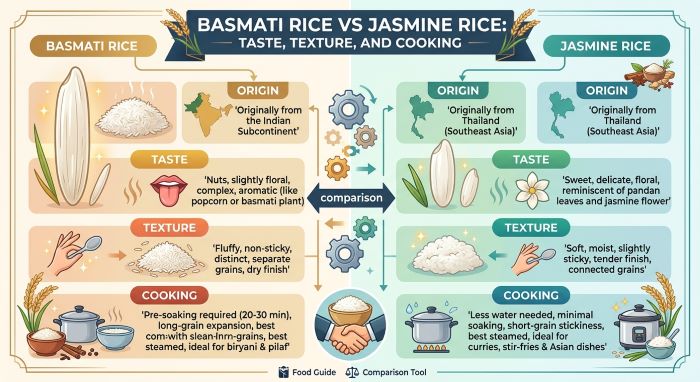
Basmati grows mainly in the foothills of the Himalayas, in India and Pakistan. The name comes from Hindi and is often translated as “full of aroma.” Authentic basmati is often aged for months, sometimes a year or more, which dries the grains and improves their flavor and texture.
Jasmine rice, also called Thai fragrant rice or hom mali, comes mainly from Thailand, with Cambodia, Vietnam, and Laos also growing it. It is usually sold fresh rather than aged. Its name refers to its sweet, floral smell, which some compare to jasmine flowers, though it does not contain any jasmine.
Both are available as white and brown rice, and you will find many brands grown in the United States too.
Stage 2: The Raw Grain
Pour a little of each into your hand.
- Basmati grains are very long and thin, almost needle-like, and slightly translucent.
- Jasmine grains are long but a bit shorter and plumper, with more rounded ends and a pearly look.
Stage 3: The Rinse and Soak
Rinse both. Swirl the rice in cold water and drain, repeating two or three times until the water runs mostly clear. This removes loose surface starch that can make rice gummy.
Soak basmati. Many cooks soak basmati for 20 to 30 minutes before cooking. Soaking helps the grains absorb water evenly, so they cook up longer and less likely to break.
Skip the soak for jasmine. Jasmine is softer and cooks faster. Soaking can make it too mushy. A simple rinse is enough.
Stage 4: The Pot
The water ratios differ, and this is where many people go wrong.
| Basmati | Jasmine | |
|---|---|---|
| Water ratio (stovetop) | About 1 cup rice to 1.5 cups water (after soaking) | About 1 cup rice to 1.25 cups water |
| Cook time | About 15 minutes, then 10 minutes resting | About 12 to 15 minutes, then 10 minutes resting |
| Common method | Absorption method, or boiled in extra water and drained | Absorption method or rice cooker |
These are starting points. Different brands and stovetops vary, so adjust after your first batch.
Basic absorption method for either rice:
- Add rinsed rice and water to a pot with a pinch of salt.
- Bring to a boil.
- Cover, lower the heat to a gentle simmer, and cook for the time above.
- Turn off the heat and let it rest, covered, for 10 minutes.
- Fluff with a fork.
Some cooks make basmati the way pasta is made: boiling it in lots of salted water, then draining. This gives very separate, fluffy grains and is common in Indian and Persian cooking.
Stage 5: The Aroma
Both rices owe their smell to the same natural compound, 2-acetyl-1-pyrroline, the same one that gives fresh bread and pandan leaves part of their scent.
- Basmati smells nutty, warm, and a little like popcorn.
- Jasmine smells sweeter, softer, and more floral.
Fresh jasmine rice from a new crop often has the strongest scent. Aged basmati keeps its aroma well over time.
Stage 6: The Texture
This is the biggest difference in the basmati rice vs jasmine rice comparison.
Basmati cooks up dry, light, and fluffy. The grains stay separate and get much longer, often nearly doubling in length. That texture comes from a higher level of amylose, a type of starch that keeps grains firm and distinct.
Jasmine cooks up moist, soft, and slightly sticky. It has less amylose and more amylopectin, the starch that makes rice cling. It is not as sticky as sushi rice or glutinous rice, but the grains hold together, which makes it easy to eat with chopsticks.
Stage 7: The Plate
Each rice suits different dishes.
Where Basmati Shines
- Biryani: The separate grains layer beautifully with spiced meat or vegetables.
- Pilaf and pulao: Fluffy grains absorb broth without turning mushy.
- Indian curries: Butter chicken, dal, chana masala, and korma.
- Persian rice: Including tahdig, the crispy rice from the bottom of the pot.
- Middle Eastern dishes: Kabsa, mandi, and grilled kebabs.
Where Jasmine Shines
- Thai curries: Green, red, and massaman curry.
- Stir fries: The soft grains soak up sauce.
- Southeast Asian dishes: Larb, pad krapow, and grilled meats.
- Fried rice: Use day-old jasmine rice for the best texture.
- Simple sides: With grilled fish, chicken, or vegetables.
Nutrition: Basmati Rice vs Jasmine Rice
White basmati and white jasmine are very similar in calories, carbs, and protein. A cup of cooked white rice of either type has roughly 200 calories, about 45 grams of carbohydrates, and around 4 grams of protein.
The main difference is how they affect blood sugar:
- Basmati has a lower glycemic index, often listed in the 50s, which puts it in the low to medium range.
- Jasmine has a higher glycemic index, often listed in the high 60s to 80s, which is considered high.
The glycemic index measures how quickly a food raises blood sugar. Basmati’s higher amylose content means it digests more slowly. For people watching blood sugar, basmati is usually the better white rice choice. Brown versions of either rice have more fiber and a gentler impact than their white forms.
People with diabetes should follow their doctor’s or dietitian’s advice on rice and portion sizes.
A Note on Arsenic
Rice can absorb arsenic from soil and water. Testing by groups such as Consumer Reports has found that basmati from India, Pakistan, and California tends to be on the lower end, while brown rice generally has more than white because arsenic builds up in the outer bran layer.
To lower your exposure:
- Rinse rice well.
- Cook it in extra water and drain the excess.
- Eat a variety of grains, not only rice.
Can You Swap Them?
Yes, in most recipes, but expect a change in texture.
- Using jasmine instead of basmati: Your biryani or pilaf will be softer and stickier. It will still taste good, but the grains will not stay as separate.
- Using basmati instead of jasmine: Your Thai curry or stir fry will have drier, more separate grains. It works, though it will feel less authentic.
If you can only keep one rice in your pantry, pick the one that matches the food you cook most often.
Price and Storage
Prices are similar, though premium aged basmati can cost more. Store both in an airtight container in a cool, dry place. White rice keeps for a year or longer. Brown rice has natural oils that go rancid faster, so use it within about six months or store it in the fridge.
A Quick Pantry Guide
Not sure which bag to grab? Use this simple rule for basmati rice vs jasmine rice: think about the sauce. Thin, saucy curries and dishes where you want every grain to stand apart call for basmati. Rich, coconut-based curries and stir fries, where you want the rice to soak up flavor and hold together, call for jasmine.
If you cook both Indian and Thai food often, keeping a bag of each is worth it. They store well, and having both on hand means you never have to compromise. Many home cooks say that once they learned the basmati rice vs jasmine rice difference, their curries and stir fries started tasting more like restaurant versions. Small choices like this make a big difference on the plate, and the basmati rice vs jasmine rice choice is one of the easiest to get right.
From Pot to Plate
The basmati rice vs jasmine rice choice comes down to texture and cuisine. Basmati gives you long, dry, separate grains with a nutty aroma and a lower glycemic index, perfect for Indian, Persian, and Middle Eastern dishes. Jasmine gives you soft, slightly sticky grains with a sweet floral scent, perfect for Thai and Southeast Asian meals. Rinse both, soak only the basmati, and use the right water ratio. Get those steps right, and the basmati rice vs jasmine rice question becomes less about which is better and more about what is for dinner.
Key Takeaways
- Basmati comes mainly from India and Pakistan. Jasmine comes mainly from Thailand and nearby countries.
- Basmati grains are longer and thinner and cook up dry, fluffy, and separate. Jasmine grains are plumper and cook up soft and slightly sticky.
- Rinse both rices. Soak basmati for 20 to 30 minutes, but skip soaking for jasmine.
- Use about 1 to 1.5 for basmati after soaking and about 1 to 1.25 for jasmine as starting water ratios.
- Both get their aroma from the same compound, but basmati smells nutty while jasmine smells sweet and floral.
- Basmati has a lower glycemic index than jasmine, making it a better white rice choice for blood sugar control.
- Use basmati for biryani, pilaf, and curries. Use jasmine for Thai curries, stir fries, and fried rice.
- Rinsing rice and cooking it in extra water can help lower arsenic levels.