Butter Chicken vs Chicken Tikka Masala
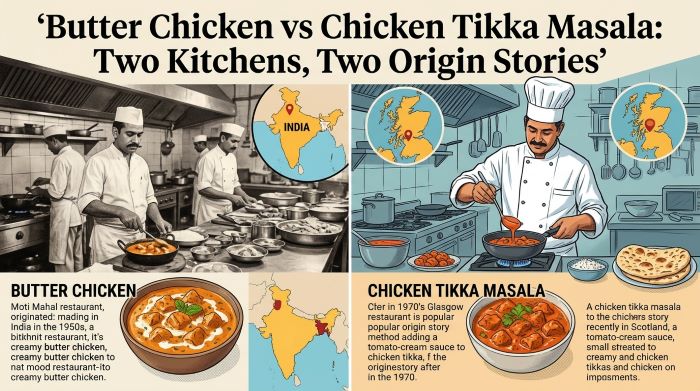
One story starts in a busy kitchen in Delhi, sometime around the late 1940s or 1950s. Pieces of tandoori chicken are left over at the end of the day, drying out in the heat. A cook drops them into a sauce of tomatoes, butter, and cream to bring them back to life. The other story starts in Glasgow, Scotland, in the 1970s. A customer sends back his chicken tikka, complaining that it is too dry. The chef reaches for a can of tomato soup and some spices. Both stories are told with total confidence. Both are argued about to this day. And together they explain why butter chicken vs chicken tikka masala is one of the most common questions on any Indian restaurant menu.
The two dishes look almost the same in the bowl: orange-red, creamy, full of chicken. But they taste different, and they come from very different places. Here is how to tell them apart and choose the right one.
The Delhi Story: Butter Chicken
Butter chicken, known in Hindi as murgh makhani, is widely credited to Moti Mahal, a restaurant in the Daryaganj area of Old Delhi. The restaurant’s founders, including Kundan Lal Gujral, came to Delhi after the Partition of India in 1947 and became famous for tandoori chicken.
The story goes that leftover tandoori chicken would dry out, so the kitchen created a rich tomato sauce with lots of butter and cream to soften it. The dish was an instant hit.
Even this origin story is disputed. In 2024, the families behind two rival Delhi restaurant groups went to court over who really invented butter chicken, with each side claiming credit for its founder. The case drew headlines around the world, proof of how much pride is tied up in one creamy curry.
Whatever the exact details, butter chicken is a dish of North India, rooted in Punjabi cooking and the tandoor oven.
The Glasgow Story: Chicken Tikka Masala
Chicken tikka masala has a more international story. Many people credit Ali Ahmed Aslam, a chef at the Shish Mahal restaurant in Glasgow, with creating it in the early 1970s. According to the well-known account, a customer found his chicken tikka too dry. Aslam made a quick sauce using tomato soup, yogurt, cream, and spices, and a new dish was born.
Other chefs in Britain and India have made their own claims, and some food historians think similar dishes existed earlier. But there is no question the dish became a British favorite. In 2001, British Foreign Secretary Robin Cook famously called chicken tikka masala “a true British national dish,” praising it as a symbol of how Britain absorbs and adapts outside influences.
So while butter chicken grew out of a Delhi kitchen, chicken tikka masala is often described as a British creation inspired by Indian cooking.
In the Bowl: How They Taste
Put a spoonful of each side by side and the butter chicken vs chicken tikka masala differences come out.
Butter Chicken
- Flavor: Mild, rich, and slightly sweet.
- Sauce: Smooth and velvety. Heavy on butter and cream, with tomato in the background.
- Spices: Gentle. Garam masala, a little chili for color more than heat, and often kasuri methi (dried fenugreek leaves), which gives a distinct, slightly bitter, maple-like aroma.
- Chicken: Usually tandoori-style chicken, sometimes on the bone in traditional versions, though boneless is common in restaurants.
Chicken Tikka Masala
- Flavor: Bolder, more tangy, and more heavily spiced.
- Sauce: Thicker and often more onion-based, with a stronger tomato presence. Creamy, but less buttery.
- Spices: More layered. Cumin, coriander, paprika or Kashmiri chili, garam masala, ginger, and garlic.
- Chicken: Boneless chicken tikka, which is marinated in yogurt and spices, then grilled or charred before going into the sauce.
A simple way to remember it: butter chicken is silky and soothing, while tikka masala is punchier and more tomato-forward.
Butter Chicken vs Chicken Tikka Masala: Side by Side
| Butter Chicken | Chicken Tikka Masala | |
|---|---|---|
| Common origin story | Moti Mahal, Delhi, after 1947 | Shish Mahal, Glasgow, 1970s |
| Heat level | Mild | Mild to medium |
| Main sauce base | Tomato, butter, cream | Tomato, onion, cream, spices |
| Texture | Smooth, velvety | Thicker, sometimes chunkier |
| Key aroma | Kasuri methi, butter | Charred tikka, cumin, coriander |
| Chicken style | Tandoori chicken | Grilled chicken tikka chunks |
| Color | Orange, glossy | Deeper orange-red |
| Best for | Spice-shy eaters, kids, comfort food | Those who want more flavor and a little more heat |
Which One Should You Order?
Pick butter chicken if:
- You are new to Indian food.
- You prefer mild, creamy dishes.
- You are ordering for kids or picky eaters.
- You want a rich comfort dish to scoop up with naan.
Pick chicken tikka masala if:
- You like more spice and tang.
- You enjoy smoky, charred flavors.
- You want a dish with more depth and contrast.
- You are pairing it with plain basmati rice.
Keep in mind that every restaurant makes these dishes its own way. Some restaurants’ butter chicken is spicier than another’s tikka masala. If heat matters, ask your server.
Cooking Them at Home: The Key Differences
You do not need a tandoor to make either one. Here is what sets the methods apart.
For Butter Chicken
- Marinate chicken in yogurt, lemon, ginger, garlic, and mild spices for a few hours.
- Roast or grill the chicken until lightly charred.
- Make the sauce by cooking tomatoes with butter, ginger, garlic, and a little chili, then blend it until smooth.
- Stir in cream, more butter, and crushed kasuri methi.
- Add the chicken and simmer briefly.
For Chicken Tikka Masala
- Marinate chicken in yogurt with cumin, coriander, paprika, garam masala, ginger, and garlic.
- Thread on skewers and grill or broil until charred at the edges.
- Cook onions until golden, then add ginger, garlic, and ground spices.
- Add tomato puree and simmer into a thick sauce.
- Finish with cream and stir in the grilled chicken.
The biggest differences: butter chicken leans on butter and a smooth, blended sauce, while tikka masala builds flavor from browned onions and a stronger spice base.
Nutrition Notes
Both dishes are rich. Restaurant portions can be high in calories and saturated fat, mainly from the butter and cream. Butter chicken often comes out a little richer because of the extra butter, though recipes vary.
At home, you can lighten either one by:
- Using half the butter and some oil
- Swapping some cream for Greek yogurt or evaporated milk
- Using chicken breast instead of thighs
- Adding vegetables like spinach or peas
What to Serve With Them
- Naan or roti: Perfect for scooping up the sauce.
- Basmati rice: A classic pairing, light and fragrant.
- Jeera rice: Rice cooked with cumin seeds.
- Cucumber raita: Cool yogurt balances richer sauces.
- Kachumber salad: A fresh mix of cucumber, tomato, and onion.
Quick Myths, Cleared Up
“They are the same dish with different names.” They are related but not the same. The sauce, spice level, and chicken prep differ.
“Tikka masala is traditional Indian food.” It is inspired by Indian cooking, but most food historians link its modern form to Britain.
“Butter chicken is always spicier.” It is usually milder.
“You need a tandoor.” A hot oven, grill, or cast iron pan gets you close.
Reading the Menu
Restaurant menus do not always make the butter chicken vs chicken tikka masala difference clear. Here is how to read between the lines:
- “Murgh makhani” is butter chicken under its Hindi name.
- “Makhani” on its own usually means a buttery tomato sauce, so “paneer makhani” or “dal makhani” share the same rich style.
- “Tikka” means small pieces, usually marinated and grilled. “Chicken tikka” alone is the dry, grilled dish without sauce.
- “Masala” means a spice mix, so “tikka masala” is grilled tikka in a spiced sauce.
Some restaurants also offer a “makhani” version of tikka masala, which blends the two styles. If you see that, ask your server how spicy it is.
Once you know these few words, the butter chicken vs chicken tikka masala choice on any menu becomes much easier. You will also be ready to explore related dishes like paneer tikka masala, a vegetarian option made with Indian cheese, or butter paneer for something mild and creamy. Many diners who start with the butter chicken vs chicken tikka masala debate end up exploring a whole new side of the menu, which is the best outcome of all.
Which Bowl Wins?
The butter chicken vs chicken tikka masala debate comes down to richness versus boldness. Butter chicken, born in Delhi, is mild, buttery, and smooth, with a hint of fenugreek. Chicken tikka masala, made famous in Britain, is tangier, more spiced, and built around smoky grilled chunks of chicken. Both are delicious, both are worth a try, and both have origin stories people still argue about. Next time you are torn over butter chicken vs chicken tikka masala, order one of each and share.
Key Takeaways
- Butter chicken is widely linked to Moti Mahal in Delhi after 1947. Chicken tikka masala is often credited to Glasgow’s Shish Mahal in the 1970s.
- Both origin stories are disputed, including a 2024 Delhi court case over who invented butter chicken.
- Butter chicken is milder, smoother, and richer in butter, often flavored with kasuri methi.
- Chicken tikka masala is bolder and tangier, with more onion, tomato, and spice.
- Butter chicken uses tandoori-style chicken. Tikka masala uses grilled chicken tikka chunks.
- Choose butter chicken for mild comfort food and tikka masala for more flavor and heat.
- At home, lighten either dish by cutting butter, using yogurt, or adding vegetables.
- Serve both with naan, basmati rice, and cooling raita.