Pho
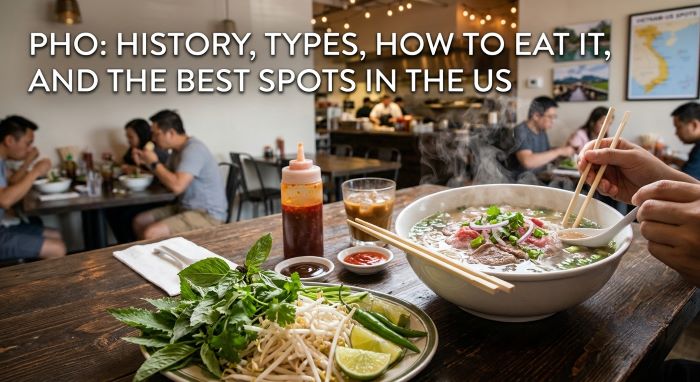
The bowl arrives steaming, almost too hot to touch. A clear, amber broth smells of star anise, cinnamon, charred onion, and beef. Thin slices of rare steak turn pink, then brown, as they cook in the soup right in front of you. On the side sits a plate piled with Thai basil, bean sprouts, lime, and sliced chilies. This is pho, and for millions of people it is the ultimate comfort food.
Pho is a Vietnamese noodle soup made with broth, flat rice noodles, herbs, and meat, most often beef or chicken. It started as street food in northern Vietnam and now has a home in strip malls, food halls, and fine dining rooms across the United States. This guide covers where the dish came from, how to say it, what goes into a great bowl, how to order like a regular, and where to find some of the best bowls in America.
How to Say It
Most English speakers say “foe,” but the Vietnamese word sounds closer to “fuh,” said with a rising, questioning tone. You will hear both in American restaurants, and no one will turn you away for saying it either way. If you want to sound closer to the original, think “fuh?” as if asking a short question.
Where the Dish Came From
Northern Roots
The soup first appeared in northern Vietnam in the early 1900s, in the area around Hanoi and the province of Nam Dinh. Food historians still debate its exact origins. Many point to a blend of influences:
- Vietnamese cooking, with its love of fresh herbs, fish sauce, and rice noodles
- Chinese cooking, which brought rice noodles and spice traditions
- French colonial rule, which increased the use of beef in Vietnam. Some suggest the name comes from the French dish pot-au-feu, a beef stew, though this theory is not proven.
Moving South
After Vietnam was divided in 1954, many northerners moved south. They brought the soup with them, and cooks in Saigon added their own touches: sweeter broth, more herbs on the side, and sauces like hoisin and sriracha at the table.
Coming to America
After the fall of Saigon in 1975, many Vietnamese refugees settled in the United States. They opened restaurants in places like Orange County, San Jose, Houston, Northern Virginia, and Seattle. One of the earliest was Pho 79 in Little Saigon, opened in 1982 by a family who came to the U.S. as boat people. From these family-run shops, the dish spread across the country and became one of America’s favorite soups.
Northern Style vs. Southern Style
| Feature | Northern (Pho Bac) | Southern (Pho Nam) |
|---|---|---|
| Broth | Clear, savory, less sweet | Sweeter, richer, often cloudier |
| Noodles | Wider | Thinner |
| Herbs | Mostly scallions and cilantro in the bowl | Large side plate of basil, sprouts, culantro |
| Sauces | Rarely used | Hoisin and sriracha common |
| Garnish | Vinegar with garlic or chili | Lime and fresh chilies |
Most American restaurants serve a southern style, since many early cooks came from the south. A growing number now offer northern bowls for those who want a cleaner, more traditional taste.
What Goes Into a Great Bowl
The Broth
The broth is the heart of the dish. A good beef broth simmers for many hours, sometimes overnight or longer. Cooks typically use:
- Beef bones, often knuckle and marrow bones
- Oxtail or beef shank for body and flavor
- Charred onion and ginger, roasted over a flame to add a smoky sweetness
- Whole spices such as star anise, cinnamon, cloves, black cardamom, and coriander seed
- Fish sauce for salty depth
- Rock sugar for balance
The bones are often boiled briefly and rinsed first, so the final broth stays clear. Skimming the pot keeps it clean.
The Noodles
The soup uses flat rice noodles called banh pho. They should be soft but not mushy. Some shops make fresh noodles, which are silky and tender. Others use dried noodles, soaked and blanched just before serving.
The Meat
Beef bowls come with many cuts. Here are the terms you will see on most menus:
| Vietnamese Term | Cut | Texture |
|---|---|---|
| Tai | Thin rare steak, often eye of round | Cooks in the hot broth |
| Chin | Well-done brisket | Soft and beefy |
| Nam | Flank | Lean with a little chew |
| Gau | Fatty brisket | Rich and tender |
| Gan | Tendon | Soft and gelatin-like |
| Sach | Tripe | Light and chewy |
| Bo vien | Beef meatballs | Springy and savory |
| Dac biet | The “special” | A combination of several cuts |
If you are new, start with tai and chin. If you are adventurous, try the dac biet, which usually includes a little of everything.
Chicken and Vegetarian Versions
Pho ga is the chicken version. It uses a lighter broth made from whole chickens, ginger, and onion, and it is topped with shredded or sliced chicken. Many people prefer it for its clean, gentle flavor.
Pho chay is the vegetarian version, made with a vegetable broth and topped with tofu, mushrooms, and vegetables. More restaurants now offer vegan options as demand grows.
The Side Plate and Sauces
Southern-style bowls come with a plate of fresh add-ons:
- Thai basil
- Bean sprouts
- Lime wedges
- Sliced jalapeños or bird’s eye chilies
- Culantro, also called sawtooth herb (ngo gai)
On the table, you will often find hoisin sauce, sriracha, fish sauce, chili oil, and pickled garlic vinegar.
How to Eat It Like a Regular
- Taste the broth first. Cooks spend hours on it. Try it before you add anything.
- Add herbs a little at a time. Tear basil leaves and drop them in. Add sprouts if you like crunch.
- Squeeze lime with care. A little brightens the bowl. Too much hides the broth.
- Go easy on sauces. Many fans put hoisin and sriracha in a small side dish for dipping meat, rather than pouring them into the soup.
- Use chopsticks and a spoon together. Pick up noodles with chopsticks and use the spoon to catch broth.
- Slurping is fine. It cools the noodles and is normal in many noodle shops.
- Eat while it is hot. The noodles soften as they sit.
Pho vs. Ramen
People often compare the two most famous Asian noodle soups.
| Feature | Pho | Ramen |
|---|---|---|
| Origin | Vietnam | Japan, with Chinese roots |
| Noodles | Flat rice noodles | Wheat noodles |
| Broth | Clear, spiced beef or chicken broth | Pork, chicken, miso, soy, or salt based |
| Toppings | Fresh herbs, lime, sprouts | Egg, pork belly, nori, scallions |
| Gluten | Rice noodles are gluten free | Wheat noodles contain gluten |
| Feel | Light and aromatic | Rich and hearty |
Rice noodles make the Vietnamese soup a good choice for people avoiding gluten, though sauces like hoisin and some broths may contain gluten. Ask if you have a strict need.
Is It Healthy?
A bowl can be a balanced meal, with protein from the meat, carbs from the noodles, and vitamins from the herbs. It is often lower in fat than creamy soups. The main concern is sodium. Restaurant broths and table sauces can add a lot of salt. To keep a bowl lighter:
- Ask for extra herbs and sprouts.
- Choose lean cuts like tai or chicken.
- Use sauces in a side dish instead of pouring them in.
- Leave some broth in the bowl.
- Order a small size.
Making It at Home
A home batch takes time but rewards patience. Here is a simple outline for beef broth:
- Parboil the bones. Boil beef bones for 10 minutes, drain, and rinse.
- Char the aromatics. Roast halved onions and a hand of ginger under a broiler or over a flame until blackened in spots.
- Toast the spices. Warm star anise, cinnamon, cloves, black cardamom, and coriander seed in a dry pan.
- Simmer. Combine bones, aromatics, and spices in a large pot of water. Simmer for at least 6 hours, skimming often.
- Season. Add fish sauce, rock sugar, and salt to taste.
- Strain. Strain the broth until clear.
- Assemble. Place cooked rice noodles in a bowl, top with raw thin-sliced steak and cooked brisket, and pour boiling broth over the top.
A pressure cooker can cut the time to about 90 minutes, though the flavor will be a bit less deep.
The Best Pho Spots in the USA
The United States has thousands of Vietnamese restaurants. The spots below are drawn from respected food guides, local critics, and national lists. Restaurants move, change hours, and sometimes close, so check before you go.
Southern California
1. Pho 79, Little Saigon (Orange County) Opened in 1982, it is one of the first pho shops in America. It won a James Beard America’s Classics award in 2019 and a Michelin Bib Gourmand in 2021. It long sat at 9941 Hazard Avenue in Garden Grove and announced in 2026 a move to a larger space at 8894 Bolsa Avenue in Westminster, still in Little Saigon. Order the beef combination.
2. Pho Filet, El Monte Known for pared-down northern-style bowls with a deep, long-simmered broth and wide flat noodles. It also has locations in Rosemead and South El Monte.
3. Saigon Eden, Alhambra Its clear oxtail broth simmers for over 12 hours with cinnamon and star anise. The restaurant shares roots with Pho 79.
4. Pho Ga District, Rosemead A tiny shop serving organic chicken soup in a Hai Phong style, with your choice of glass or rice noodles.
5. Pho Saigon Pasteur, Alhambra Loved for a light, fragrant beef broth. You can cook rib eye in the hot broth shabu-shabu style.
6. Pho Gyu, Koreatown, Los Angeles Uses wagyu beef in a broth simmered for 12 hours, with a spicy house special and self-serve toppings.
7. Camp Pho, Venice Simmers a dark, rich broth for 72 hours, with notes of anise, clove, and cardamom. It has plant-based options too.
8. Pho Hong Phat, Long Beach Located in Cambodia Town, it serves rich beef bowls in three sizes, plus Phnom Penh noodle soup.
Northern California
9. Turtle Tower, San Francisco A legendary spot for northern-style chicken soup, praised by national writers as one of the best chicken bowls in the country.
10. Pho Kim Long, San Jose A busy Bay Area favorite with a rich but not greasy broth, quality meat, and well-cooked noodles.
Texas
11. Pho Danh, Houston Located at the back of Hong Kong City Mall in Houston’s Asiatown. Its huge bowls come with fresh herbs and a dark, rich broth simmered for a long time.
12. Pho Binh, Houston The original started as a small trailer on Beamer Road. Roasting the bones before simmering gives the broth a deep, roasty flavor. Bowls often sell out early, so go before lunch.
Pacific Northwest
13. Pho Bac, Seattle Founded in 1982 by the Pham family in a boat-shaped building. The broth is lightly spiced so the beef stands out. The family also runs a cafe and cocktail bar.
14. Pho Cyclo, Seattle Chef-owner Taylor Hoang opened it in 2003 and grew it to several Seattle locations. The menu offers rare steak, tripe, tendon, shrimp, and more.
15. Luc Lac, Portland, Oregon A popular downtown spot that won a local “Best Pho” reader poll. Late weekend hours make it a night owl favorite.
Washington, D.C., Area
16. Pho 75, Arlington, Virginia A no-frills, cash-only local chain serving the D.C. area for decades. Simple menu, fast service, and steady quality.
New York City
17. Pho Bang, Little Italy A long-running Mott Street spot with a recipe dating to 1985 and about 18 varieties. Prices are friendly and it works well for groups.
18. Hello Saigon, Greenwich Village Serves southern-style bowls with eye of round, brisket, and beef balls, with a warm, family-like staff.
19. Madame Vo, East Village Simmers its broth for 24 hours. Add a bone-in short rib for a showstopper bowl.
20. Pho Ga Vang, Two Bridges A homestyle chicken specialist that came to New York in 2024 from Eden Center in Virginia. The chicken comes with skin and bone, plus a lime and pepper dipping sauce.
21. Nha Trang One, Chinatown A family-run spot since 1992 with a lighter broth and some of the lowest prices in the city.
22. Bun-Ker, Ridgewood, Queens Founded in 2014 by brothers Jimmy and Jacky Tu, who have fine-dining backgrounds. Its chicken soup uses a broth flavored with roasted shallots, star anise, cardamom, and cinnamon.
Philadelphia
23. Pho Ga Thanh Thanh, Philadelphia A casual, family-run restaurant serving chicken soup since 2001.
New Orleans
24. Tan Dinh, Gretna A family-owned shop just across the river from New Orleans. Order the beef flank and brisket combination.
Atlanta
25. Pho Dai Loi 2, Buford Highway At 4186 Buford Highway, it offers three bowl sizes and one of the biggest selections in town. Try the rare beef.
26. Lee’s Bakery, Buford Highway At 4005 Buford Highway NE, open since 2006. Pair a steak and brisket bowl with a banh mi.
27. Anh’s Kitchen, Midtown Known for filet mignon soup and rotating specials, including a lobster version.
Chicago
28. Pho 777, Argyle Street At 1065 W Argyle Street in Chicago’s Vietnamese corridor, near the Red Line Argyle stop. A reliable neighborhood bowl.
Denver
29. Pho Duy, Federal Boulevard At 945 South Federal Boulevard. Winner of Best Pho in Westword’s Best of Denver 2013, praised for long-simmered broth, rare steak, and tender tripe.
30. Pho 95, Federal Boulevard At 1401 South Federal Boulevard. Its marinated steak option adds extra flavor to the broth.
31. Saigon Bowl (Dong Khanh), Federal Boulevard At 333 South Federal Boulevard. It offers dozens of varieties in large bowls and won Best Vietnamese Restaurant in Best of Denver 2012.
Hawaii
32. The Pig and the Lady, Honolulu A Chinatown favorite known for creative Vietnamese food, including a Pho French Dip sandwich served with broth for dipping.
Quick Reference: Best Spots by City
| City | Spots to Try |
|---|---|
| Orange County, CA | Pho 79 |
| Los Angeles area | Pho Filet, Saigon Eden, Pho Ga District, Pho Saigon Pasteur, Pho Gyu, Camp Pho, Pho Hong Phat |
| San Francisco / San Jose | Turtle Tower, Pho Kim Long |
| Houston | Pho Danh, Pho Binh |
| Seattle / Portland | Pho Bac, Pho Cyclo, Luc Lac |
| Washington, D.C. area | Pho 75 |
| New York City | Pho Bang, Hello Saigon, Madame Vo, Pho Ga Vang, Nha Trang One, Bun-Ker |
| Philadelphia | Pho Ga Thanh Thanh |
| New Orleans | Tan Dinh |
| Atlanta | Pho Dai Loi 2, Lee’s Bakery, Anh’s Kitchen |
| Chicago | Pho 777 |
| Denver | Pho Duy, Pho 95, Saigon Bowl |
| Honolulu | The Pig and the Lady |
How to Spot a Great Shop Anywhere
You do not need a list to find a great bowl. Look for these signs:
- A short menu. Shops that focus on one soup often do it best.
- Vietnamese families eating there. It is a strong vote of confidence.
- Clear broth. Cloudy broth can mean rushed cooking, though some southern styles run darker.
- Fresh herbs. The side plate should look bright and crisp, not wilted.
- Busy mornings. In Vietnam, the soup is a breakfast food, and great shops are busy early.
- Simple settings. Many of the best bowls come from plain strip-mall shops.
Fun Facts
- In Vietnam, the soup is most often eaten for breakfast.
- Vietnam celebrates Pho Day on December 12 each year.
- The word “pho” refers to the noodles as much as the soup.
- Many restaurant names include numbers, often tied to a year or an address that mattered to the owners.
Common Questions
What is pho made of? Broth, flat rice noodles, herbs, and meat, most often beef or chicken.
Is it gluten free? Rice noodles are gluten free, but some sauces and broths may not be. Ask the restaurant.
What is the best cut for beginners? Tai, which is thin rare steak, and chin, which is well-done brisket.
What is pho ga? The chicken version, made with a lighter chicken broth.
What is pho dac biet? The house special, a combination of several beef cuts.
When do people eat it? In Vietnam, mostly for breakfast. In the U.S., any time of day.
A Bowl Worth Seeking Out
From its start on the streets of northern Vietnam to strip malls in Houston and Little Saigon, this soup has traveled a long way. A great bowl balances a slow-cooked, spiced broth with soft noodles, tender meat, and bright herbs. Whether you try a legendary spot like Pho 79, a chicken specialist like Turtle Tower, or a neighborhood shop on Federal Boulevard or Buford Highway, the best way to learn is simple: taste the broth first, add herbs a little at a time, and eat it while it is hot.
Key Takeaways
- Pho is a Vietnamese noodle soup made with broth, flat rice noodles, herbs, and meat, most often beef or chicken.
- It began in northern Vietnam in the early 1900s and spread south after 1954, then to the U.S. after 1975.
- The Vietnamese pronunciation is closer to “fuh” than “foe.”
- A great broth simmers for hours with beef bones, charred onion and ginger, and spices like star anise and cinnamon.
- Common beef cuts include tai (rare steak), chin (brisket), nam (flank), gan (tendon), and sach (tripe).
- Taste the broth before adding sauces, and add herbs a little at a time.
- Pho 79 in Little Saigon, open since 1982, won a James Beard America’s Classics award and a Michelin Bib Gourmand.
- Top U.S. spots include Turtle Tower, Pho Danh, Pho Bac, Pho Bang, Pho Dai Loi 2, and Pho Duy, among more than 30 listed here.