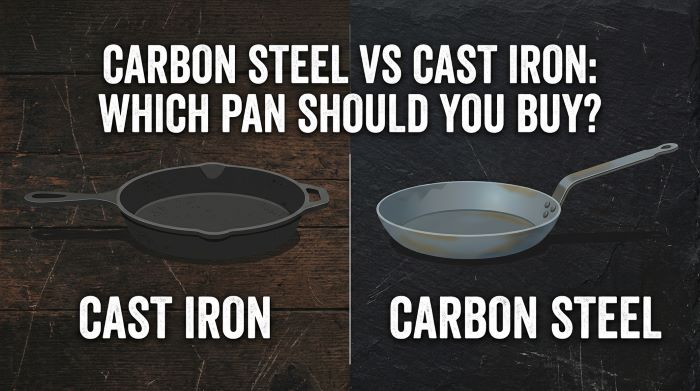
Carbon Steel vs Cast Iron
Walk into a busy restaurant kitchen and you will see stacks of thin, dark pans hanging over the stove. Walk into your grandmother’s kitchen and you may find a heavy black skillet that has been in the family for 50 years. Both pans are workhorses. Both get better with age. And both need the same kind of care. Yet the carbon steel vs cast iron debate splits home cooks, because each pan shines at different jobs.
If you are trying to decide which one to buy, or whether you need both, this guide explains how they are made, how they cook, how to care for them, and which tasks each one handles best.
What Is Cast Iron?
Cast iron is made by pouring molten iron into a mold, usually made of sand. Once it cools, the pan comes out in one solid piece. Cast iron contains about 2 to 4 percent carbon, which makes it hard but brittle. Drop it on a tile floor, and it can crack.
The casting process creates thick walls and a heavy base. A 12-inch cast iron skillet often weighs 7 to 8 pounds. That weight is what gives cast iron its famous heat retention.
What Is Carbon Steel?
Carbon steel is made from steel sheets that are stamped, pressed, or spun into shape. It contains around 99 percent iron and about 1 percent carbon. Less carbon makes it tougher and less brittle than cast iron, so it can be made much thinner.
A 12-inch carbon steel skillet usually weighs about 4 to 5 pounds. Carbon steel is the standard pan in many professional kitchens, and it is also the classic material for woks and French crêpe pans.
Carbon Steel vs Cast Iron at a Glance
| Cast Iron | Carbon Steel | |
|---|---|---|
| Carbon content | About 2 to 4% | About 1% or less |
| How it is made | Cast in a mold | Stamped, pressed, or spun from sheet steel |
| Weight (12-inch skillet) | About 7 to 8 pounds | About 4 to 5 pounds |
| Heats up | Slowly | Quickly |
| Holds heat | Very well | Moderately well |
| Responds to heat changes | Slowly | Quickly |
| Surface | Often slightly rough when new | Smooth |
| Brittleness | Can crack if dropped | Very durable |
| Needs seasoning | Yes | Yes |
| Induction compatible | Yes | Yes |
| Oven safe | Yes | Yes |
| Price | About $20 to $200+ | About $30 to $150+ |
How They Cook
Heat Retention: Cast Iron Wins
Cast iron’s thick, heavy body soaks up heat and holds onto it. When you drop a cold steak into a hot cast iron pan, the temperature barely dips. That makes cast iron great for:
- Searing thick steaks and chops
- Frying chicken
- Baking cornbread and deep-dish pizza
- Keeping food warm at the table
Responsiveness: Carbon Steel Wins
Carbon steel heats up faster and cools down faster. When you turn the burner down, the pan follows quickly. That control makes carbon steel ideal for:
- Stir fry in a wok
- Sautéing vegetables
- Cooking eggs and omelets
- Making crêpes
- Searing fish and scallops
Evenness
Neither pan spreads heat perfectly. Both can have hot spots over a burner that is smaller than the pan. Preheating slowly helps both pans heat more evenly. Cast iron’s mass helps even things out once it is fully hot.
Weight and Handling
This is a big factor in the carbon steel vs cast iron choice. Cast iron is heavy. Tossing vegetables, flipping a pancake with a flick of the wrist, or lifting a full pan off the stove takes real effort. If you have wrist or hand pain, that weight matters.
Carbon steel is much lighter, with long handles that make tossing and flipping easier. That is one reason chefs use it during busy dinner service.
Seasoning: Both Need It
Both pans are bare iron at heart, so they can rust. Both need seasoning, a layer of oil baked onto the surface until it bonds into a slick, nonstick coating.
How Seasoning Works
When you heat a thin layer of oil past its smoke point, it turns into a hard, plastic-like film. Each time you cook with fat, the layer builds up. Over time, the pan becomes dark, glossy, and naturally nonstick.
Seasoning Cast Iron
Many cast iron pans come pre-seasoned from the factory, so you can cook right away. The slightly rough surface on many modern pans helps seasoning stick, though it can take a while to become slick.
Seasoning Carbon Steel
Many carbon steel pans ship with a protective wax or oil coating that you need to scrub off first. Then you season the pan on the stove or in the oven. New carbon steel often turns blotchy and uneven in color as it seasons. That is normal. The smooth surface becomes very slick once well seasoned, often better at releasing eggs than cast iron.
Care and Cleaning
Cleaning is almost the same for both:
- Clean while warm. Rinse with hot water and scrub with a brush or chainmail scrubber.
- A little soap is fine. Modern dish soap will not strip good seasoning. Avoid long soaks.
- Dry right away. Wipe it dry, then set it on a warm burner for a minute.
- Oil lightly. Rub a very thin layer of oil on the surface before storing.
- Avoid the dishwasher. It will strip seasoning and cause rust.
If rust appears, scrub it off with steel wool, rinse, dry, and re-season.
Acidic Foods
Both pans react with acidic foods, like tomato sauce, wine, and vinegar. Short cooking times are fine in a well-seasoned pan. Long simmers can strip seasoning and give food a metallic taste. For slow-cooked tomato sauces, use stainless steel or enameled cast iron instead.
Durability
Both pans can last for generations with basic care. Carbon steel holds up better to drops and knocks because it is less brittle. Cast iron can crack if dropped or if a very hot pan is plunged into cold water.
Carbon steel can warp if heated very fast on high heat while empty, especially thinner pans. Warm it up gradually to avoid this.
Price and Popular Brands
Both materials come in budget and premium versions.
- Cast iron: Lodge is the most common budget brand and makes reliable skillets at low prices. Premium brands like Smithey, Field Company, and Finex offer smoother surfaces and lighter weight at higher prices.
- Carbon steel: De Buyer and Matfer Bourgeat are classic French brands. Made In, Lodge, and Merten & Storck also make popular options.
You can buy a solid pan in either material for under $50.
Which Should You Buy?
| If You Mostly | Choose |
|---|---|
| Sear thick steaks and fry chicken | Cast iron |
| Bake cornbread, pizza, or skillet cookies | Cast iron |
| Cook eggs and delicate fish | Carbon steel |
| Stir fry and toss vegetables | Carbon steel (especially a wok) |
| Want a lighter pan | Carbon steel |
| Want a pan that is ready to use right away | Pre-seasoned cast iron |
| Cook on a glass-top or induction stove | Either, lifted gently |
Common Questions About Carbon Steel vs Cast Iron
Is carbon steel better than cast iron? Neither is better overall. Cast iron holds heat best. Carbon steel is lighter and more responsive.
Can carbon steel go in the oven? Yes. Both are oven safe, as long as the handle has no plastic or wood parts.
Are they safe for glass-top stoves? Yes, but lift them instead of sliding them to avoid scratches. Cast iron’s weight makes this extra important.
Do I need both? Many serious home cooks own one of each. Start with the one that fits the dishes you cook most.
A Starter Plan for New Owners
If you are new to bare iron pans, the carbon steel vs cast iron learning curve is about the same. Here is a simple plan for your first month:
- Week one: Cook fatty foods, like bacon, sausage, or shallow-fried potatoes. The extra fat builds seasoning fast.
- Week two: Move on to searing meat and roasting vegetables.
- Week three: Try eggs with a little butter. If they stick, add more fat and give the seasoning more time.
- Week four: Use the pan for almost anything except long, acidic simmers.
Within a few weeks, either pan will start to look darker and feel slicker. That is the sign your seasoning is building. Stick with it, and the carbon steel vs cast iron question will feel less important than simply using your pan every day.
Final Thoughts
The carbon steel vs cast iron choice comes down to how you cook. Cast iron is heavy, slow, and steady, perfect for searing, frying, and baking. Carbon steel is lighter, faster, and more responsive, ideal for eggs, stir fry, and quick sautés. Both need seasoning, both last for decades, and both get better the more you use them. Once you understand the carbon steel vs cast iron trade-offs, you can pick the pan that fits your kitchen and your cooking style.
Key Takeaways
- Cast iron has about 2 to 4 percent carbon and is cast in a mold. Carbon steel has about 1 percent carbon and is stamped or spun from sheet steel.
- A 12-inch cast iron skillet weighs about 7 to 8 pounds. A carbon steel skillet weighs about 4 to 5 pounds.
- Cast iron holds heat best, making it ideal for searing, frying, and baking.
- Carbon steel heats and cools quickly, making it ideal for eggs, stir fry, crêpes, and sautéing.
- Both need seasoning, both can rust, and both should stay out of the dishwasher.
- Both react with acidic foods during long simmers, so use stainless steel or enameled cast iron for slow tomato sauces.
- Carbon steel is less brittle and harder to crack. Cast iron can crack if dropped.
- Good pans in either material start under $50 and can last for generations.