Rump Roast vs Chuck Roast
There are two kinds of Sunday pot roast. One falls apart at the touch of a fork, rich and juicy, with gravy soaking into every strand. The other comes out dry and stringy, no matter how long it cooked. Very often, the difference is not the recipe. It is the cut of beef. That is why the rump roast vs chuck roast question matters so much to home cooks. The two cuts look similar in the meat case, but they come from opposite ends of the cow and need different treatment.
This guide explains where each roast comes from, how they differ in fat and flavor, and the best ways to cook each one so it turns out tender every time.
Where Each Cut Comes From
Chuck Roast
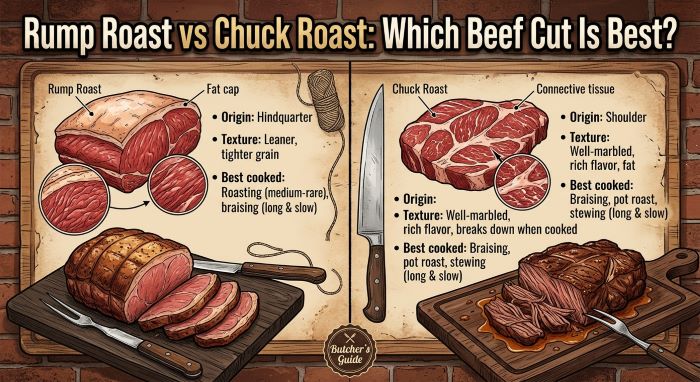
Chuck comes from the shoulder area of the cow, near the neck. These muscles work hard every day as the animal walks and stands. Working muscles build up connective tissue, mainly collagen, and the chuck also has plenty of fat marbled through it.
You may see chuck sold under several names, such as chuck roast, chuck eye roast, shoulder roast, seven-bone roast, or blade roast.
Rump Roast
Rump roast comes from the round, the rear leg and hip area of the cow. It is part of the same primal cut that gives us top round, bottom round, and eye of round. The rump area is lean, with less marbling and less connective tissue than the chuck.
In some stores, rump roast is labeled as bottom round rump roast or simply round roast.
Rump Roast vs Chuck Roast at a Glance
| Chuck Roast | Rump Roast | |
|---|---|---|
| Location | Shoulder (front) | Round, near the hip (rear) |
| Fat content | High, well marbled | Low, lean |
| Connective tissue | A lot | Less |
| Flavor | Rich, beefy | Mild, beefy |
| Texture when done right | Fall-apart tender | Tender when sliced thin |
| Best cooking methods | Braising, slow cooking, pressure cooking | Roasting to medium-rare, or careful braising |
| Price | Often a little cheaper per pound | Similar, sometimes a bit higher |
| Best for | Pot roast, shredded beef, stew | Sliced roast beef, sandwiches |
Fat and Flavor
Fat equals flavor in beef, and this is where chuck pulls ahead. The marbling in a chuck roast melts during long cooking and bastes the meat from the inside. The result is juicy and full of deep, beefy taste.
Rump roast has a cleaner, milder flavor. It tastes good, but with less fat, it has less room for error. Overcook it, and it dries out fast.
Why Chuck Roast Is the King of Pot Roast
The secret to chuck is collagen. When you cook collagen low and slow in moist heat, it breaks down into gelatin. Gelatin makes the meat silky and tender, and it gives the cooking liquid a rich body that turns into great gravy.
That is why chuck is the go-to cut for:
- Classic pot roast
- Shredded beef for tacos and sandwiches
- Beef stew
- Slow cooker and Instant Pot recipes
Chuck is forgiving. Cook it an extra hour, and it usually just gets more tender.
How to Cook Rump Roast So It Stays Tender
Rump roast works best in one of two ways.
Option 1: Roast It and Slice It Thin
This is the best way to enjoy rump roast. Treat it like a lean roast beef:
- Season the roast well and let it sit at room temperature for 30 to 60 minutes.
- Sear it on all sides in a hot pan.
- Roast at 325°F (165°C) until the center reaches about 130 to 135°F (54 to 57°C) for medium-rare.
- Rest it for 15 minutes. The temperature will rise a few more degrees.
- Slice very thin across the grain.
Thin slices make lean meat feel tender. This method makes great roast beef for dinners and sandwiches.
Option 2: Braise It With Care
You can braise rump roast, but it will not get as soft as chuck. Use plenty of liquid, keep the heat low, and check it often. Slice it rather than shredding it, and serve it with lots of gravy.
How to Cook Chuck Roast
Chuck needs time to break down its collagen. Fast, high-heat cooking leaves it chewy.
Classic Oven Braise
- Pat the roast dry and season with salt and pepper.
- Sear it in a Dutch oven until browned on all sides.
- Remove the meat, then cook onions, carrots, and garlic in the same pot.
- Add broth, a splash of red wine if you like, and herbs like thyme and bay leaves.
- Return the roast, cover, and cook at 300°F (150°C) for about 3 to 4 hours.
- It is done when a fork twists through it easily. The inside will often be near 200°F (93°C).
Slow Cooker
Sear first for best flavor, then cook on low for 8 to 10 hours with vegetables and broth.
Pressure Cooker
Sear using the sauté setting, add liquid, and cook on high pressure for about 60 to 90 minutes, depending on size. Let the pressure release naturally for at least 15 minutes.
Nutrition: Rump Roast vs Chuck Roast
If you are watching calories or fat, rump roast is the leaner choice. A cooked serving of rump roast has noticeably less fat and fewer calories than the same serving of chuck. Both are rich in protein, iron, zinc, and B vitamins.
You can cut some of the fat in a chuck pot roast by chilling the cooking liquid and skimming off the fat before making gravy.
Price and Availability
Both cuts are usually budget-friendly compared to steaks. Chuck roast is easy to find in almost every grocery store and is often slightly cheaper per pound. Rump roast may be harder to find in some areas, since many stores cut the round into other roasts or steaks. Prices vary by region and season, so compare the two on your next shopping trip.
Can You Swap One for the Other?
You can, but adjust your expectations and method.
- Using rump in a pot roast recipe: The meat will be leaner and firmer. Slice it instead of shredding, and keep the heat low.
- Using chuck in a roast beef recipe: Roasting chuck to medium-rare can leave it chewy because the collagen has not broken down. It works better as a braise.
When in doubt in the rump roast vs chuck roast choice, match the cut to the method. Low and slow for chuck. Roast and slice for rump.
Other Cuts to Consider
If neither is available, these work well:
- Brisket: Great for braising and smoking, with lots of flavor.
- Bottom round: Similar to rump, good for roasting and slicing.
- Short ribs: Rich and fatty, perfect for braising.
- Top sirloin roast: Lean and tender enough for roasting to medium-rare.
Common Questions About Rump Roast vs Chuck Roast
Which is more tender? When cooked properly, chuck is more tender because its fat and collagen break down into juicy, soft meat. Rump is tender only when cooked to medium-rare and sliced thin.
Which is better for shredded beef? Chuck, by far.
Why is my pot roast tough? It is usually either the wrong cut or not cooked long enough. If you used chuck and it is tough, give it more time.
Is rump roast the same as round roast? Rump roast is a type of round roast, taken from the area near the hip.
Shopping Tips at the Meat Counter
A few simple checks help you pick the best roast, whichever side of the rump roast vs chuck roast choice you land on:
- Look for marbling. For chuck, choose a roast with plenty of thin white streaks of fat. For rump, some marbling still helps with juiciness.
- Check the color. Fresh beef should be bright to deep red. Avoid gray patches or a sticky surface.
- Pick an even shape. A roast with an even thickness cooks more evenly.
- Ask the butcher. If labels confuse you, ask where the roast came from. A good butcher will also tie a roast for even cooking.
- Plan about half a pound per person. Roasts shrink as they cook, especially fattier chuck.
These tips work for both cuts, and they make the rump roast vs chuck roast decision easier because you know exactly what you are bringing home.
Final Thoughts
The rump roast vs chuck roast choice comes down to what you want on your plate. Choose chuck for a classic, fall-apart pot roast, rich gravy, or shredded beef. Choose rump for a lean roast beef that you cook to medium-rare and slice thin. Use the right method for each, and both cuts can make a great family dinner. Keep this rump roast vs chuck roast guide in mind the next time you stand at the meat counter, and your Sunday roast will turn out right.
Key Takeaways
- Chuck roast comes from the shoulder. Rump roast comes from the round, near the hip.
- Chuck has more fat and collagen, which makes it ideal for braising and slow cooking.
- Rump roast is lean, with a milder flavor, and works best roasted to medium-rare and sliced thin.
- For pot roast, braise chuck at 300°F for 3 to 4 hours until it is fork-tender.
- For roast beef, cook rump at 325°F to about 130 to 135°F in the center, rest it, and slice it thin across the grain.
- Chuck is more forgiving, while rump dries out fast if overcooked.
- Rump is the leaner choice for fewer calories and less fat.
- Match the cut to the method: low and slow for chuck, roast and slice for rump.