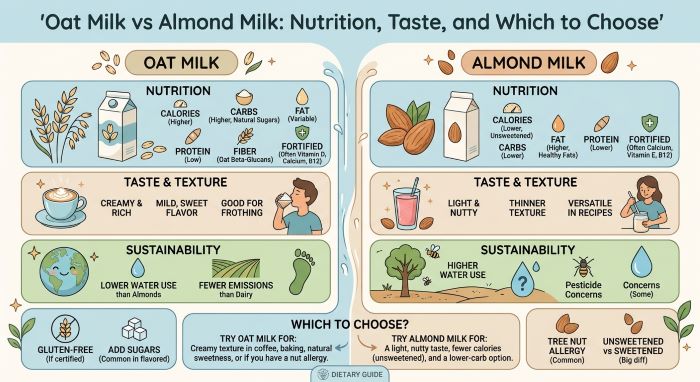
Oat Milk vs Almond Milk
Walk into any coffee shop and the barista will likely ask, “Oat or almond?” Ten years ago, almond milk ruled the dairy-free shelf. Today, oat milk has caught up and, in many cafés, pulled ahead. Both are dairy-free, both work in cereal and smoothies, and both come in sweetened and unsweetened versions. But the oat milk vs almond milk choice affects more than taste. It changes your calories, your carbs, how your latte foams, and even your environmental footprint.
This guide breaks down the key differences so you can pick the one that fits your diet, your coffee habit, and your values.
How Each Milk Is Made
Almond milk is made by soaking almonds, blending them with water, and straining out the pulp. Store-bought versions add vitamins, minerals, thickeners, and sometimes sweeteners. Most cartons contain only a small amount of almonds, often a few percent of the total.
Oat milk is made by blending oats with water, then using enzymes to break the oat starch into simpler sugars. This step gives oat milk its natural sweetness and creamy feel. The mix is then strained. Many brands add a small amount of oil, such as rapeseed or sunflower oil, for richness, plus vitamins and minerals.
Oat Milk vs Almond Milk Nutrition
Nutrition varies a lot by brand, but here is a typical comparison for one cup (240 ml) of unsweetened versions.
| Nutrient (per cup, unsweetened) | Oat Milk | Almond Milk |
|---|---|---|
| Calories | About 90 to 130 | About 30 to 40 |
| Protein | About 2 to 4 grams | About 1 gram |
| Carbohydrates | About 14 to 17 grams | About 1 to 2 grams |
| Sugar | About 4 to 7 grams (from oat starch) | 0 grams |
| Fat | About 2 to 5 grams | About 2.5 to 3 grams |
| Fiber | About 1 to 2 grams | Less than 1 gram |
| Calcium | Often fortified to about 25 to 35% DV | Often fortified to about 25 to 45% DV |
Calories
Almond milk is the clear winner if you want fewer calories. Unsweetened almond milk has about a third of the calories of oat milk. If you drink several glasses a day or use it in large smoothies, that difference adds up.
Carbs and Sugar
Oat milk has far more carbohydrates. Even “unsweetened” oat milk contains natural sugars made when enzymes break down oat starch. That gives it a higher glycemic impact than almond milk. People on low-carb or keto diets, or those managing blood sugar, usually do better with unsweetened almond milk.
Protein
Neither is a strong protein source compared to cow’s milk, which has about 8 grams per cup, or soy milk, which has about 7. Oat milk has a slight edge over almond milk. If protein matters to you, consider soy or pea milk instead, or look for a protein-fortified version.
Fiber
Oat milk contains some beta-glucan, a soluble fiber found in oats. Beta-glucan is linked to lower LDL cholesterol when eaten in larger amounts, though one cup of oat milk provides only a small dose.
Vitamins and Minerals
Most popular brands of both milks are fortified with calcium and vitamin D, and often vitamin B12 and vitamin A. Check the label, since fortification varies by brand. Homemade versions are not fortified.
Taste and Texture
Almond milk tastes light and slightly nutty. It is thin and watery compared to dairy milk. Some people love its clean taste in cereal and smoothies. Others find it too thin in coffee.
Oat milk tastes mild, a little sweet, and a bit like oatmeal. It is creamier and fuller, closer to whole or 2% dairy milk. That richness is why many people who dislike almond milk switch to oat milk.
In Coffee: Which Foams Better?
This is where the oat milk vs almond milk debate gets settled for many people. Oat milk wins in coffee.
- Oat milk steams into smooth, silky microfoam, especially barista editions made for coffee shops. It blends into espresso without separating and adds a gentle sweetness.
- Almond milk can be hard to froth well. The foam is often thin and fades fast. It can also split or curdle in hot, acidic coffee.
Barista editions of almond milk exist and do better than regular cartons, but oat milk is still the favorite for lattes and cappuccinos.
Cooking and Baking
Both work as one-to-one swaps for dairy milk in most recipes.
- Oat milk is great in creamy soups, sauces, pancakes, and baked goods where you want richness. Its natural sweetness can show up in savory dishes, so pick unsweetened.
- Almond milk works well in smoothies, overnight oats, and baking where a lighter liquid is fine. Its low calorie count makes it popular for everyday use.
Allergies and Dietary Needs
- Tree nut allergy: Avoid almond milk. Oat milk is the safer choice.
- Gluten sensitivity or celiac disease: Oats do not contain gluten by nature, but they are often processed alongside wheat. Choose oat milk labeled certified gluten-free.
- Low-carb or keto: Unsweetened almond milk fits much better.
- Weight loss: Unsweetened almond milk saves calories.
- Need more fiber: Oat milk has a slight edge.
Environmental Impact
Both plant milks have a lower carbon footprint than dairy milk. But they differ in one big way: water.
Almonds need a lot of water to grow, and most of the world’s almonds come from California, a state that often faces drought. Studies, including a widely cited 2018 analysis from the University of Oxford, found that almond milk uses far more water per liter than oat milk.
Oats need much less water and grow well in cooler climates. Oat milk also tends to have low land use and greenhouse gas emissions.
If water use matters to you, oat milk comes out ahead in the oat milk vs almond milk comparison. Both are still better choices for the climate than dairy milk.
Price
Prices vary by brand and store, but oat milk often costs a bit more than almond milk, especially barista editions. Store brands of both can cut the cost a lot.
Which Should You Choose?
| If You Want | Pick |
|---|---|
| Lowest calories | Unsweetened almond milk |
| Creamy texture | Oat milk |
| Best latte foam | Oat milk (barista edition) |
| Low carb or keto | Unsweetened almond milk |
| Nut-free | Oat milk |
| Lower water footprint | Oat milk |
| A light smoothie base | Almond milk |
Many households keep both. Almond milk works for smoothies and cereal, and oat milk goes in coffee.
Tips for Buying Plant Milk
- Choose unsweetened when you can. Sweetened versions can have 10 grams or more of added sugar per cup.
- Check fortification. Look for calcium, vitamin D, and B12 on the label.
- Read the ingredient list. Shorter lists usually mean fewer additives.
- Shake well. Plant milks separate, so give the carton a good shake.
- Watch the date. Once opened, most plant milks last 7 to 10 days in the fridge.
Common Questions About Oat Milk vs Almond Milk
Is oat milk healthier than almond milk? Neither is healthier for everyone. Almond milk is lower in calories and carbs. Oat milk has slightly more protein and fiber.
Does oat milk spike blood sugar? It can have a higher impact than almond milk because of its natural sugars. People with diabetes should check with their doctor and read labels.
Can I make either milk at home? Yes. Blend soaked almonds or rolled oats with water and strain. Homemade versions lack fortification and spoil faster.
Is almond milk good for kids? It is low in protein and calories, so it is not a full replacement for dairy milk for young children. Ask your pediatrician.
A Simple Taste Test at Home
The best way to settle oat milk vs almond milk for your own kitchen is a quick taste test. Buy small cartons of unsweetened versions of each. Try them plain, in your morning coffee, and in a bowl of cereal. Note which one you like better in each use. Many people discover they prefer oat milk in hot drinks and almond milk cold, which is why keeping both on hand is so common.
If you are trying a plant milk for health reasons, look at the label of your favorite brand, since nutrition can vary widely. The general oat milk vs almond milk patterns in this guide hold true, but one brand of oat milk may have twice the sugar of another, and some almond milks add extra protein.
Final Thoughts
The oat milk vs almond milk choice depends on your goals. Almond milk is light, low in calories, and great for low-carb diets. Oat milk is creamy, foams beautifully in coffee, and uses far less water to produce. Choose unsweetened and fortified versions of either one, and match the milk to how you use it. Once you know the oat milk vs almond milk trade-offs, your next trip down the dairy-free aisle gets much easier.
Key Takeaways
- Unsweetened almond milk has about 30 to 40 calories per cup, while oat milk has about 90 to 130.
- Oat milk has more carbs and natural sugars, so almond milk is better for low-carb and keto diets.
- Oat milk is creamier and froths much better for lattes and cappuccinos.
- Neither is high in protein. Soy or pea milk is better if protein matters.
- Avoid almond milk with a tree nut allergy. Choose certified gluten-free oat milk if you avoid gluten.
- Almond milk uses much more water to produce than oat milk, though both have lower emissions than dairy.
- Pick unsweetened, fortified versions to get calcium and vitamin D without added sugar.
- Many households use almond milk for smoothies and cereal and oat milk for coffee.