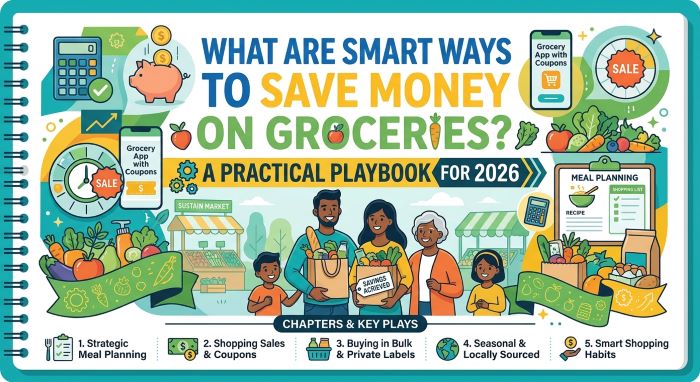
What Are Smart Ways to Save Money on Groceries?
Your grocery receipt tells a story. It shows what you planned to buy, what caught your eye at the end of the aisle, and what you threw away last week and bought again. If you have looked at that receipt and asked, “What are smart ways to save money on groceries?” you are not alone. Food is one of the few big costs you can change this week, not next year.
Prices are still climbing in 2026. The USDA’s October 2026 outlook expects food-at-home prices to rise about 2.3 percent this year. Some categories are rising much faster. Beef and veal are forecast to climb about 8.7 percent, sugar and sweets about 6.5 percent, and fresh vegetables about 5.8 percent. The good news is that most savings come from habits, not from luck. Below are the methods that work, grouped by when you use them: before you shop, in the store, and after you get home.
Before You Leave the House
Most money is saved or lost before you touch a cart. If you want to know what are smart ways to save money on groceries, start here. A few minutes of planning can cut your bill more than any coupon.
Take Stock of What You Have
Open your fridge, freezer, and pantry before you write a list. Many people buy a second jar of something they already own. Write down what needs to be used soon, such as half a bag of spinach or leftover rice. Build your first few meals around those items.
Plan Meals for the Week
A meal plan does not need to be fancy. Pick five or six dinners, and choose a couple of lunches you can repeat. Plan for one “leftovers night” so food does not go to waste.
Here are a few tips that make meal planning easier:
- Share ingredients across meals. If you buy cilantro for tacos, plan a rice bowl later in the week that uses the rest.
- Cook once, eat twice. A big pot of chili can be dinner on Monday and lunch on Wednesday.
- Plan around sales. Check your store’s weekly ad first, then pick meals that use what is on sale.
Write a List and Stick to It
A list is your best defense against impulse buys. Group it by store section so you move through the store fast and spend less time looking at things you do not need. Many store apps let you build a list and see prices as you go, which helps you stay within a budget.
Set a Weekly Budget
Decide how much you will spend before you shop. Some people bring cash for groceries so they cannot go over. Others track spending in an app. Either way, a number in your head changes how you shop.
Check Store Hours Around Holidays
Holiday weeks bring big meals and bigger bills. Plan your trip so you are not stuck paying convenience store prices for a missing ingredient. Store hours often change on major holidays, so check ahead. For example, if you plan a last-minute run on Thursday, November 26, look up Is Walmart Open on Thanksgiving 2026? before you head out.
Choosing Where to Shop
Where you shop can matter as much as what you buy. Many lists of what are smart ways to save money on groceries skip this step, but it is one of the easiest wins. The same cart can cost very different amounts at two stores a mile apart.
Try a Discount Grocer
Stores like Aldi, Lidl, and other discount chains keep costs low by stocking fewer brands, using their own labels, and keeping stores simple. Many shoppers find their weekly bill drops when they move most of their list to a discount grocer and buy only a few items elsewhere.
Compare Store Brands
Store brands, also called private labels, often cost much less than name brands. In many cases, they come from similar factories and use similar ingredients. Try the store version of staples like flour, sugar, canned beans, pasta, milk, and frozen vegetables. If you do not like one, go back to the name brand for that item only.
Use Warehouse Clubs With Care
Costco, Sam’s Club, and BJ’s can save you money on items you use a lot, like paper goods, coffee, rice, and frozen chicken. They can also cost you money if you buy more than you can use before it spoils. A membership pays off when you shop there often and buy items you would buy anyway.
Consider Delivery and Pickup Programs
Online ordering can help some shoppers save. When you order online, you see a running total and are less likely to grab extra items. Walmart+ costs $98 a year or $12.95 a month and includes free delivery from your store on orders of $35 or more. If you already shop at Walmart each week, that can save you time and gas. If you rarely order, the fee may cost more than it saves.
Inside the Store
Once you are in the aisle, small choices add up. Here is what to watch for, and why these habits rank high when people ask what are smart ways to save money on groceries.
Look at the Unit Price
The shelf tag shows the price per ounce, pound, or count. This is the best way to compare sizes and brands. A bigger box is not always the better deal. Sometimes the smaller size costs less per ounce, mostly when it is on sale.
Shop the Edges, Then the Middle
The outer edges of most stores hold fresh foods: produce, meat, dairy, and bread. The middle aisles hold packaged foods, which often cost more per serving. Start with the edges, then go to the middle aisles only for items on your list.
Look High and Low
Stores place the priciest items at eye level. Cheaper store brands and bulk options are often on the top or bottom shelf. Take a second to look up and down.
Buy Produce in Season
Fruits and vegetables cost less when they are in season and grown closer to home. In the fall, look for apples, squash, sweet potatoes, and cabbage. In summer, look for berries, corn, tomatoes, and zucchini. Out-of-season produce has to travel farther, and you pay for that trip.
Do Not Skip Frozen and Canned
Frozen fruits and vegetables are picked and frozen at their peak. They keep for months, so you waste less. Canned beans, tomatoes, and fish are cheap, shelf-stable, and easy to cook with. With fresh vegetables forecast to rise about 5.8 percent in 2026, frozen and canned options are a smart backup.
Rethink the Protein
With beef prices forecast to rise about 8.7 percent this year, protein is one of the best places to save. Try these swaps:
| Instead of | Try | Why It Helps |
|---|---|---|
| Steak or ground beef every night | Chicken thighs, pork shoulder, or ground turkey | Lower price per pound |
| Meat in every meal | Beans, lentils, eggs, or tofu a few nights a week | Much lower cost per serving |
| Pre-cut, boneless meats | Whole chickens or bone-in cuts | You pay less for less labor |
| Fresh fish fillets | Frozen fish or canned tuna and salmon | Lower price and less waste |
Apps, Coupons, and Rewards
Technology can stretch your budget with little effort. Here is how to use it without getting lost in the details.
Use Your Store’s App
Most grocery chains offer digital coupons and member prices through their apps. Clip deals before you shop, and they apply at checkout. Many apps also track your purchases and send offers for items you buy often.
Try Cash-Back Apps
Apps like Ibotta and Fetch give cash back or points when you scan your receipt or link a loyalty card. The amounts per item are small, but they add up over a year.
Stack Your Savings
Stacking means using more than one discount on the same item. You might combine a store sale, a digital coupon, and a cash-back offer. It takes a bit of practice, but it can lead to large savings on items you buy often.
After You Get Home
The money you save at the store can vanish if food spoils in the fridge. Any honest answer to what are smart ways to save money on groceries has to include cutting waste. Here is how to make every dollar count.
Store Food the Right Way
- Keep berries dry and unwashed until you eat them.
- Store herbs like flowers, with stems in a glass of water.
- Wrap celery in foil to keep it crisp.
- Keep potatoes and onions apart, since onions can make potatoes sprout faster.
Use the Freezer as a Savings Tool
Freeze bread, cooked rice, sauces, ripe bananas, and extra meat before they go bad. Label everything with the date. A full freezer gives you quick meals that keep you away from takeout.
Practice “First In, First Out”
When you unpack groceries, move older items to the front of the shelf and put new items in back. This simple step keeps food from getting lost and wasted.
Cook From Scratch More Often
Cooking at home costs much less than takeout or meal kits. Even easy meals like pasta, stir-fries, soups, and sheet-pan dinners can feed a family for a few dollars per serving.
Turn Leftovers Into New Meals
Leftover chicken becomes tacos or soup. Stale bread becomes croutons or French toast. Vegetable scraps become broth. Thinking this way cuts waste and stretches your food further.
Common Mistakes to Avoid
Even careful shoppers fall into a few traps.
- Shopping hungry. You will buy more snacks and treats.
- Buying in bulk without a plan. A huge bag of produce is not a deal if half of it rots.
- Chasing every coupon. A coupon for something you would not buy is not savings.
- Ignoring the receipt. Pricing errors happen. Check your receipt before you leave the store.
- Paying for convenience you do not need. Delivery fees, tips, and markups add up if you order too often.
Putting It All Together
So, what are smart ways to save money on groceries? They fall into three simple parts: plan before you shop, choose stores and items with care, and waste less once you get home. You do not need to use every tip at once. Pick two or three that fit your life, try them for a month, and see how your receipt changes.
When friends ask what are smart ways to save money on groceries, the most honest answer is this: the best savings come from habits you will keep. A meal plan you follow beats a coupon binder you never open. A freezer you use beats a bulk deal that spoils.
Families who learn what are smart ways to save money on groceries often save hundreds of dollars a year without giving up good food. With prices still rising in 2026, those savings matter more than ever. Start with your next trip. Take stock, write a list, check the unit prices, and see what you can keep in your wallet.
Key Takeaways
- The USDA expects food-at-home prices to rise about 2.3 percent in 2026, with beef, sweets, and fresh vegetables rising faster.
- Check your fridge and pantry, plan meals, and write a list before every trip.
- Set a weekly grocery budget and shop fewer times each week to cut impulse buys.
- Discount grocers and store brands can lower your bill without hurting quality.
- Compare unit prices, look on high and low shelves, and buy produce in season.
- Swap some beef for chicken, pork, beans, lentils, eggs, or frozen fish to save on protein.
- Use store apps, digital coupons, and cash-back apps, and stack deals when you can.
- Store food well, use your freezer, and turn leftovers into new meals to cut waste.
- Check store hours around holidays so you avoid costly last-minute runs.