Storm Door With Retractable Screen
There’s a moment every spring when the weather turns perfect. You want to open the front door and let the breeze in, but you don’t want flies, mosquitoes, or the neighbor’s cat walking into the living room. Then winter comes, and you want that same doorway to block cold drafts while still letting in light.
A storm door with retractable screen solves both problems. The screen rolls up and hides inside the door frame when you don’t need it, leaving a full glass view. When you want airflow, you lower the glass and pull the screen down. No more swapping panels each season.
This guide explains how these doors work, the main types, top brands, costs, and what to look for before you buy.
What Is a Storm Door With Retractable Screen?
A storm door is a second, lighter door installed outside your main entry door. It protects the main door from weather, adds a layer of insulation, and lets light in.
A traditional storm door with screen uses a separate screen panel that you swap with a glass panel each season. A retractable screen model builds the screen into the door itself. The screen rolls up into a hidden cassette, usually at the top of the door, and comes down only when you want it.
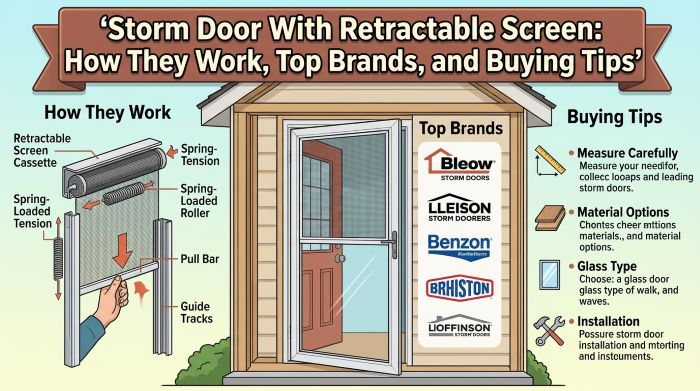
How It Works
Most retractable designs follow the same basic idea:
- Glass panels slide. The upper glass panel slides down, or the lower panel slides up, to open the door for ventilation.
- The screen follows. As the glass moves, the screen unrolls from its housing and covers the open area.
- Close it back up. Slide the glass back into place, and the screen rolls back into the housing.
The result is a door that looks like a full-view glass storm door most of the time, but turns into a screen door in seconds.
Types of Storm Doors
| Type | Description | Best For |
|---|---|---|
| Full-view | One large glass panel, with interchangeable screen | Showing off your main door |
| Mid-view | Glass on top, solid panel on the bottom | Homes with kids and pets |
| High-view | Large glass area with a small solid section at the bottom | A balance of view and durability |
| Ventilating | Sliding glass panels with a fixed screen | Frequent airflow |
| Retractable screen | Hidden roll-up screen with sliding glass | Year-round flexibility |
A storm door with retractable screen usually falls into the full-view or ventilating category, with the added convenience of the hidden screen.
Benefits of a Retractable Screen
Why pick a retractable model over a regular storm door?
- No seasonal swaps. You never need to store a screen panel in the garage again.
- Better view. When the screen is rolled up, the glass stays clear and clean.
- Longer screen life. Hidden screens are protected from sun, rain, and pets when not in use.
- Quick airflow. Open the glass and get a breeze in seconds.
- Clean look. No visible screen frame, which keeps the front of your home looking tidy.
Possible Drawbacks
- Higher price than basic storm doors
- More moving parts, which can need occasional adjustment
- Screen damage from pets or kids pushing on it, though replacement screens are available
Top Brands to Consider
Several major brands sell storm doors with built-in retractable screens.
Larson
Larson is one of the best-known storm door brands in the US. Its Screenaway line uses a retractable screen that rolls away when you don’t need it. Many Larson models are sold at big-box home improvement stores and come in several colors and styles.
Pella
Pella’s storm doors include models with Rolscreen retractable screens. The screen rolls up out of sight when you close the glass and comes down when you open it.
Andersen
Andersen offers storm doors with retractable insect screens across several of its lines. These doors often feature quick-install systems and a range of hardware finishes.
Other Options
You’ll also find retractable screen doors made as stand-alone units. A retractable screen door mounts inside your existing door frame without a full storm door. It’s a simpler option if you only want a screen and don’t need the insulation or weather protection of a storm door.
Storm Door vs. Retractable Screen Door
These two products sound similar, but they do different jobs.
| Feature | Storm Door With Retractable Screen | Retractable Screen Door Only |
|---|---|---|
| Glass panel | Yes | No |
| Weather protection | Yes | No |
| Insulation | Some | None |
| Screen | Built in, rolls up | Rolls to the side or up |
| Security | Often includes locks | Limited |
| Cost | Higher | Lower |
If you want year-round use, go with a storm door. If you only want bug protection in warm months, a retractable screen door may be enough.
How Much Does a Storm Door With Retractable Screen Cost?
Prices for a storm door with retractable screen depend on the brand, materials, size, and features.
- Door only: About $300 to $800 for most retractable models at home improvement stores. High-end or custom doors can cost more.
- Professional installation: Usually $150 to $400, depending on your area and door condition.
- Extras: Upgraded hardware, keyed deadbolts, and decorative glass add to the price.
Features to Look For
When shopping, compare these features:
- Frame material: Aluminum is light and rust-resistant. Steel-reinforced cores add strength. Vinyl resists dents.
- Glass type: Tempered safety glass is standard. Low-E glass helps with energy efficiency.
- Screen quality: Look for durable mesh. Pet-resistant screens are available for homes with dogs or cats.
- Closer: A pneumatic closer stops the door from slamming. Some doors have two closers for extra control.
- Hardware and locks: Look for a keyed lock or deadbolt for security.
- Color and style: Match your home’s trim and front door.
- Warranty: Check coverage on the frame, glass, screen, and hardware.
Measuring for a Storm Door
Getting the size right matters. Here’s a simple way to measure:
- Measure width between the inside edges of the brick molding or exterior trim at the top, middle, and bottom. Use the smallest number.
- Measure height from the top of the opening to the threshold on both sides. Use the smaller number.
- Check the hinge side. Decide which side you want the door to open from. Most doors can be set up for left or right swing.
- Look for clearance. Make sure the main door’s handle won’t hit the storm door’s glass when both are closed.
Standard storm doors fit 32-inch and 36-inch openings, with heights around 80 inches.
DIY vs. Professional Installation
Many homeowners install storm doors themselves in an afternoon. You’ll need a drill, level, tape measure, hacksaw, and a helper.
DIY makes sense if:
- Your door frame is square and in good shape
- You’re comfortable with basic tools
- The door is a standard size
Hire a pro if:
- The frame is out of square or damaged
- You want custom sizing
- You’d rather have the work warrantied
Retractable screen models can take a bit more care during installation, since the screen housing needs proper alignment to roll smoothly.
Maintenance Tips
A few simple habits keep your door working well:
- Clean the glass and screen with mild soap and water.
- Wipe the screen tracks to remove dirt and debris.
- Lubricate hinges and moving parts with a silicone spray once or twice a year.
- Check the closer and adjust tension if the door slams or doesn’t close fully.
- Inspect weatherstripping and replace it if it cracks.
- Roll up the screen during storms to protect it from wind damage.
Upgrading Other Doors Around the House
If you’re improving your home’s entryways, don’t forget the garage. Modern garage door openers bring convenience and better security, but programming remotes and keypads can be tricky. Our guide on How to Program LiftMaster Garage Door Opener walks you through the steps.
Final Thoughts
A storm door with retractable screen gives you the best of both worlds: clear glass in winter and a breezy screen in summer, all without seasonal swaps. Brands like Larson, Pella, and Andersen offer solid options, with most models priced between $300 and $800 before installation. Measure carefully, compare features like glass type, closers, and locks, and decide whether to install it yourself or hire a pro. With a little care, your new door will protect your home and let in fresh air for years.
Key Takeaways
- A storm door with retractable screen hides the screen in a housing inside the door, so it rolls down only when you open the glass for airflow.
- It removes the need to swap glass and screen panels each season and protects the screen when it’s not in use.
- Larson’s Screenaway, Pella’s Rolscreen, and Andersen’s retractable insect screen models are popular options.
- A stand-alone retractable screen door costs less but offers no glass, insulation, or weather protection.
- Most retractable storm doors cost about $300 to $800, plus $150 to $400 for professional installation.
- Compare frame material, tempered or Low-E glass, screen quality, closers, locks, and warranty before buying.
- Measure width and height at several points and use the smallest numbers. Standard openings are 32 or 36 inches wide and about 80 inches tall.
- Clean the tracks, lubricate moving parts, and adjust the closer to keep the door working smoothly.