Crawl Space Mold Encapsulation Services
That musty smell in the hallway. The cold floors in winter. The allergy flare-ups that never quite go away. Many homeowners chase these problems for years before they look under the house. When they finally open the crawl space hatch, they find damp soil, sagging insulation, and black or white fuzzy growth on the wood.
A Crawl space is the shallow, unfinished area between the ground and the first floor of many homes. Because it sits right on the soil, it pulls in moisture, and moisture feeds mold. Crawl space mold encapsulation services fix the problem by removing the mold, sealing the space from the ground and outside air, and keeping humidity under control.
This guide explains what encapsulation is, how the process works, what it costs, and how to find a qualified crawl space specialist in your area.
Why Crawl Spaces Grow Mold
Mold needs three things: moisture, a food source, and the right temperature. Crawl spaces often have all three.
- Ground moisture: Bare dirt floors release water vapor all day long.
- Outside air: Traditional vented crawl spaces pull in warm, humid summer air. When it hits cooler surfaces, it condenses.
- Wood framing: Floor joists, subfloors, and beams give mold plenty to feed on.
- Plumbing leaks: Slow drips from pipes go unnoticed for months.
- Poor drainage: Gutters and grading that send water toward the foundation flood the space.
The Stack Effect
Air in a house rises and leaks out through the attic. As it does, it pulls air up from below. Some experts estimate that a large share of the air on your first floor can come from the crawl space. That means mold spores, odors, and humidity from under the house can end up in the rooms where you live.
Signs You Need Crawl Space Mold Encapsulation Services
Watch for these warning signs that you may need crawl space mold encapsulation services:
- Musty or earthy smells inside the house
- Visible mold on joists, beams, or insulation
- Standing water or damp soil under the house
- Sagging or wet fiberglass insulation
- Condensation on pipes or ductwork
- Soft, bouncy, or cold floors
- Rising energy bills
- Pests like termites, rodents, or crickets in the crawl space
- Worsening allergies or asthma symptoms in the home
If you notice several of these, it’s time to call a pro.
What Is Crawl Space Encapsulation?
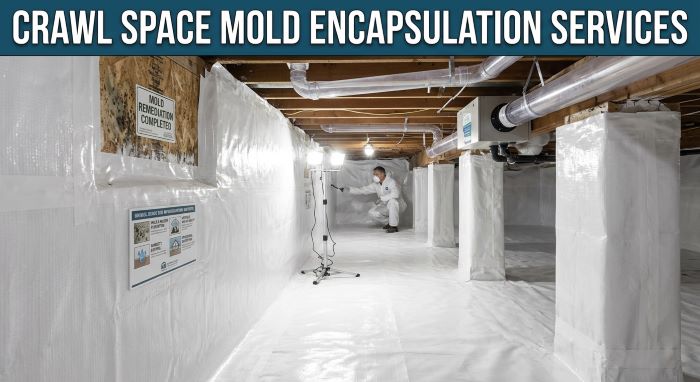
Encapsulation turns a damp, vented crawl space into a sealed, dry area that behaves more like part of the house. A typical job includes:
- Inspection: The contractor checks moisture levels, mold growth, insulation, drainage, and structural damage.
- Mold remediation: Mold is cleaned, treated with an antimicrobial, and sometimes removed with sanding or soda blasting. Badly damaged wood may need replacing.
- Debris removal: Old insulation, trash, and loose debris come out.
- Drainage fixes: If water enters the space, crews may install a drain system and sump pump.
- Vent sealing: Foundation vents and gaps are sealed to block humid outside air.
- Vapor barrier: A thick plastic liner, often 10 to 20 mil, covers the floor and runs up the walls. Seams are taped and sealed.
- Wall insulation: Rigid foam board on the foundation walls helps control temperature.
- Dehumidifier: A crawl space dehumidifier keeps relative humidity in a safe range, usually below 60 percent and ideally between 30 and 50 percent.
Encapsulation vs. a Vapor Barrier
A basic vapor barrier is just a sheet of plastic on the dirt floor. It helps, but it doesn’t seal vents or control humidity. Full encapsulation seals the entire space, which gives much better long-term moisture control.
| Feature | Basic Vapor Barrier | Full Encapsulation |
|---|---|---|
| Floor covered | Yes | Yes |
| Walls covered | No | Yes |
| Vents sealed | No | Yes |
| Dehumidifier | No | Usually |
| Mold prevention | Limited | Strong |
| Typical cost | Lower | Higher |
How Much Do Crawl Space Mold Encapsulation Services Cost?
Costs vary by the size of the space, how much mold is present, and what repairs are needed. Here are common ranges reported by contractors and home service sites:
| Service | Typical Cost Range |
|---|---|
| Inspection | Free to $300 |
| Mold remediation only | $500 to $4,000 |
| Basic vapor barrier | $1,000 to $4,000 |
| Full encapsulation | $5,000 to $15,000 |
| Sump pump and drainage | $1,500 to $5,000 |
| Crawl space dehumidifier | $1,200 to $3,000 installed |
| Structural repairs (joists, supports) | $1,000 to $10,000 or more |
Get at least three written quotes for crawl space mold encapsulation services. Prices can vary widely, and the cheapest bid isn’t always the best value.
Is It Worth It?
Encapsulation is a big investment, but it can pay off through:
- Lower heating and cooling bills
- Better indoor air quality
- Less risk of wood rot and structural damage
- Fewer pests
- Higher home value and easier home sales
Crawl Space Repair Near Me: What Else Might Need Fixing
When you search for crawl space repair near me, you may find that mold is only part of the problem. A full inspection often turns up related issues:
- Sagging floors: Weak or rotted joists may need sistering or new supports.
- Foundation cracks: These let in water and should be sealed.
- Failed insulation: Wet fiberglass batts lose their value and hold moisture.
- Plumbing leaks: Leaks should be fixed before sealing the space.
- Pest damage: Termites and rodents can damage wood and wiring.
A good crawl space repair company will address these first, so the encapsulation lasts.
How to Choose Crawl Space Encapsulation Contractors
Picking the right contractor matters as much as the materials. Here’s what to look for when comparing crawl space encapsulation contractors:
- Licensing and insurance: Confirm state licensing where required, plus liability and workers’ comp insurance.
- Mold training: Ask about certifications, such as IICRC training for mold remediation.
- Written inspection: A good pro shows you photos, moisture readings, and a written plan.
- Clear quotes: The quote should list liner thickness, insulation type, dehumidifier model, and drainage work.
- Warranty: Look for warranties on the liner, dehumidifier, and workmanship.
- Reviews: Check Google, Angi, and the Better Business Bureau for patterns.
- No high pressure: Avoid contractors who push for a same-day signature or scare you about “toxic mold.”
Questions to Ask a Crawl Space Specialist
- How will you treat the existing mold?
- What thickness is the vapor barrier, and does it run up the walls?
- Will you seal the vents and rim joists?
- What dehumidifier do you recommend, and how is it drained?
- Do I need a sump pump or drainage system?
- What does the warranty cover, and for how long?
- Will you test humidity after the job?
Finding Crawl Space Encapsulation Near Me
Searching for crawl space encapsulation near me will bring up a mix of national networks and independent local companies. Both can do great work.
- National networks: Groups like Groundworks and other foundation repair brands operate in many states and often offer standard warranties.
- Local specialists: Smaller companies may offer faster scheduling, flexible pricing, and deep knowledge of local soil and weather.
- Mold remediation firms: Some focus on mold removal and partner with encapsulation crews.
For local crawl space mold removal, choose a company that handles both the mold and the moisture problem. Removing mold without fixing the moisture source means it will come back.
Can You DIY Crawl Space Encapsulation?
Handy homeowners sometimes tackle a basic vapor barrier themselves. But full encapsulation is tougher than it looks.
DIY may work if:
- The space is easy to access and has enough headroom.
- There’s little or no mold.
- There’s no standing water or drainage issue.
Hire a pro if:
- Mold covers large areas.
- There’s water intrusion or structural damage.
- The space is tight, wet, or has electrical hazards.
Working in crawl spaces involves tight spaces, poor air, and possible mold exposure. Always wear an N95 or better respirator, gloves, and eye protection.
How to Keep Your Crawl Space Dry After Encapsulation
Once your crawl space mold encapsulation services are complete, a few habits help the results last:
- Check the dehumidifier filter and drain line a few times a year.
- Keep gutters clean and downspouts pointed away from the house.
- Make sure soil slopes away from the foundation.
- Inspect the liner for tears after any plumbing or HVAC work.
- Use a hygrometer to track humidity levels.
- Schedule a yearly inspection with your contractor.
Final Thoughts
Crawl space mold encapsulation services solve more than a mold problem. They seal out the moisture that causes mold, protect your home’s structure, and improve the air your family breathes. Start with a thorough inspection, get several written quotes, and choose a contractor who fixes the moisture source, not just the symptoms. A dry, sealed crawl space is one of the best long-term investments you can make in your home.
Key Takeaways
- Crawl spaces grow mold because of ground moisture, humid outside air, wood framing, leaks, and poor drainage. The stack effect can carry that air into your living space.
- Warning signs include musty odors, visible mold, damp soil, sagging insulation, cold floors, pests, and rising energy bills.
- Crawl space mold encapsulation services usually include inspection, mold remediation, debris removal, drainage fixes, vent sealing, a 10 to 20 mil vapor barrier, wall insulation, and a dehumidifier.
- Full encapsulation typically costs $5,000 to $15,000, while mold remediation alone often runs $500 to $4,000.
- Choose licensed, insured crawl space encapsulation contractors with mold training, clear written quotes, strong warranties, and good reviews.
- Ask about liner thickness, vent sealing, dehumidifier choice, drainage needs, and warranty terms before you sign.
- DIY may work for a simple vapor barrier, but hire a pro for heavy mold, water problems, or structural damage.
- Keep the space dry after encapsulation by maintaining the dehumidifier, gutters, and grading, and by tracking humidity.