Gabagool
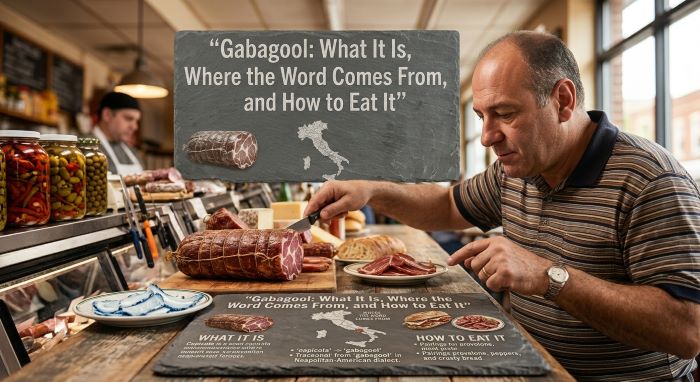
Picture Tony Soprano standing at his open fridge late at night, pulling paper-thin slices of cured pork straight from a deli package. He calls it gabagool, and millions of viewers who had never heard the word before learned it from him. The meat itself is centuries older than the show. It is capicola, a dry-cured cut from the pig’s neck and shoulder, made in many parts of Italy and loved in Italian American delis. This guide explains what the meat is, how it gets its flavor, why the name sounds the way it does, and how to serve it at home.
The Short Answer
Gabagool is an Italian American way of saying capicola, also spelled capocollo or capicollo. In Italy it is often called coppa. All of these names refer to the same basic product: a whole pork muscle that is salted, seasoned, and dried for weeks or months, then sliced very thin.
| Name | Where It Is Used |
|---|---|
| Capocollo | Standard Italian |
| Capicollo | Campania and Calabria |
| Coppa | Northern Italy, including Piacenza |
| Capicollu | Corsica |
| Ossocollo | Veneto and Friuli Venezia Giulia |
| Capicola or capicolla | United States and Canada |
| Bondiola | Argentina, Paraguay, and Uruguay |
Where the Name Comes From
The Italian word capocollo joins two words: capo, meaning “head,” and collo, meaning “neck.” That describes the cut well. The muscle runs from the base of the pig’s head along the neck and into the shoulder.
The word gabagool comes from the south of Italy. According to the Wikipedia entry on capocollo, the form used by Italian Americans traces back to the Neapolitan word capecuollo. Working-class immigrants from Naples and nearby regions brought it to New York and the Northeast in the late 1800s and early 1900s.
How “Capicola” Turned Into a New Word
Southern Italian dialects follow sound patterns that differ from standard Italian. Three of them shaped the American word:
- Hard “c” becomes “g.” In many southern dialects, a “c” sound softens toward a “g.” Capicola starts to sound like “gabigola.”
- The final vowel drops. Speakers in Naples and the surrounding area often clip the last vowel of a word. “Gabigola” becomes “gabigol.”
- The stressed vowel shifts. The “o” stretches into an “oo” sound, which gives you the final pronunciation.
The same patterns explain other Italian American food words. Mozzarella becomes “mootz-ah-dell.” Prosciutto becomes “pruh-zhoot.” Ricotta becomes “ri-gott.” Manicotti becomes “mani-cott.”
These words survived because of history. Italy only became a single country in 1861, and for a long time most people spoke their local dialect rather than standard Italian. Immigrants who left in that era carried their dialects to America. In Italy, standard Italian later spread through schools, radio, and TV. In the immigrant neighborhoods of New Jersey and New York, the older sounds stayed alive.
The Sopranos Effect
The Sopranos ran on HBO from 1999 to 2007. The show followed a New Jersey mob boss whose family roots traced back to Avellino, near Naples. Food was central to the series. Characters gathered at the fictional restaurant Nuovo Vesuvio, argued over baked ziti, and talked about cured meats in dialect.
Tony’s love of capicola became one of the show’s running details. In one early episode, his daughter Meadow warns her grandmother not to eat it because of its fat and nitrates. Those small scenes made gabagool a pop culture shorthand for Italian American life in New Jersey. Esquire’s explainer on the word’s Sopranos fame is one of many articles written to answer the question fans kept asking.
Today the word shows up on restaurant menus, deli signs, T-shirts, and memes. Some Italian Americans enjoy it as a fond nod to their grandparents’ speech. Others feel the show turned it into a stereotype. Both views are common.
How Capicola Is Made
Traditional capicola is a dry-cured whole muscle. Unlike salami, the meat is not ground. Unlike some hams, it is not soaked in brine. The process takes time and care.
Step 1: Trim the Muscle
A butcher removes the neck and upper shoulder muscle in one piece, usually running to the fourth or fifth rib. This cut has a good mix of lean meat and fat. That marbling keeps the finished product tender.
Step 2: Salt and Season
The meat is rubbed with salt, which draws out moisture and protects it from spoiling. Many makers also add garlic, wine, black pepper, and spices. The mix depends on the region and the family recipe.
Step 3: Rest in the Cold
The salted meat rests in a cold room for days or weeks so the salt can move through the muscle.
Step 4: Season Again and Case
The salt is brushed or rinsed off. A second coat of spices goes on. Then the meat is packed into a natural casing and tied tightly with string.
Step 5: Dry and Age
The tied muscle hangs in a room with controlled temperature and humidity. Over weeks or months, it loses water, firms up, and develops a deeper flavor. Coppa Piacentina, from Piacenza, must age for at least six months.
Common Seasonings
- Black pepper
- Red pepper flakes or hot paprika
- Fennel seed
- Garlic
- Red or white wine
- Coriander, nutmeg, or anise in some recipes
Sweet Versus Hot
In American delis, capicola usually comes in two styles:
- Sweet has a mild flavor from black pepper, garlic, and gentle spices. “Sweet” here means not spicy, rather than sugary.
- Hot is coated with red pepper or paprika, giving it a red rim and a spicy kick.
Many American delis also sell cooked versions labeled “ham capicola” or “capicola ham.” These are made from a pork shoulder or ham that is cooked and coated with spices rather than dried for months. They are softer and milder than the traditional dried product. The sandwich recipe later in this guide uses this kind of thin-sliced capicola ham.
Protected Italian Versions
The European Union protects certain regional foods with special labels. A Protected Designation of Origin (PDO) means the food must come from a defined area and follow strict rules. A Protected Geographical Indication (PGI) is a similar but looser label.
| Product | Region | Protection |
|---|---|---|
| Coppa Piacentina | Emilia-Romagna (Piacenza) | PDO |
| Capocollo di Calabria | Calabria | PDO |
| Coppa de Corse | Corsica, France | PDO |
| Capocollo di Martina Franca | Apulia | PGI |
Each one has its own character. The Calabrian version often carries the heat of local chili peppers. The Piacenza version is milder and aged longer. The Corsican version depends on a careful balance of lean meat and white fat for flavor and softness.
How It Compares With Other Cured Meats
| Meat | Cut | Seasoning | Typical Texture |
|---|---|---|---|
| Capicola | Neck and shoulder | Salt plus spices, often wine and garlic | Tender and marbled |
| Prosciutto | Hind leg | Salt only | Silky and buttery |
| Salami | Ground pork | Salt, spices, often garlic | Firm and fatty |
| Pancetta | Belly | Salt and spices | Fatty, usually cooked |
| Mortadella | Ground pork, cooked | Mild spices, often pistachios | Soft and smooth |
Prosciutto usually ages much longer than capicola, often a year or more. That is one reason capicola tends to cost less per pound.
How to Buy It
A few simple tips help you pick a good product:
- Ask for it thin. At the deli counter, ask for slices so thin you can almost see through them. Thick slices taste chewy.
- Look at the marbling. Good capicola shows streaks of white fat running through deep red meat.
- Check the label. Know whether you are buying dry-cured capicola or cooked ham capicola. They taste quite different.
- Buy what you need. Freshly sliced cured meat tastes best within a few days.
- Store it well. Wrap slices in deli paper, then place them in a sealed container in the fridge.
If you live near an Italian deli, ask the staff which style they prefer. Many will let you taste a slice before you buy.
Ways to Serve It
Capicola is easy to use in everyday meals:
- Charcuterie boards. Pair it with provolone, olives, roasted peppers, and crusty bread.
- Italian subs. Layer it with salami, ham, provolone, lettuce, tomato, onion, oil, and vinegar.
- Pizza. Add slices after baking so they stay tender, or bake them on top for crisp edges.
- Pasta. Chop and crisp it in a pan, then toss with pasta, garlic, and olive oil.
- Eggs. Fold chopped slices into an omelet or frittata.
- Panini. Press it with mozzarella and pesto.
A Sandwich Worth Trying
Food Network published a crispy gabagool sandwich recipe from Good Company, a restaurant in Cleveland, Ohio. It uses thin-sliced capicola ham that is fried until crisp and topped with melted cheese.
Here is how it comes together, in short:
- Pickle banana peppers. Slice them thin and cover them with a cooled mix of vinegar, salt, sugar, garlic, and a bay leaf. Let them sit for at least three hours.
- Make a mustard sauce. The recipe’s “Company Sauce” blends eggs, yellow mustard, capers, vinegar, lemon juice, and seasonings with oil until thick.
- Prep the buns. Spread mayonnaise on hoagie buns and add shredded romaine tossed with Italian dressing.
- Crisp the meat. Shape the capicola into four mounds of about 4 ounces each and fry them until crisp on one side, about 5 minutes, then flip.
- Melt the cheese. Top each mound with pickled peppers and two slices of white American cheese. Cook until melted.
- Build the sandwich. Set each mound on a bun, spread sauce on the top half, and close it up.
The full recipe serves four and takes about 40 minutes of active work, plus pickling time.
Making It at Home
Some home cooks cure their own capicola. It is a rewarding project, but it needs care. Dry curing requires accurate salt amounts, curing salts in many recipes, and a space with steady temperature and humidity. Mistakes can allow harmful bacteria to grow. Beginners should follow a tested recipe from a trusted source and learn the basics of food safety before starting. For most people, a good deli is the easier path.
Nutrition Notes
Like most cured meats, capicola is high in protein and fat and contains a lot of salt. Many commercial products also include nitrates or nitrites as preservatives. Health groups advise eating processed meats in moderation. A few thin slices on a sandwich or board go a long way in flavor.
Common Questions
Is gabagool the same as capicola? Yes. The word is an Italian American pronunciation of capicola, also called capocollo or coppa.
What part of the pig does it come from? The neck and upper shoulder.
Is capicola cooked? Traditional capicola is dry-cured, not cooked. Some American “ham capicola” products are cooked.
Why do people say it that way? Southern Italian dialects soften hard “c” sounds, drop final vowels, and stretch the stressed vowel. Immigrants brought these patterns to America.
Did The Sopranos invent the word? No. The word was used in Italian American homes for generations. The show made it famous.
What does it taste like? Savory, slightly sweet from the fat, and lightly spiced. Hot versions add a peppery bite.
Small Word, Long Story
Gabagool is more than a funny word from a TV show. It carries the sound of Naples, the story of immigrant families in New Jersey and New York, and centuries of Italian curing tradition. The next time you order capicola at a deli counter, you will know where it comes from, how it was made, and why some people insist on calling it something else. Ask for it thin, share it with friends, and enjoy a bite of history.
Key Takeaways
- Gabagool is an Italian American pronunciation of capicola, a dry-cured pork cut.
- Capocollo means “head neck” in Italian and comes from the pig’s neck and shoulder.
- The pronunciation traces to the Neapolitan word capecuollo and Southern Italian sound patterns.
- The Sopranos (1999 to 2007) made the word famous worldwide.
- Traditional capicola is salted, spiced, cased, and dried for weeks or months.
- Coppa Piacentina, Capocollo di Calabria, and Coppa de Corse hold PDO status.
- American delis sell sweet and hot styles, plus cooked “ham capicola.”
- Serve it thin on boards, subs, pizza, pasta, or a crispy fried sandwich.