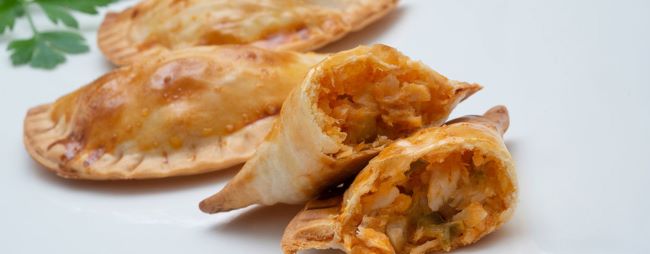
Empanada de atún shows up on menus from Argentina to Spain to Venezuela, which means finding one is rarely the problem. Finding a good one is another matter. Tuna empanadas are one of the most common fillings precisely because tuna is affordable, shelf-stable, and easy to work with at volume, which also means they are one of the fillings most likely to be made carelessly.
A rushed tuna filling tastes of canned fish and little else. A properly made one has depth from the sofrito base, brightness from the olives and peppers, and a balance of moisture that keeps the pastry from going soggy while keeping the filling from being dry. If you have been searching for the best empanada de atún near me, this guide helps you find a version that justifies the search.
What Empanada de Atún Actually Is
Empanada de atún appears across the Spanish and Latin American culinary world with enough variation that the specific version you encounter depends largely on which tradition the restaurant or vendor follows.
The Argentine version uses a filling of tuna mixed with onion, red pepper, green olive, hard-boiled egg, and sometimes tomato, all cooked briefly in olive oil to form a sofrito base before the tuna is added. The filling is enclosed in the standard Argentine empanada pastry and baked or fried. The olive and egg are structural elements, not optional additions.
The Spanish galician version, called empanada gallega de atún, is a larger format flatbread-style empanada using an olive oil and yeast-leavened dough encasing a tuna, onion, pepper, and tomato filling. This is a tray-baked preparation cut into squares rather than individual folded pockets. It is its own distinct dish and is more commonly found at Spanish restaurants than at Latin American empanada shops.
The Venezuelan version uses corn dough similar to an arepa dough rather than wheat pastry, producing a fried empanada with a different exterior texture and a filling that may include black beans alongside the tuna.
When you search for the best empanada de atún near me, knowing which tradition you want to eat from helps you identify the right restaurant or vendor and evaluate whether what you find matches the style you are looking for.
Where to Find It
Argentine empanada shops carry tuna empanadas as a standard permanent menu item. A shop that lists atún or tuna alongside beef, chicken, and spinach fillings is likely making it with the traditional Argentine sofrito-based preparation.
Spanish restaurants with Galician menus are the source for empanada gallega de atún. This preparation is significantly different from the Argentine individual empanada and requires looking specifically for Galician-style restaurants or Spanish restaurants that specify northwest Spanish cooking.
Latin American bakeries and panaderias frequently carry empanada de atún as part of their savory pastry selection. These are often casual, high-volume operations where the quality of the filling depends on whether the kitchen builds a proper sofrito or simply mixes canned tuna with mayonnaise and calls it done.
Venezuelan restaurants and areperas carry their own version of tuna empanada using corn dough rather than wheat pastry. These are worth seeking out as a distinct preparation rather than a substitute for the Argentine or Spanish versions.
Home cook and community vendors selling through Instagram and Facebook batch orders include empanada de atún regularly because it is practical to make in quantity, holds well, and has broad appeal. Home cooks who make the filling from scratch with onion, pepper, and olive produce a noticeably better result than those who use a shortcut filling.
How to Search More Effectively
A search for the best empanada de atún near me will return empanada shops and Latin American restaurants in your area. Here is how to narrow it down:
Search Google Maps for Argentine empanada shop or Spanish restaurant in your city and browse menus for tuna or atún. A menu that lists the filling components, including olive and egg for the Argentine version or tomato and pepper for the Galician version, indicates a kitchen that thinks about its fillings in detail.
Search Yelp for empanada shops or Latin American restaurants and read reviews that mention tuna empanadas specifically. Reviewers who order them will describe whether the filling was moist or dry, whether the olive and egg were present, and whether the pastry held up properly.
Search Instagram with “empanada atun” plus your city name. Both Argentine and Galician empanada accounts post photos of tuna empanadas, and the visual difference between the individual folded Argentine version and the tray-baked Galician version is immediately apparent.
Ask any empanada vendor or restaurant directly what goes into their tuna filling. A kitchen making it properly will describe a sofrito-based filling with specific ingredients. A kitchen using a shortcut will describe something much simpler.
What Good Empanada de Atún Should Look Like
Once you find a source, a few things confirm the quality.
The pastry. Golden and fully baked, with enough structure to hold the filling without becoming soggy. Tuna filling releases moisture during baking, and a properly structured pastry manages this without the base going soft. A pale or damp pastry base means either underbaking or a filling that was too wet before it went into the dough.
The filling visible when broken open. The tuna should be mixed throughout the filling rather than sitting in a single compressed layer. Visible pieces of onion, red or green pepper, and olive distributed through the tuna indicate a properly made sofrito-based filling. A uniform paste of tuna without any distinguishable components suggests the filling was not built with care.
The moisture balance. Moist enough to feel cohesive and flavorful but dry enough not to make the pastry soggy. A filling that runs out when the empanada is cut was too wet. A filling that crumbles and feels dry was either made with insufficient binding or over-baked.
The olive and egg. Present in the Argentine version and distributed through the filling. A piece of hard-boiled egg and an olive should appear in most bites rather than being confined to one area of the empanada.
The seasoning. Savory, slightly acidic from the tomato or pepper in the sofrito, and complete without needing additional salt at the table. A filling that tastes only of canned tuna without any other flavor development was not made with a proper sofrito base.
Ordering and Eating Tips
Empanada de atún works well as a starter, snack, or light meal. It is one of the milder fillings on most empanada menus, which makes it a good choice to eat alongside a spiced beef or chicken empanada where the contrast between mild and savory adds interest to the overall order.
Eat it warm rather than hot. Tuna filling has a more nuanced flavor when it is not too hot to taste properly. Five minutes of resting after baking or purchase brings the flavors into clearer focus.
For the Galician version, order it at room temperature. Empanada gallega is traditionally served at room temperature or slightly warm rather than hot, and the olive oil dough and tuna filling both taste better when not served directly from the oven.
Ask whether the empanada is baked or fried. The Argentine individual empanada is typically baked in the traditional version. Some shops offer fried versions, which have a different exterior texture. Both can be good, but knowing which you are getting helps set expectations.
Pricing Expectations
Individual empanadas de atún at an Argentine empanada shop typically run between $3 and $6 each, often priced slightly below beef versions because the ingredients are less expensive. A half dozen runs between $16 and $28. Galician-style tray empanadas at a Spanish restaurant are typically priced by the piece or by the slice, running $8 to $16 for a serving. Home cook versions are priced similarly to shop rates.
Key Takeaways
- The best empanada de atún near me is most reliably found at Argentine empanada shops with traditional menus and at Spanish restaurants specifically offering Galician-style cooking, depending on which version you want.
- Argentine tuna empanadas use a wheat pastry filled with tuna, onion, pepper, olive, and hard-boiled egg in a sofrito base. Galician empanada de atún uses an olive oil yeast dough and is baked in a tray rather than as individual folded pockets.
- A sofrito-based filling with visible components including onion, pepper, and olive is the mark of a properly made version. A uniform paste of canned tuna without other distinguishable ingredients indicates a shortcut.
- Ask any vendor what goes into their tuna filling. A specific, detailed answer is a positive quality signal.
- Search Instagram with “empanada atun” plus your city name. The visual difference between Argentine and Galician versions is clear in photos and helps you identify which style a vendor is making.
- Eat Argentine empanadas warm. Eat Galician empanada at room temperature. Both lose their best qualities when served very hot or refrigerator-cold.
- Expect to pay $3 to $6 per individual Argentine empanada and $8 to $16 per serving of Galician-style tray empanada at a Spanish restaurant.