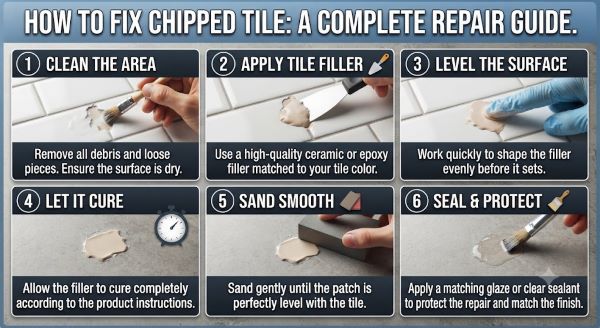
A chipped tile is one of those small home defects that becomes more noticeable the longer it sits unaddressed, especially on floors and countertops that see daily use. Knowing how to fix chipped tile depends on the severity of the damage, since a small surface chip can often be repaired in place within an hour, while more significant chips or cracks may require full tile replacement. This guide covers both approaches along with the materials and techniques that produce a genuinely invisible repair.
Assessing the Damage First
Before choosing a repair method, take a close look at the chip itself. A small, shallow chip that affects only the glaze (the glossy surface layer) on the top of the tile is the easiest type to repair convincingly. A deeper chip that exposes the tile’s body material beneath the glaze, or a chip accompanied by cracking that extends beyond the immediate chipped area, requires a more involved repair and may ultimately be better addressed through replacement rather than filling.
Check whether the tile is structurally sound beyond the chip itself by gently tapping around the damaged area. A hollow sound can indicate the tile has become loose from the subfloor or wall, which is a separate problem that filling the chip will not address and that needs to be resolved first.
How to Fix Chipped Tile: The Epoxy Filler Method
This is the most common and effective approach for small to medium chips, particularly on floor and wall tiles where exact color matching is achievable.
What you need:
- A two-part epoxy filler kit designed for tile or porcelain repair (widely available at hardware stores)
- Fine-grit sandpaper (220 grit or higher)
- A small putty knife or craft stick for application
- Rubbing alcohol and a clean cloth
- Tile-matching paint or pigment (often included in repair kits, or purchased separately to color-match)
Steps:
- Clean the chipped area thoroughly. Wipe the damaged area with rubbing alcohol to remove dust, grease, and debris, then allow it to dry completely. Any residue left in the chip will prevent the epoxy from bonding properly.
- Lightly sand the edges of the chip. This helps the epoxy filler adhere more securely and creates a smoother transition between the repaired area and the surrounding tile surface.
- Mix the epoxy filler according to the kit instructions. Most two-part epoxy products require combining a resin and hardener in equal parts and mixing thoroughly for the specified time before application.
- Tint the epoxy to match the tile color. If your kit includes color pigments, mix small amounts in gradually until the color closely matches the surrounding tile. Working in good lighting and comparing against the tile constantly during mixing produces the most accurate match.
- Apply the epoxy to the chip, slightly overfilling the area since epoxy typically shrinks marginally as it cures. Use the putty knife or craft stick to smooth the surface as close to level with the surrounding tile as possible.
- Allow the epoxy to cure fully, following the manufacturer’s specified curing time, which is often 24 hours for full hardness even though the surface may feel dry much sooner.
- Sand the cured epoxy smooth, starting with a slightly coarser grit if there is excess material to remove, then finishing with fine-grit sandpaper to blend the repair seamlessly with the tile’s surface texture.
How to Fix Chipped Tile on a Glazed Surface
For tiles with a glossy glazed finish, an additional step helps the repair blend more convincingly with the surrounding sheen.
After the epoxy has cured and been sanded smooth, apply a thin layer of clear gloss top coat (available at hardware stores, often marketed for tile or appliance touch-up repairs) over the repaired area. This restores the reflective shine that matches the glazed surface surrounding the chip, since cured epoxy alone often has a slightly different sheen than the original glaze, even when the color match is otherwise excellent.
How to Fix Chipped Tile Using a Porcelain Touch-Up Kit
Specifically designed porcelain and ceramic touch-up kits, sold under various brand names at hardware and home improvement stores, often provide a more streamlined process than generic epoxy, with pre-formulated color options designed to match common tile shades like white, almond, and bone.
These kits typically include a two-part compound similar to epoxy filler, along with detailed color-matching guides. They work particularly well for white or off-white tiles, which are common in bathrooms and kitchens, since matching white tones convincingly is more straightforward than matching tiles with complex patterns or unusual colors.
When Replacement Makes More Sense Than Filling
For chips that are large, deep, accompanied by significant cracking, or located in a highly visible area where even a well-executed repair might still be noticeable, replacing the tile entirely often produces a better long-term result.
Steps for replacing a single tile:
- Remove the grout surrounding the damaged tile using a grout saw or rotary tool with a grout removal attachment, working carefully to avoid damaging adjacent tiles.
- Break and remove the damaged tile. Using a hammer and chisel, carefully break the tile into smaller pieces starting from the center, working outward toward the edges to avoid damaging the surrounding tiles or substrate.
- Remove old adhesive or mortar from the subfloor or wall using a scraper, creating a clean, flat surface for the replacement tile.
- Apply new thin-set mortar or tile adhesive to the cleaned area, following the product’s specific application instructions.
- Press the replacement tile into place, using tile spacers if needed to maintain consistent spacing with surrounding tiles, and check that it sits flush and level with the surrounding surface.
- Allow the adhesive to cure according to the manufacturer’s specified time, typically 24 hours, before proceeding.
- Apply new grout to match the surrounding grout lines, working it into the joints and wiping away excess before it fully sets.
Finding an exact replacement tile can be challenging if the original tile is discontinued, which is worth checking before committing to the replacement approach, since a slightly mismatched replacement tile can be more visually jarring than a well-executed chip repair.
Preventing Future Chips
A few habits reduce the likelihood of future tile damage and reduce how often you need to revisit how to fix chipped tile in the same spot. Use felt or rubber pads under furniture legs and appliances to prevent direct contact with tile surfaces. Avoid dropping heavy or sharp objects directly onto tile flooring or countertops, and address minor chips promptly before moisture or debris can work into the damaged area and worsen it over time.
Key Takeaways
- Knowing how to fix chipped tile starts with assessing the severity: small surface chips affecting only the glaze are repairable in place, while deeper damage or structural looseness may require replacement.
- The epoxy filler method is the most common repair approach, involving cleaning, sanding, color-matching, application, curing, and final smoothing for a seamless result.
- A clear gloss top coat applied after the epoxy cures helps match the sheen of glazed tile surfaces, since cured epoxy alone often has a slightly different finish than the original glaze.
- Porcelain touch-up kits with pre-formulated color matches work particularly well for common white and off-white tile shades found in many bathrooms and kitchens.
- Full tile replacement makes more sense for large, deep, or highly visible chips, though finding an exact match for discontinued tile lines can be a genuine challenge.
- Checking for a hollow sound when tapping around a chipped tile can reveal loose subfloor adhesion, a separate issue that needs addressing before any cosmetic repair.
- Most epoxy and filler repairs require a full 24-hour cure time for genuine hardness, even though the surface may feel dry much sooner.
- Preventive habits like using felt pads under furniture and addressing minor chips promptly reduce both the frequency and severity of future tile damage.