Soft shell crab occupies a unique place in seafood cuisine, prized specifically for a narrow window in the crab’s natural molting cycle when its entire body, shell included, can be eaten without the usual labor of cracking and picking meat from a hard exoskeleton. Understanding what soft shell crab actually is, how it ends up on your plate, and how to cook it well opens up one of the more rewarding seasonal seafood experiences available.
What Is Soft Shell Crab?
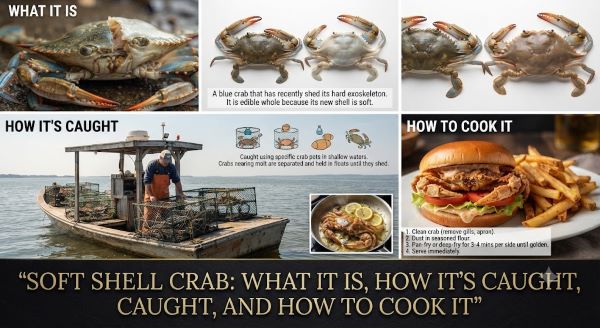
Soft shell crab is not a separate species of crab. It is a regular blue crab (most commonly, though other crab species are used in some regions) caught during the brief window immediately after it molts its old, hard exoskeleton and before the new shell has had time to harden. During this window, typically lasting only a few hours to a day, the crab’s entire body, including what would normally be an inedible hard shell, is soft enough to eat in its entirety.
Crabs molt periodically throughout their lives as they grow, shedding an old shell that has become too small and developing a larger one underneath. Watermen who harvest soft shell crab specifically monitor crabs in shedding tanks, removing them from the water as soon as they molt and before the new shell has hardened, which requires close, continuous monitoring since the soft shell window closes quickly.
When Is Soft Shell Crab Season?
Soft shell crab season generally runs from late spring through early fall in the United States, with peak availability typically occurring between May and September, particularly in the Chesapeake Bay region, which remains the most significant source of soft shell crab in the country. Blue crabs molt more frequently during warmer months, which is why the season aligns with this period rather than being available year-round, and why soft shell crab carries a genuinely seasonal character distinct from many other seafood items that are available consistently throughout the year.
How Soft Shell Crab Is Harvested
The process of harvesting soft shell crab requires significant hands-on attention from watermen. Crabs showing signs of an imminent molt, identified by experienced watermen through subtle changes in shell color and condition along the edge of the swimming legs, are placed in specialized floating or land-based shedding tanks with circulating water. These crabs are monitored closely, sometimes checked multiple times per day, since the soft shell window after molting is brief, and a crab left too long after molting will begin to harden again, losing the soft shell quality that defines the product.
Once a crab has molted and is confirmed soft, it’s removed from the water promptly and typically processed (cleaned and prepared) shortly after harvest, since soft shell crab has a limited shelf life compared to hard shell crab and is often sold either fresh within a day or two of harvest, or frozen to preserve quality for longer storage and shipping to markets further from the harvest region.
How to Buy Soft Shell Crab
Fresh soft shell crab is available seasonally, typically sold live or recently cleaned at seafood markets, particularly in coastal regions close to harvest areas like the Chesapeake Bay. Live soft shell crab should show some movement and should smell clean and oceanic rather than having any strong ammonia or off odor, which would indicate the crab is no longer fresh.
Frozen soft shell crab extends the season’s availability significantly and is widely available at grocery stores and seafood markets even outside the primary harvest region and season. Quality frozen soft shell crab, properly frozen shortly after harvest and cleaning, can be very close to fresh in eating quality once properly thawed and cooked.
Cleaned vs. uncleaned. Soft shell crab requires cleaning before cooking, removing the gills, the apron (a flap on the underside), and the face, including the eyes and mouth area. Many fish markets and grocery stores sell soft shell crab already cleaned, which is significantly more convenient for home cooks, though some specialty markets sell live, uncleaned crab for those who prefer to clean it themselves immediately before cooking.
How to Clean Soft Shell Crab (If Needed)
If you’ve purchased live, uncleaned soft shell crab, cleaning it before cooking involves a few specific steps. Using kitchen shears, cut off the face of the crab just behind the eyes, removing the eyes and mouth area entirely. Lift the pointed ends of the top shell on each side and remove the feathery gills underneath, which are not edible and have an unpleasant texture if left in. Flip the crab over and pull off the small triangular or T-shaped apron flap on the underside, discarding it. Rinse the cleaned crab briefly under cold water and pat dry before cooking.
How to Cook Soft Shell Crab
Pan-frying is the most classic and widely used method. Dredge the cleaned crab in seasoned flour, then pan-fry in butter or a neutral oil with a high smoke point over medium-high heat for roughly three to four minutes per side, until golden brown and crispy on the exterior. The legs will crisp up dramatically and become genuinely edible and enjoyable to eat, which is part of the appeal of properly cooked soft shell crab.
Deep-frying produces an even crispier exterior and is a common preparation method at restaurants, particularly for soft shell crab sandwiches, a popular regional dish in areas with strong soft shell crab traditions like Maryland and the broader Mid-Atlantic.
Grilling offers a lighter preparation, brushing the cleaned crab with oil and seasoning before grilling briefly over direct heat, which works particularly well for crab destined for a salad or a lighter summer dish rather than a heartier fried preparation.
Sautéing with garlic, butter, and white wine is a lighter pan-cooking method that lets the crab’s natural sweetness come through more clearly than a heavily breaded fried preparation, often finished with a squeeze of lemon just before serving.
Popular Soft Shell Crab Dishes
The soft shell crab sandwich, typically fried and served on a bun with lettuce, tomato, and a simple sauce like tartar or remoulade, is one of the most iconic preparations, particularly popular throughout the Mid-Atlantic and Chesapeake Bay region during peak season. Soft shell crab over pasta, often in a light butter and white wine sauce, showcases the whole crab as a more elegant plated dish. Soft shell crab tempura, a Japanese-influenced preparation using a light tempura batter, has become increasingly popular at sushi restaurants and Asian fusion menus, offering a different textural and flavor profile than traditional American preparations.
Key Takeaways
- Soft shell crab is a regular blue crab harvested during the brief window after molting and before its new shell hardens, allowing the entire crab, shell included, to be eaten.
- Peak season runs from late spring through early fall, generally May through September, with the Chesapeake Bay remaining the most significant source in the United States.
- Watermen monitor crabs closely in shedding tanks since the soft shell window after molting lasts only hours to a day before the new shell begins to harden again.
- Soft shell crab requires cleaning before cooking, removing the gills, apron, and face, though many markets sell it already cleaned for convenience.
- Pan-frying and deep-frying are the most classic cooking methods, while grilling and sautéing offer lighter preparations that let the crab’s natural sweetness come through more clearly.
- Fresh soft shell crab should be purchased live with no ammonia or off odor, while properly frozen soft shell crab extends availability outside the primary harvest season with quality close to fresh.
- The soft shell crab sandwich is one of the most iconic regional dishes, particularly popular throughout the Mid-Atlantic during peak season.
- Soft shell crab tempura has grown in popularity at sushi and Asian fusion restaurants, offering a distinctly different preparation than traditional American pan-fried or deep-fried versions.