The ukulele has become one of the most approachable instruments for new musicians, and finding the best ukulele for beginners makes the difference between an instrument that encourages daily practice and one that ends up in a closet within a month. This guide covers what actually matters when choosing a first ukulele, including size, materials, and specific models worth considering at different price points.
Why the Ukulele Is a Great Starting Instrument
The ukulele has fewer strings than a guitar, smaller and simpler chord shapes, and nylon strings that are far gentler on fingertips than steel guitar strings, which makes the early learning curve significantly less painful and discouraging. Most beginners can learn a handful of basic chords and play recognizable songs within their first few practice sessions, which builds motivation in a way that instruments with steeper initial learning curves often do not.
Choosing the Right Size
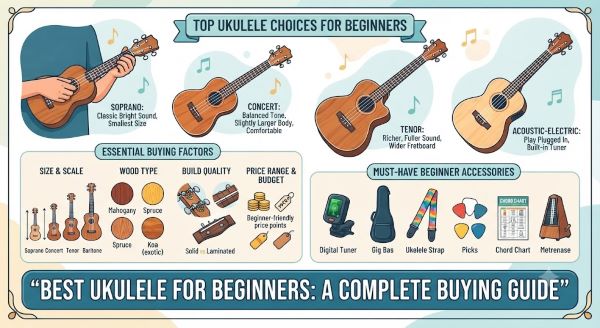
Ukuleles come in four standard sizes, and choosing correctly matters significantly for comfort and playability when starting out.
Soprano is the smallest and most traditional ukulele size, producing the classic bright, plucky ukulele sound most people associate with the instrument. It is the most affordable size generally and well-suited to smaller hands, including children, though the compact fret spacing can feel cramped for adults with larger hands.
Concert is slightly larger than soprano, offering more room between frets and a fuller, slightly deeper tone while remaining compact and comfortable. This size is frequently recommended as the best ukulele for beginners overall, since it balances the classic ukulele sound with more comfortable playability for most adult hands.
Tenor is larger still, with even more fret spacing and a noticeably fuller, richer tone closer to a small guitar. Many intermediate and advanced players prefer tenor ukuleles, and they work well for beginners with larger hands or those who anticipate wanting a fuller sound as they progress.
Baritone is the largest size, tuned differently from the other three (closer to the bottom four strings of a guitar) and producing a deeper, warmer tone. This size is less commonly recommended for absolute beginners since its different tuning means standard ukulele chord charts and beginner resources do not directly apply.
For most new players, concert or soprano size represents the best ukulele for beginners, with concert size offering a slight edge in comfort for adult hands without sacrificing the instrument’s characteristic sound.
Materials: What Actually Matters for Beginners
Laminate wood ukuleles are significantly more affordable and far more durable against humidity and temperature changes than solid wood instruments, making them a practical and frequently recommended choice for the best ukulele for beginners. The tonal difference compared to solid wood is real but is unlikely to matter much to a player just starting to develop their ear and technique.
Solid wood ukuleles generally produce a richer, more resonant tone and tend to improve in sound as the wood ages, but they come at a higher price point and require more careful humidity control to prevent cracking, which adds a maintenance consideration that is not ideal for someone still learning basic instrument care.
For a true beginner, a quality laminate ukulele provides excellent value and durability without the added cost and care requirements of solid wood, and many laminate models sound very good despite the lower price point.
Top Recommended Models for Beginners
Kala KA-15S (Soprano, around $60-$80). One of the most widely recommended entry-level ukuleles, known for reliable build quality and a pleasant, classic ukulele tone at a genuinely beginner-friendly price.
Kala MK-C (Makala Concert, around $70-$90). A step up from the entry-level KA series with slightly better materials and tone, while remaining very affordable, making it a strong choice for the best ukulele for beginners who want a bit more quality without a significant price jump.
Cordoba 15CM (Concert, around $80-$100). Known for solid build quality and good intonation (meaning the instrument stays in tune accurately across the fretboard), an important factor for beginners since an instrument with poor intonation can make learning frustrating and confusing.
Lohanu LU-C (Concert, around $50-$70). A budget-friendly option that consistently receives positive reviews for sound quality relative to its low price point, often bundled with useful beginner accessories like a gig bag, extra strings, and a tuner.
Fender Grace VanderWaal Signature Soprano (around $50-$60). A well-regarded budget option with a notably good reputation for tone quality at its price point, named after the ukulele-playing winner of America’s Got Talent, which has made it a popular choice for younger beginners specifically.
Kala KA-T (Tenor, around $90-$120) is worth considering for beginners who anticipate wanting a fuller sound or have larger hands that find soprano and concert sizes cramped.
What to Look for Beyond the Ukulele Itself
A built-in or included tuner. Ukuleles go out of tune relatively easily, particularly when new strings are still stretching and settling. A clip-on tuner, often included in beginner bundle packages, removes a significant point of early frustration.
A gig bag or case. Protects the instrument from minor bumps and humidity changes, both common causes of damage to a new player’s first instrument.
Accessible online tutorials matched to the model. Many popular beginner ukulele brands, including Kala, have substantial online tutorial content and community support, which makes a meaningful difference in how quickly a beginner progresses.
Avoiding Common Mistakes When Buying a First Ukulele
Avoid ukuleles priced under $30. While tempting for the lowest possible entry cost, ukuleles at this price point often have poor intonation, warp easily, and use low-quality strings that make learning genuinely harder rather than easier. Spending even $50 to $80 on a reputable entry-level model from the recommendations above produces a significantly better learning experience.
Avoid choosing based on appearance alone. Decorative finishes and colors are appealing but should not be the deciding factor over build quality, intonation, and brand reputation when choosing the best ukulele for beginners.
Avoid oversizing for a small child. While concert size is often recommended for adults, a soprano ukulele remains the better fit for younger children due to its smaller scale and lighter weight.
Key Takeaways
- The best ukulele for beginners generally falls into soprano or concert size, with concert offering a slight edge in comfort for adult hands while retaining the instrument’s classic sound.
- Laminate wood construction is recommended over solid wood for beginners, offering better durability and lower cost without a significant sacrifice in sound quality at the beginner level.
- The Kala KA-15S and Kala MK-C are among the most consistently recommended entry-level models, known for reliable build quality and beginner-friendly pricing.
- Good intonation, meaning the instrument stays accurately in tune across the fretboard, matters more for a beginner’s learning experience than cosmetic features or finish.
- Avoid ukuleles priced under $30, since extremely cheap instruments often have quality issues that make learning genuinely harder rather than easier.
- A bundled package including a clip-on tuner, gig bag, and extra strings adds meaningful value and removes early points of frustration for new players.
- Baritone ukuleles are generally not recommended as a first instrument due to their different tuning, which doesn’t match standard beginner chord charts and resources.
- Spending $50 to $100 on a reputable entry-level model produces a significantly better learning experience than choosing the cheapest available option, without requiring a large financial commitment.