Curtain bangs are everywhere right now, and for good reason. This hairstyle frames the face beautifully, suits most face shapes, and works with virtually any hair length. Whether you’re looking for a dramatic change or a subtle refresh, understanding this style and how to style them is key to achieving the look you want.
Unlike blunt bangs that sit straight across your forehead, this cut features a parted center with longer pieces that frame the sides of your face. The style is flattering, versatile, and easier to maintain than many other bang styles. This guide covers everything about this popular hairstyle, from cutting techniques to daily styling tips.
What Are Curtain Bangs?
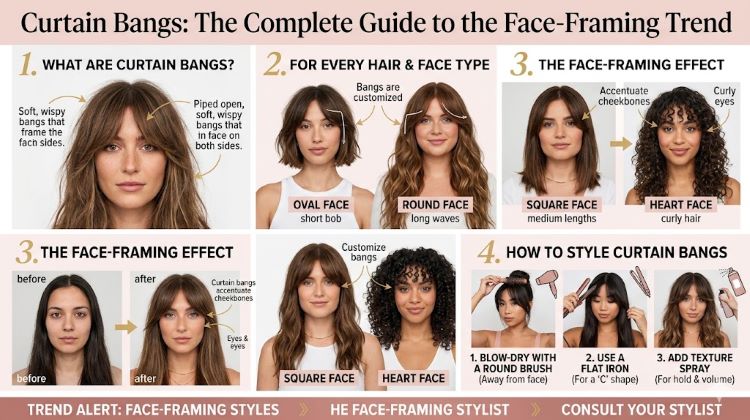
This hairstyle is a type of fringe cut that parts in the middle and sweeps back along the sides of the face. The name comes from their resemblance to curtains opening from the center. Rather than forming a straight line across your forehead, they create a soft, face-framing effect.
The defining characteristic is the center part. The longest pieces sit in the middle, and the hair gradually gets shorter as it moves toward each side of the face. This creates a tapered look that draws attention to your face rather than creating a harsh line.
This style works with almost any hair texture and length. You can get long versions that blend seamlessly into shoulder-length hair, or shorter versions that create more definition. The versatility is part of what makes this hairstyle so popular.
The History and Trend of Curtain Bangs
Curtain bangs have been around since the 1970s, when the shag haircut dominated. That era celebrated soft, feathered styles with movement, and curtain bangs fit that aesthetic perfectly. The style faded but never completely disappeared, cycling in and out of fashion.
In recent years, curtain bangs experienced a major comeback. Social media amplified their popularity, with countless celebrities and influencers sporting the look. What made this resurgence different was the recognition that curtain bangs work for many people and face shapes, not just a select few. They’re genuinely flattering and practical, which explains their staying power.
Who Suits This Style?
One reason this hairstyle is so popular is their versatility. Most face shapes benefit from them.
Round Face: This style with layers can make a round face appear longer by creating vertical lines. The center part also adds length visually.
Square Face: The soft, rounded edges work well on square faces, softening angular jawlines.
Oval Face: Nearly any bang style works on oval faces, and this option is no exception. They enhance your natural balance.
Heart-Shaped Face: This style works well for heart-shaped faces because they draw attention away from a wider forehead. The pieces framing the sides create balance.
Long Face: If you have a longer face, shorter bangs work better than very long ones to avoid elongating further.
The only real limitation is that very curly or kinky hair textures require more styling effort with this look, though it’s still absolutely possible.
How to Cut Curtain Bangs
Learning how to cut this style starts with understanding the technique. Whether you’re cutting them yourself or visiting a stylist, knowing the process helps.
What You Need:
- Sharp hair scissors (not regular scissors)
- A fine-tooth comb
- Hair clips
- Spray bottle for water
- A mirror
Basic Steps:
- Section the hair: Create a triangle section from the center of your hairline to each temple. This is your bang section.
- Create the center part: Part the bang section down the middle.
- Cut one side: Comb one side straight down and cut at an angle, longer in the center, shorter toward the side. Don’t go too short on the first cut; you can always cut more.
- Mirror the other side: Cut the other side to match, keeping lengths balanced.
- Add layers (optional): You can add texture by using point-cutting or a razor technique.
- Style and assess: Blow-dry to see how they sit and fall naturally.
The key is to start longer than you want. Hair looks shorter when dry than when wet, and once you cut, you can’t put it back.
With Layers
Adding layers creates movement and texture. This style with layers works especially well for thicker hair or anyone wanting a more textured, modern look.
Layers can be subtle or dramatic. Subtle layering adds slight movement without completely changing the style. Dramatic layering creates shorter pieces on top that stand away from your head, giving more dimension.
The placement of layers matters. They typically sit closer to the face rather than throughout the hair, maintaining the framing effect.
Long Version
The long version extends further down the face than traditional styles. Often called “long bangs,” this variation typically reaches to your cheekbones or even your jawline.
This option is ideal for:
- Those who want bangs but prefer a softer, less dramatic look
- People with longer hair who want to maintain length while adding style
- Anyone concerned about bangs feeling too short
Long versions require less frequent trimming than shorter bangs because they have more flexibility. Even as they grow, they maintain the framing effect.
For Different Hair Types
Straight Hair
Straight hair shows the cut clearly. The lines are clean and the part is obvious. Styling is straightforward: blow-dry straight, and they fall into place naturally. No product needed unless you want added shine or texture.
Curly Hair
Curly hair requires different cutting technique. Barbers cut curly hair longer than the finished length because it shrinks when dry. What looks like three inches wet might be one and a half inches dry.
With curly hair, this style takes on a naturally voluminous, textured look. It works beautifully but requires styling products to define and shape the curls.
Wavy Hair
Wavy hair falls between straight and curly, offering a nice medium. Waves add natural texture that makes this style look softer. Minimal styling effort is usually needed.
How to Style Curtain Bangs
Once you have curtain bangs, styling them properly keeps them looking their best.
Daily Styling Tips:
Blow-dry in the direction you want them to fall. Use a round brush to add volume if desired.
For straight hair, a flat iron can smooth and shape curtain bangs. Run the iron down each side separately, curling slightly at the ends.
With curly or wavy hair, use a curl cream or mousse to define texture. Apply product while hair is damp and let it air dry or blow-dry.
If your bangs feel heavy or flat, try blow-drying them backward first, then flip your head and blow-dry forward. This adds volume.
Styling With Products:
Volumizing products help create lift, especially for fine hair. Texturizing products like sea salt spray add grip and definition. Light oils or serums smooth flyaways without weighing hair down.
How to Style Bangs Away:
On days you don’t want visible bangs, you can style them back. Use a small bobby pin clipped underneath the bang section to pin them back smoothly. A light pomade or gel helps keep them in place.
Curtain Bangs Haircut Variations
Curtain Bangs Long Hair
When you have long hair and want curtain bangs, the key is ensuring they blend with the rest of your hair. The lengths should transition smoothly. Long hair curtain bangs work with or without layers throughout the rest of your hair.
Curtain Bangs Haircut with Layers Throughout
Adding layers throughout your hair with curtain bangs creates a cohesive, textured look. The curtain bangs work with the layer structure rather than standing alone.
Curtain Bangs Blunt or Textured
While traditional curtain bangs have some texture, you can request blunt edges for a sharper look or more textured edges for a softer appearance.
Bangs Hairstyles: Beyond Basic Curtain Bangs
Curtain bangs pair beautifully with various hairstyles:
With Straight Hair: Creates clean lines and a polished look.
With Waves: Adds romantic, soft styling options.
With Curls: Creates a bold, textured statement.
Shag Hairstyle: Curtain bangs complement shag cuts perfectly, creating movement and dimension.
Lob (Long Bob): Curtain bangs work particularly well with a lob, creating a cohesive, balanced style.
Medium Length Hair: Curtain bangs frame medium length nicely without being lost in the length.
Maintenance and Growing Out Curtain Bangs
Curtain bangs typically need trims every four to six weeks to maintain shape. As they grow, the center part becomes less defined, and the styling changes.
If you want to grow out curtain bangs, expect several months of an awkward phase. During this time, you can style them back, clip them, or keep them styled forward while they grow.
To speed up the process, trim only the ends of your bangs while leaving them longer, gradually blending them into the rest of your hair.
How to Cut Bangs: Professional vs. DIY
Professional Cutting
A stylist understands how hair texture affects the cut and can create a precise style. They have specialized tools and experience. Cost typically ranges from fifteen to thirty dollars for a bang trim.
DIY Cutting
You can cut your own curtain bangs if you’re comfortable doing so. The key is starting longer than you want and cutting conservatively. Watch tutorials and take your time.
Many people start with professional cuts and maintain them at home between appointments.
Common Mistakes to Avoid
Cutting Too Short Too Fast: Always cut longer than you think you need. You can always cut more, but you can’t put it back.
Not Adjusting for Wet vs. Dry Hair: Hair appears shorter when wet. Account for this when cutting.
Ignoring Your Hair Texture: The cutting technique varies for straight, wavy, and curly hair. Don’t use the same approach for all textures.
Skipping Regular Trims: Bangs need maintenance. Let them get too long and they stop looking intentional.
Poor Styling Technique: Even a good cut needs proper daily styling. Invest time in learning how to blow-dry and style your bangs.
Key Takeaways
- Curtain bangs are a face-framing bang style with a center part that sweeps back along the sides of the face.
- Long versions extend further down the face, typically to the cheekbones or jawline, offering a softer look than shorter bangs.
- This style with layers adds texture and movement, working well for thicker hair or anyone wanting a more textured look.
- How to cut them involves creating a center part in your bang section and cutting each side at an angle, longer in center, shorter toward sides.
- Long hair works beautifully with this style because longer bangs blend seamlessly while maintaining the framing effect.
- How to style them depends on your hair type but generally involves blow-drying them in the direction you want them to fall.
- Long bangs as a style choice work for anyone wanting a subtle bang option that can grow out gracefully.
- How to cut bangs properly requires understanding your hair texture and cutting conservatively, starting longer than your final desired length.
- Bangs hairstyles incorporating this cut work with virtually any face shape and hair length.
- Long hair versions offer versatility, allowing you to maintain length while adding a face-framing style element.
- This haircut requires trims every four to six weeks to maintain the center part and framing effect.
- Fringe cut styles like this have become a major trend because they’re flattering, versatile, and work with most hair types.
- Hairstyles with bangs benefit from this style because they provide softness and movement compared to blunt bang styles.
- This style with straight hair creates clean lines and requires minimal styling effort to maintain.
- How to style bangs varies by texture, but the basic approach involves blow-drying in your desired direction and using products as needed.
- Hair bangs in this style offer a modern, flattering option for anyone looking to refresh their hairstyle.