Octopus nigiri is one of the most technically demanding pieces on a sushi menu, which is why finding a well-executed version requires more thought than ordering salmon or tuna. The octopus, called tako in Japanese, must be cooked before it goes on the rice. That cooking process, whether a long braise, a simmer in seasoned water, or a short blanch followed by cold pressing, determines almost everything about the final texture and flavor. Get it wrong and you have a rubbery, chewy piece that fights you until you give up. Get it right and tako nigiri has a tender, slightly yielding texture with a clean oceanic flavor and a slight sweetness that makes it one of the more distinctive pieces at any sushi counter.
If you have been searching for sushi nigiri octopus near me and encountering versions that are difficult to chew or lacking in flavor, this guide helps you identify the restaurants handling tako with the care it requires.
What Tako Nigiri Actually Is
Tako is the Japanese term for octopus prepared for sushi, and it almost always refers to cooked octopus rather than raw. Raw octopus is too tough and chewy to eat comfortably as nigiri, so the preparation involves cooking the octopus until it reaches the right texture before being sliced for sushi.
Traditional Japanese tako preparation involves simmering the octopus in a seasoned broth, sometimes with sake, soy, and mirin, or rubbing it with salt and then cooking it slowly until tender. The cooked octopus is then chilled, pressed into a compact shape if needed, and sliced thinly on a bias across the tentacle to show the characteristic sucker pattern. This bias cut is not decorative. It breaks through the muscle fibers in a way that makes each piece easier to eat.
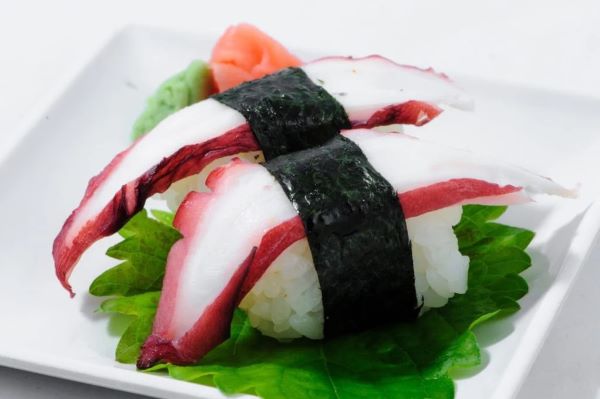
The slice is placed on a formed rice ball with a small amount of wasabi between the rice and the tako. The surface may be scored lightly to help the piece hold its shape on the rice. Some presentations add a thin strip of nori to secure the slice, though this is more common with slippery or unstable toppings. A light brushing of nikiri, a soy sauce reduction, is sometimes applied before the piece is handed across the counter.
When you search for sushi nigiri octopus near me, the tenderness of the octopus and the quality of the preparation cooking are what separate a piece worth ordering from one that will test your patience.
Where to Find It
Traditional sushi bars with counter service are the most reliable source for properly prepared tako nigiri. A sushi restaurant with an itamae who handles each piece individually and has experience with the full range of traditional nigiri toppings is more likely to braise and prepare octopus properly than a high-volume roll-focused restaurant where nigiri is an afterthought.
Japanese restaurants with omakase or chef’s choice options often include tako as part of a nigiri progression. A chef putting together an omakase menu has selected the octopus because it is in good condition and prepared it in advance with care. This is often the best way to encounter tako nigiri without needing to evaluate the kitchen’s handling of this specific topping in advance.
Japanese izakayas and casual Japanese restaurants with a serious sushi component sometimes carry tako nigiri as part of a small nigiri selection. The quality at an izakaya depends on whether the kitchen has dedicated sushi preparation or whether the nigiri is made by the kitchen staff as part of a broader menu.
Japanese grocery stores with sushi counters sometimes carry tako nigiri as a prepared item. The octopus in these preparations is pre-cooked in bulk, and while the quality varies, established Japanese grocery sushi counters with high turnover can produce acceptable tako nigiri.
How to Search More Effectively
A direct search for sushi nigiri octopus near me will return Japanese restaurants and sushi bars in your area. Here is how to identify the ones handling tako properly:
Search Google Maps for sushi restaurant and look at photo sections for close-up nigiri photos. A restaurant that posts individual nigiri photos showing clear sucker patterns on the octopus slice, proper size relative to the rice, and clean presentation is showing you something useful about their preparation standards.
Search Yelp for sushi restaurants and read reviews that mention octopus or tako specifically. Reviewers who order it will describe whether it was tender or rubbery, and that single detail tells you more than any other factor about the kitchen’s preparation.
Search Instagram with “tako nigiri” plus your city name. Sushi restaurant accounts and food bloggers who cover Japanese food post individual nigiri pieces, and a close-up photo of tako nigiri will show you immediately whether the slice is clean, properly cut, and appropriately sized.
Ask the restaurant directly how they prepare their octopus before ordering. A kitchen that braises or slow-cooks its tako will describe the process. A kitchen that does minimal preparation will be vague. Any kitchen confident in its octopus preparation will answer without hesitation.
What Good Tako Nigiri Should Look Like
Once you order, a few things tell you immediately whether the kitchen prepared the octopus properly.
The color. Pale to medium purple on the outer skin, with white flesh visible at the cut surface. The sucker pattern should be visible and distinct on the outer edge of the slice. A uniform, grayish-beige color with no visible skin or suckers means the octopus was peeled before serving, which removes a significant amount of flavor and character.
The slice angle. Cut on a bias across the tentacle, showing an oval cross-section with the suckers along the outer edge. A straight cut produces a round cross-section that does not present as well and does not break through the muscle fibers as effectively.
The texture. The most important quality marker. Properly cooked tako yields immediately when bitten, with a slight chew that is not prolonged. If the octopus resists significantly and requires multiple chews before it gives way, it was undercooked. If it is so soft that it has no texture at all, it was overcooked past the ideal point.
The flavor. Clean and slightly sweet with a mild oceanic character. A properly cooked octopus tastes of the sea without any fishiness or bitterness. Off flavors indicate either poor handling before cooking or an octopus that was not fresh when purchased.
The rice. The same standard applies as with any nigiri. Warm, properly seasoned, with a slight resistance followed by separation in the mouth. Cold or over-vinegared rice undermines even a perfectly prepared octopus topping.
Ordering Tips
Order tako nigiri early in a sushi meal rather than at the end. Octopus has a clean, mild flavor that reads clearly on a fresh palate. After several pieces of fatty fish like salmon belly or yellowtail, the subtlety of tako can be difficult to appreciate.
If the restaurant offers both a standard tako nigiri and a variation with scoring, additional seasoning, or a sauce, try the standard version first. A kitchen that cannot make plain tako nigiri well will not improve it with additions. A kitchen that makes excellent plain tako will produce something even more interesting with thoughtful additions.
Consider ordering two pieces at once. A single piece of tako nigiri is easy to eat too quickly to fully evaluate. Two pieces give you time to taste the octopus itself, then eat the second piece more slowly while paying attention to the texture progression from bite to finish.
Pricing Expectations
Tako nigiri at a mid-range sushi restaurant typically runs between $5 and $9 for two pieces. At a higher-end sushi bar, particularly one sourcing from specific Japanese or Mediterranean octopus suppliers, the price may be $8 to $14 for two pieces. Omakase menus that include tako as part of a larger progression will absorb the cost into the overall menu price.
Key Takeaways
- Finding quality sushi nigiri octopus near me is most reliable at traditional sushi bars with counter service and a dedicated itamae rather than at roll-focused Japanese restaurants where nigiri is secondary.
- Tako nigiri uses cooked octopus, typically braised or simmered in seasoned liquid until tender, then chilled, sliced on a bias, and placed on sushi rice with wasabi.
- The texture of the octopus is the single most important quality marker. Properly cooked tako yields immediately with a slight chew. Rubbery, resistant texture means undercooked. No texture at all means overcooked.
- The bias cut across the tentacle showing sucker pattern and oval cross-section is a visual indicator of proper preparation. A straight-cut round piece was not cut correctly.
- Ask the restaurant how they prepare their octopus before ordering. A confident, specific answer about braising or slow cooking confirms proper technique.
- Order it early in a sushi meal when your palate is fresh. The clean, mildly sweet flavor of well-prepared tako reads most clearly before stronger-flavored fish.
- Search Instagram with “tako nigiri” plus your city name for the most visually informative results about local sushi bars handling octopus with care.
- Expect to pay $5 to $9 at a mid-range sushi restaurant and $8 to $14 at a higher-end sushi bar for two pieces.