Sterile processing technician jobs have grown into one of the more accessible and stable entry points into healthcare, offering a path into a hospital or surgical setting without requiring years of schooling or a nursing degree. This guide covers what the role actually involves, what certification is required, realistic salary expectations, and how to break into the field if you’re considering it as a career path.
What Does a Sterile Processing Technician Do?
Sterile processing technicians, sometimes called central service technicians or CSTs, are responsible for cleaning, decontaminating, inspecting, assembling, sterilizing, and distributing surgical instruments and medical equipment used in hospitals, surgical centers, and other healthcare facilities. The role exists specifically to ensure that every instrument used in a surgical procedure or medical intervention is completely sterile and free of any contamination that could put a patient at risk.
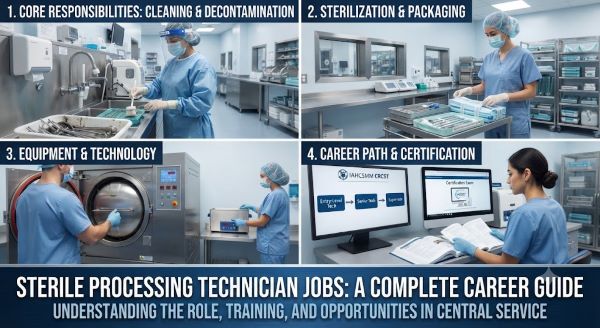
The daily responsibilities of sterile processing technician jobs typically include receiving used surgical instruments from operating rooms, manually and mechanically cleaning instruments to remove blood, tissue, and other biological material, inspecting instruments carefully for damage or wear that could affect their function or sterility, assembling instrument trays and sets according to specific surgical procedure requirements, operating sterilization equipment including autoclaves and other specialized sterilization technology, and maintaining detailed records of sterilization cycles and instrument tracking for quality control and regulatory compliance purposes.
Required Education and Certification
Most sterile processing technician jobs require a high school diploma or equivalent as the baseline educational requirement, making the field genuinely accessible without a college degree. Beyond that baseline, formal training and certification requirements vary somewhat by employer and by state.
Certification programs. Most employers prefer or require candidates to complete a sterile processing technician certificate program, typically offered through community colleges, vocational schools, or specialized healthcare training programs, generally taking anywhere from a few months to about a year to complete depending on the program’s format and intensity.
National certification. Two primary organizations offer recognized national certification for sterile processing technicians: the Certification Board for Sterile Processing and Distribution (CBSPD) and the International Association of Healthcare Central Service Materiel Management (IAHCSMM, now part of HSPA, the Healthcare Sterile Processing Association). Earning a certification from one of these organizations, such as the Certified Registered Central Service Technician (CRCST) credential, is increasingly required or strongly preferred for sterile processing technician jobs, particularly at larger hospital systems.
State-specific requirements. Some states have specific licensing or certification requirements for sterile processing technicians beyond national certification, so checking your specific state’s healthcare workforce requirements is an important step before pursuing formal training.
On-the-job training. Many employers provide additional on-the-job training even after formal certification, since the specific equipment, protocols, and instrument sets used can vary somewhat between different healthcare facilities.
Salary Expectations for Sterile Processing Technician Jobs
Salary for sterile processing technician jobs varies based on geographic location, years of experience, certification level, and the specific type of healthcare facility. According to data from the Bureau of Labor Statistics and various industry salary surveys, entry-level sterile processing technician jobs typically start in the range of $32,000 to $38,000 annually in many parts of the country, with median salaries for experienced technicians generally falling between $40,000 and $48,000 annually.
Technicians in supervisory or lead roles, or those working in larger metropolitan hospital systems with higher costs of living, can earn meaningfully more, sometimes reaching $50,000 to $60,000 or higher in senior or management-track positions within sterile processing departments. Additional certifications beyond the entry-level credential, along with years of demonstrated experience, are the most reliable paths toward higher compensation within the field over time.
Where Sterile Processing Technicians Work
The majority of sterile processing technician jobs are based in hospitals, specifically within a dedicated sterile processing department (sometimes called central supply or central service), which serves the hospital’s operating rooms and other departments requiring sterile instruments and equipment. Beyond traditional hospitals, sterile processing technician jobs are also available at outpatient surgical centers, dental practices and clinics requiring instrument sterilization, veterinary hospitals and clinics, and medical device manufacturing or reprocessing companies that handle sterilization as part of their broader operations.
Career Growth Opportunities
Sterile processing technician jobs offer several realistic paths for career advancement over time. Lead technician or supervisor roles within a sterile processing department represent a natural next step for experienced technicians who develop strong leadership and operational skills. Sterile processing department manager positions oversee an entire department’s operations, staffing, and compliance, typically requiring several years of direct experience along with additional management-focused training or education. Some technicians use the role as a stepping stone into other healthcare careers, since the hands-on hospital experience and medical terminology familiarity gained in sterile processing technician jobs can support a transition into surgical technology, nursing, or other clinical healthcare roles, sometimes with additional schooling required depending on the specific career path pursued.
Is a Sterile Processing Technician Job a Good Fit for You?
This career path tends to suit people who are detail-oriented and comfortable with repetitive, precision-focused tasks, since instrument inspection and sterilization protocols require careful, consistent attention every single time regardless of how routine the task has become. Comfort working in a clinical, sometimes physically demanding environment matters, since the role involves standing for extended periods and handling used surgical instruments as a core part of daily responsibilities. An interest in healthcare without necessarily wanting direct, ongoing patient interaction is common among people drawn to sterile processing technician jobs specifically, since the role supports patient care indirectly through ensuring instrument safety rather than through direct clinical patient contact.
How to Get Started
For anyone interested in pursuing sterile processing technician jobs, a practical path generally involves researching accredited certificate programs in your area, whether through a community college, vocational school, or hospital-based training program. Pursuing CRCST or equivalent national certification through CBSPD or HSPA strengthens your job application significantly, even in regions where it isn’t strictly required by every employer. Many community colleges and vocational programs also offer externship or clinical placement components built into their sterile processing technician training, providing genuine hands-on experience and often a direct connection to potential employers before you’ve even completed the program.
Key Takeaways
- Sterile processing technician jobs involve cleaning, inspecting, assembling, and sterilizing surgical instruments and medical equipment, ensuring everything used in patient care is free of contamination.
- Most positions require only a high school diploma as a baseline, with a certificate program (typically a few months to a year) and national certification like CRCST increasingly expected by employers.
- Entry-level sterile processing technician jobs typically pay $32,000 to $38,000 annually, with experienced technicians earning $40,000 to $48,000, and supervisory roles reaching $50,000 to $60,000 or more.
- The majority of positions are based in hospitals, though outpatient surgical centers, dental practices, veterinary clinics, and device reprocessing companies also offer sterile processing technician jobs.
- Career advancement paths include lead technician and department manager roles, along with the option to use the position as a stepping stone into other healthcare careers like surgical technology or nursing.
- The role suits detail-oriented people comfortable with repetitive, precision-focused tasks in a clinical setting, who want healthcare involvement without necessarily seeking direct ongoing patient interaction.
- National certification through CBSPD or HSPA (formerly IAHCSMM) significantly strengthens job applications, even in regions where it isn’t strictly mandated by every individual employer.
- Community college and vocational certificate programs, often including externship or clinical placement components, provide the most direct and practical path into entry-level sterile processing technician jobs.