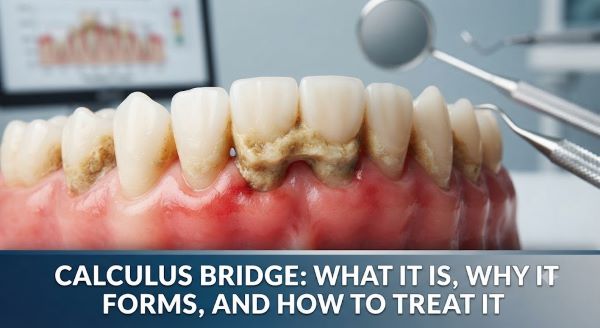
A calculus bridge is one of the more visually alarming dental conditions a person can discover, often appearing seemingly overnight as a hardened, yellow or brown mass connecting the bases of the lower front teeth. Despite how dramatic it looks, a calculus bridge is a well-understood dental issue with a clear cause and established treatment path. This guide explains what it actually is, why it forms specifically behind the lower front teeth, and what removal involves.
What Is a Calculus Bridge?
A calculus bridge is a hardened deposit of dental calculus, also known as tartar, that has built up to the point where it forms a continuous connected mass across the base of several teeth, most commonly the lower front teeth (the lingual surface of the lower incisors). Unlike plaque, which is soft and can be removed with regular brushing, calculus is plaque that has mineralized and hardened onto the tooth surface, and once formed, it cannot be removed through brushing or flossing alone.
A calculus bridge specifically refers to a severe, advanced stage of this buildup, where individual deposits on neighboring teeth have grown large enough to merge together, creating a single connected structure that literally bridges across multiple teeth rather than remaining as separate deposits on each tooth.
Why Calculus Bridges Form Behind the Lower Front Teeth
The lower front teeth are the single most common location for a calculus bridge to develop, and this is not a coincidence. Two major salivary glands, the submandibular and sublingual glands, have ducts that open directly behind the lower front teeth, near the floor of the mouth. Saliva flowing from these ducts is naturally rich in minerals, particularly calcium and phosphate.
This constant exposure to mineral-rich saliva means that any plaque present on the lingual (tongue-facing) surface of the lower front teeth has significantly higher mineral content available to harden into calculus compared to plaque elsewhere in the mouth. Over time, without adequate removal through brushing, flossing, and professional cleaning, this mineralization process compounds, with new layers of plaque mineralizing on top of existing calculus, gradually building a calculus bridge if left untreated for an extended period.
Risk Factors for Developing a Calculus Bridge
While anyone can develop calculus buildup, certain factors increase the likelihood of progression to a full calculus bridge specifically.
Inconsistent or inadequate oral hygiene is the most direct contributing factor, since regular brushing and flossing remove plaque before it has the opportunity to mineralize into calculus in the first place.
Infrequent dental cleanings allow calculus that does form to continue accumulating without professional removal, since once calculus hardens, only a dental professional using specialized tools can remove it safely.
Mouth breathing, particularly during sleep, can increase calculus formation in some individuals due to changes in saliva flow and composition associated with breathing through the mouth rather than the nose.
Certain medications, including some that reduce saliva production or alter its composition, can influence calculus formation rates, as can certain medical conditions that affect saliva chemistry.
Diet high in starches and sugars provides more material for plaque-forming bacteria, increasing the baseline rate of plaque accumulation that can eventually mineralize into calculus if not adequately removed.
Smoking and tobacco use are associated with increased calculus formation and buildup speed in numerous dental studies, in addition to their many other well-documented effects on oral health.
Health Risks Associated With a Calculus Bridge
A calculus bridge is not merely a cosmetic concern. The condition is closely linked to several more serious oral health problems if left untreated.
Gum disease (gingivitis and periodontitis) develops as the bacteria embedded within and around calculus deposits continually irritate the gum tissue, leading to inflammation, bleeding, and eventually more advanced periodontal disease if untreated. A calculus bridge specifically, given its size and the surface area of bacteria-harboring material involved, significantly accelerates this process.
Bad breath (halitosis) is commonly associated with significant calculus buildup, since the bacteria living within calculus deposits produce sulfur compounds responsible for persistent bad breath that resists improvement through normal oral hygiene alone.
Tooth decay can develop in areas where calculus has created an environment that traps additional plaque and bacteria against the tooth surface, increasing decay risk in the surrounding area even though calculus itself is not the direct cause of cavities.
Receding gums and bone loss can result from the chronic inflammation associated with long-term calculus presence, since the body’s inflammatory response to the bacterial irritation can gradually damage the supporting structures around the teeth, including the bone itself in advanced cases.
How a Calculus Bridge Is Removed
A calculus bridge cannot be removed at home through brushing, flossing, or over-the-counter products, regardless of how vigorously they are used. The hardened mineral structure requires professional removal using specific dental tools and techniques.
Scaling is the primary procedure used to remove calculus, performed by a dentist or dental hygienist using either hand-held scaling instruments or an ultrasonic scaler, which uses vibration to break up and dislodge hardened calculus from the tooth surface.
Root planing may be necessary alongside scaling if the calculus bridge has been present long enough to contribute to gum disease, smoothing the root surfaces of the teeth to remove bacterial toxins and help gum tissue reattach more effectively to the tooth.
Multiple visits are sometimes required for severe calculus bridges, since removing a large, well-established deposit safely without damaging the underlying tooth enamel or causing excessive discomfort can require a more gradual approach than a single appointment allows.
Follow-up evaluation after removal typically includes an assessment of any gum damage that occurred during the period the calculus bridge was present, which may require additional periodontal treatment depending on severity.
Why You Should Never Attempt to Remove a Calculus Bridge Yourself
Attempting to remove a calculus bridge at home using picks, tools, or aggressive brushing carries real risk. Calculus is bonded firmly to the tooth surface, and improper removal attempts can damage tooth enamel, cause gum injury and bleeding, or push bacteria deeper into the gum tissue rather than removing it. Professional removal using proper technique and sterile instruments is the only safe and effective method.
Preventing a Calculus Bridge From Forming
Prevention is significantly easier than treatment once a calculus bridge has formed. Brushing twice daily with proper technique, paying particular attention to the lingual surface of the lower front teeth given their elevated risk, removes plaque before it has the opportunity to mineralize. Daily flossing removes plaque from between teeth that brushing alone cannot reach. Regular professional dental cleanings, typically recommended every six months, remove any calculus that has begun forming before it has the chance to progress into a larger, connected bridge structure. Reducing sugar and starch intake, staying hydrated to support healthy saliva flow, and avoiding tobacco products all contribute to a lower overall risk of significant calculus buildup over time.
Key Takeaways
- A calculus bridge is an advanced stage of hardened dental tartar buildup where deposits on neighboring teeth, most commonly the lower front teeth, merge into a single connected mass.
- The lower front teeth are the most common location due to their proximity to major salivary gland ducts, which deliver mineral-rich saliva that accelerates plaque hardening into calculus.
- A calculus bridge cannot be removed through brushing, flossing, or any home remedy. Professional removal using dental scaling tools is required.
- Left untreated, a calculus bridge significantly increases the risk of gum disease, bad breath, tooth decay, and in advanced cases, gum recession and bone loss.
- Risk factors include inconsistent oral hygiene, infrequent dental cleanings, mouth breathing, certain medications, a diet high in sugar and starch, and tobacco use.
- Dental scaling, sometimes combined with root planing for more advanced cases, is the standard professional treatment, occasionally requiring multiple visits for severe buildup.
- Attempting to remove a calculus bridge yourself risks damaging tooth enamel and gum tissue, making professional removal the only safe option.
- Regular brushing with attention to the lower front teeth, daily flossing, and consistent six-month dental cleanings are the most effective ways to prevent a calculus bridge from forming in the first place.