Labskaus is one of the more unusual-looking traditional German dishes you can encounter, and if you have been searching for the best labskaus near me, you are looking for something with deep roots in maritime history and a flavor profile that surprises people who try it without knowing what to expect. This guide covers what labskaus actually is, what separates a well-made version from a mediocre one, and where you are most likely to find it.
What Is Labskaus?
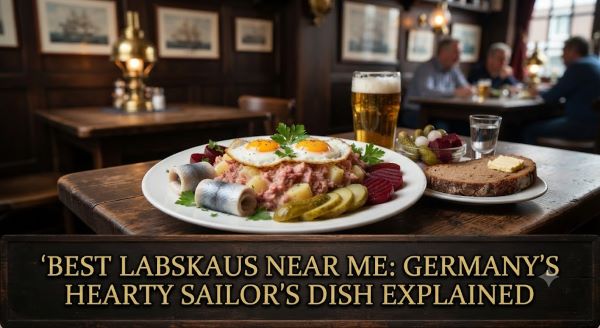
Labskaus is a traditional dish from northern Germany, particularly associated with the port cities of Hamburg, Bremen, and the broader North Sea and Baltic coastal regions. It is a mashed combination of corned beef (or salted beef), mashed potatoes, and beetroot, blended together until the mixture takes on a distinctive reddish-pink hue from the beetroot mixed throughout.
The dish originated as a practical meal for sailors on long sea voyages, when fresh ingredients were scarce and preserved foods like salted or corned meat needed to be prepared in a way that was easy to eat, calorie-dense, and made use of whatever shelf-stable ingredients were available on board. The mashing technique itself reflects this maritime origin, since a softer, blended texture was easier to eat in rough sea conditions and required less in the way of fresh preparation.
A traditional plate of labskaus is typically topped with a fried egg, sunny-side up, along with pickled herring (rollmops) and pickled beetroot or gherkins served on the side. The combination of the rich, savory mashed base with the briny, acidic pickled accompaniments and the richness of the egg yolk creates a balance that defines the dish.
What Makes a Great Labskaus
When searching for the best labskaus near me, these details separate a well-executed version from an average one.
The meat quality. Traditional labskaus uses corned beef or salted beef that has been properly prepared, either slow-cooked from scratch or sourced from a quality preserved product. The meat should contribute a deep, savory flavor throughout the mash rather than tasting bland or overly salty, which can happen if lower-quality corned beef is used or if the salt content is not balanced properly during preparation.
The texture. Labskaus should have a smooth, cohesive, mashed consistency, but not so smooth that it becomes a uniform paste with no textural interest. Some traditional preparations leave very small fragments of meat visible throughout the mash rather than processing everything into complete uniformity, giving the dish a more rustic character.
The beetroot balance. Beetroot should be present enough to give the dish its characteristic color and a subtle sweetness, but not so much that it dominates the savory meat and potato base. The color should be a deep pink to reddish hue throughout, indicating the beetroot has been properly incorporated rather than simply added as a garnish on top.
The egg. A properly fried egg with a runny yolk is essential to a well-executed plate of labskaus. The yolk functions similarly to a sauce, enriching the mash when broken and stirred into the dish as you eat. An overcooked egg with a hardened yolk loses this important function entirely.
The pickled accompaniments. Rollmops (pickled herring rolls) and pickled gherkins or beetroot provide acidity that cuts through the richness of the mashed base. A labskaus plate without these accompaniments, or with poor-quality versions of them, loses an essential part of the dish’s intended flavor balance.
Where to Find the Best Labskaus Near Me
German restaurants with northern German or maritime-focused menus. Labskaus is a regional specialty, and not every German restaurant carries it, since it is more closely associated with the north of the country than German cuisine broadly. Restaurants specifically representing Hamburg-style or northern German cooking are significantly more likely to include it.
German delis and specialty food stores. Some German delis sell pre-made or canned labskaus, which can be heated at home as a reasonably authentic alternative if a restaurant version isn’t accessible nearby. While not equivalent to a freshly prepared version, quality canned labskaus from German import brands can be a genuinely solid option.
German cultural events and Oktoberfest celebrations. While Oktoberfest menus tend to lean heavily on Bavarian specialties rather than northern German dishes specifically, some larger German cultural events with broader regional representation do feature labskaus among their offerings.
Cities with significant German communities. Milwaukee, Cincinnati, St. Louis, and other Midwest cities with strong German-American heritage are more likely to have restaurants carrying regional specialties like labskaus, though even within these cities it remains less common than more widely known German dishes like schnitzel or sauerbraten.
How to Search Effectively
If a direct search for the best labskaus near me does not return useful results, try broadening the approach to find the best labskaus near me through more specific regional search terms:
- Search “northern German restaurant near me” or “Hamburg cuisine near me” rather than a general German restaurant search.
- Call German restaurants directly and ask whether labskaus is available, since it may appear as a rotating special rather than a permanent menu fixture.
- Check German grocery stores or delis for canned or vacuum-packed labskaus products as a home-preparation alternative.
- Search German community groups or cultural associations in your area, which sometimes know of specific restaurants or events featuring regional specialties beyond the typical Bavarian-focused offerings.
Making Labskaus at Home
Labskaus is achievable at home, particularly using canned corned beef as a starting point if preparing salted beef from scratch isn’t practical. Boil and mash potatoes, combine with finely chopped or processed corned beef, and mix in cooked, pureed or finely diced beetroot until the mixture reaches an even color throughout. Season with black pepper and a small amount of the pickling liquid from gherkins or beetroot for added depth. Top with a fried egg and serve alongside rollmops and pickled gherkins for an authentic presentation.
Key Takeaways
- The best labskaus near me is a traditional northern German dish of mashed corned beef, potatoes, and beetroot, originally developed as practical, calorie-dense food for sailors on long voyages.
- A well-made version balances savory meat flavor with a noticeable but not overpowering beetroot presence, finished with a fried egg with a runny yolk that functions as a sauce.
- Pickled herring (rollmops) and pickled gherkins or beetroot are essential accompaniments that provide acidity to balance the richness of the mashed base.
- Labskaus is a regional specialty most reliably found at German restaurants specifically representing northern German or Hamburg-style cuisine rather than German restaurants generally.
- Cities with strong German-American communities, including Milwaukee, Cincinnati, and St. Louis, offer the best chance of finding labskaus, though it remains less common than more widely known German dishes.
- German delis and specialty grocery stores sometimes carry canned or vacuum-packed labskaus, offering a reasonable home-preparation alternative when restaurant access is limited.
- If a direct search returns no results, searching specifically for northern German or Hamburg cuisine, or calling restaurants directly, often surfaces options a generic search misses.
- Home preparation using canned corned beef as a base is an accessible way to make a reasonably authentic version without needing to source or prepare salted beef from scratch.