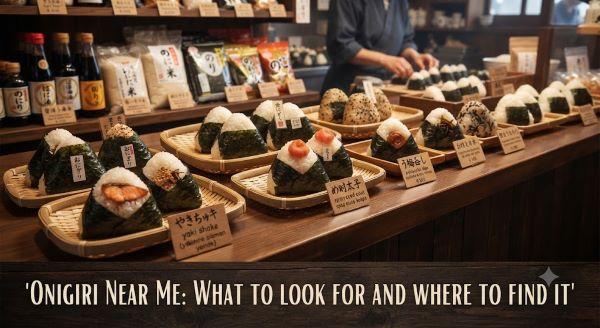
Onigiri has grown from a Japanese convenience store staple into a genuinely popular snack and meal option in many cities outside Japan, and if you’ve been searching for onigiri near me, you’re looking for something that’s deceptively simple in concept but surprisingly variable in quality depending on where it’s made. This guide covers what onigiri actually is, what separates a great version from a mediocre one, and where you’re most likely to find it.
What Is Onigiri?
Onigiri is a Japanese rice ball, typically triangular or cylindrical in shape, made from seasoned (usually lightly salted) short-grain Japanese rice, often wrapped partially or fully in a sheet of nori (seaweed) and frequently filled with a savory ingredient at the center. It’s one of the most common and beloved portable foods in Japan, sold at convenience stores, train station kiosks, and dedicated onigiri shops throughout the country, and eaten as breakfast, lunch, a snack, or part of a larger meal.
The defining characteristic of onigiri is the rice itself. Properly prepared sushi-style short-grain rice has a sticky, cohesive texture that holds together in a compact shape without needing any binding agent, which is what allows onigiri to be shaped and eaten by hand rather than requiring utensils.
Common Onigiri Fillings
Understanding the range of traditional fillings helps when evaluating options as you search for onigiri near me.
Umeboshi (pickled plum) is one of the most traditional fillings, offering an intensely sour and salty flavor that contrasts sharply with the mild rice surrounding it.
Salmon (shake) is one of the most popular and widely available fillings, typically using grilled or baked salted salmon flaked into the center of the rice ball.
Tuna mayo (tsuna mayo) combines canned tuna with Japanese mayonnaise, producing a creamy, mild filling that has become one of the most universally popular options, particularly among newcomers to onigiri.
Katsuobushi (bonito flakes) with soy sauce offers a savory, umami-forward filling that’s simpler than some other options but deeply flavorful when made well.
Kombu (simmered seaweed) provides a savory, slightly sweet filling with a distinct chewy texture, popular in more traditional or homestyle onigiri preparations.
Mentaiko (spicy pollock roe) offers a spicier, more intensely flavored option that has grown in popularity outside Japan as awareness of the ingredient has spread through broader Japanese food culture.
What Makes Great Onigiri
When searching for onigiri near me, these details indicate quality.
The rice texture. Properly cooked rice should be sticky enough to hold its shape but not mushy or overly compressed. Onigiri that has been pressed too firmly during shaping results in a dense, heavy texture that loses the lighter, more delicate mouthfeel that well-made onigiri should have.
The nori condition. If wrapped in nori, the seaweed should ideally be crisp rather than soggy, particularly if you’re eating the onigiri shortly after purchase. Some convenience store onigiri in Japan uses clever packaging specifically designed to keep the nori separate from the rice until just before eating, preserving crispness. Restaurants and shops making onigiri fresh to order generally handle this well by wrapping the nori at the point of serving rather than far in advance.
Filling quality and proportion. The filling should be generously portioned at the center, not just a token amount, and should use quality ingredients, particularly noticeable with fillings like salmon or tuna mayo where ingredient freshness directly affects the eating experience.
Rice seasoning. Properly seasoned rice should have a subtle, balanced saltiness that complements rather than competes with the filling. Under-seasoned rice tastes flat, while over-salted rice overwhelms more delicate fillings.
Where to Find Onigiri Near Me
Japanese grocery stores. Stores like Mitsuwa, Marukai, H Mart (which carries a strong selection of Japanese as well as Korean products), and similar Asian grocery chains frequently have prepared food sections carrying fresh onigiri, often made daily in-store or sourced from local Japanese food producers.
Dedicated onigiri shops and restaurants. A growing number of cities have dedicated onigiri specialty shops, particularly in areas with significant Japanese populations or strong Japanese food culture more broadly. These shops typically offer the widest variety of fillings and the freshest preparation.
Japanese bakeries and cafes. Some Japanese bakeries that primarily focus on pastries also carry onigiri as a savory option alongside their sweet offerings, providing a convenient combined stop for both.
Japanese restaurants with a takeout or grab-and-go section. Larger Japanese restaurants, particularly those with a more casual or izakaya-style format, sometimes offer onigiri as a side item or appetizer alongside their main menu.
Cities with strong Japanese food culture. Los Angeles (particularly Little Tokyo and the broader Sawtelle area), New York, San Francisco, and Seattle all have well-established Japanese food scenes with multiple options for finding quality onigiri near me through dedicated shops, grocery stores, and restaurants.
How to Search Effectively
If a direct search for onigiri near me doesn’t surface useful results, try these alternative approaches:
- Search “Japanese rice ball near me” since some platforms or smaller shops may not use the Japanese term specifically in their listings.
- Search “Japanese grocery store near me” and check whether the store has a prepared food section, since many carry fresh onigiri even without it being the store’s primary focus.
- Check food delivery apps directly, since some dedicated onigiri shops operate primarily or exclusively through delivery platforms in cities where dedicated foot traffic for a niche specialty shop might be limited.
Making Onigiri at Home
Onigiri is genuinely approachable to make at home, requiring short-grain Japanese rice (avoid long-grain varieties, which won’t hold together properly), salt, your choice of filling, and nori if desired. Cook rice slightly firmer than you might for regular eating, season lightly with salt while still warm, and shape using wet hands (to prevent sticking) into triangles or rounds with the filling placed at the center before fully enclosing it with rice. Plastic wrap can help with shaping for beginners, allowing you to mold the rice around the filling without the rice sticking directly to your hands during the learning process.
Key Takeaways
- Onigiri near me searches point to Japanese rice balls, typically triangular, made from seasoned short-grain rice and often filled with savory ingredients like salmon, tuna mayo, or umeboshi.
- Quality depends primarily on rice texture (sticky but not compressed), nori crispness if wrapped, filling proportion and freshness, and balanced rice seasoning.
- Japanese grocery stores like Mitsuwa, Marukai, and H Mart frequently carry fresh, daily-made onigiri in their prepared food sections.
- Dedicated onigiri specialty shops offer the widest filling variety and freshest preparation, and are increasingly common in cities with strong Japanese food culture.
- Cities including Los Angeles, New York, San Francisco, and Seattle offer the best access to quality onigiri through a combination of specialty shops, grocery stores, and restaurants.
- If a direct search doesn’t return useful results, try “Japanese rice ball near me” or check food delivery apps, since some shops operate primarily through delivery.
- Tuna mayo and salmon are among the most universally appealing fillings for newcomers, while umeboshi and kombu offer more traditional, intensely flavored options for experienced onigiri eaters.
- Making onigiri at home is accessible with short-grain rice, salt, and your choice of filling, with wet hands or plastic wrap helping beginners shape the rice without sticking.