Medialuna dulce is one of the most specific and most missed things for Argentines living abroad. It is not quite a croissant in the French sense and it is not quite anything else either. It is a slightly sweet, slightly smaller, slightly richer rolled pastry made from a yeasted laminated dough enriched with more butter and egg than a standard croissant, glazed with a sugar syrup before baking that produces a shiny, slightly sticky exterior and a tender, layered interior. It is Buenos Aires breakfast food, eaten dunked into café con leche, and the combination of the sweet, buttery pastry softening in the coffee is one of those eating rituals that Argentines abroad describe with a specific nostalgic precision.
If you have been searching for the best medialuna dulce near me, this guide helps you find the Argentine version specifically rather than a French croissant or a generic sweet roll.
What Medialuna Dulce Actually Is
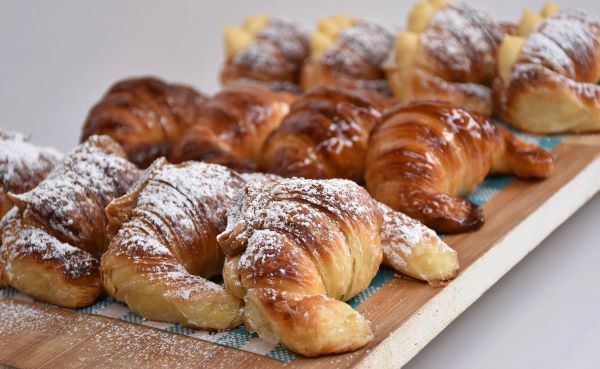
The medialuna, which means half moon, gets its name from the crescent shape shared with the French croissant. The Argentine version is distinct in three primary ways: sweetness, size, and glaze.
The sweetness. Argentine medialuna dulce uses more sugar in the dough than a French croissant and sometimes adds a small amount of honey or vanilla. The result is a pastry that is perceptibly sweet when eaten plain, not just buttery and flaky like a French croissant. This sweetness is a defining characteristic and not an accident. It is why the medialuna works specifically as a breakfast pastry eaten with the bitter contrast of coffee.
The size. Argentine mediaslunas are slightly smaller than a typical French croissant, more compact and slightly plumper, with a tighter roll and less pronounced tip ends. The smaller size makes them suitable for dunking into a coffee cup without awkward maneuvering, which is the traditional eating method.
The glaze. Before baking, and sometimes again immediately after, Argentine mediaslunas receive a brush of dulce de leche thinned with water or a simple sugar syrup. This glaze gives the exterior its characteristic shine and slight stickiness and provides an additional layer of sweetness that the French croissant does not have. A properly glazed medialuna dulce should be visibly shiny and slightly sticky to the touch when fresh.
The interior. Laminated, with distinct layers visible when the medialuna is broken open, but slightly more tender and less shattering than a French croissant because the dough is richer in egg and the glaze keeps the exterior from becoming fully crispy. A properly made medialuna dulce tears into layers rather than shattering into flakes.
When you search for the best medialuna dulce near me, the sweetness of the dough, the sugar or dulce de leche glaze, and the slightly plumper, more compact shape are the markers that distinguish the authentic Argentine version from a French croissant served under a different name.
Where to Find It
Argentine bakeries and panaderias are the definitive source. A dedicated Argentine panaderia that carries traditional Argentine baked goods will stock mediaslunas as its most basic and essential item. In cities like Miami, New York, Los Angeles, Chicago, and Houston, Argentine bakeries serve mediaslunas as the foundation of the morning rush, typically freshly baked throughout the morning.
Argentine cafes and restaurants that serve breakfast and afternoon tea sometimes carry mediaslunas as part of their pastry offering. A restaurant that serves desayuno argentino, the Argentine breakfast format of café con leche with assorted pastries including mediaslunas, is sourcing or making them specifically for this cultural context.
Latin American bakeries with Argentine clientele sometimes carry mediaslunas alongside baked goods from other South American traditions. A bakery serving a mixed Argentine, Uruguayan, and Brazilian clientele may carry mediaslunas as a permanent item because the demand from the Argentine and Uruguayan community makes it worthwhile.
Argentine home bakers and community vendors selling through Instagram and Facebook batch orders frequently include mediaslunas in their weekly offerings because they are one of the items most requested by Argentine expats who cannot find them locally. Home bakers who describe glazing their mediaslunas with sugar syrup or dulce de leche are following the traditional method.
How to Search More Effectively
A direct search for the best medialuna dulce near me will return some Argentine bakeries and restaurants. Here is how to find the ones making them properly:
Search Google Maps for Argentine bakery or panaderia argentina in your city. Browse photo sections for pastry display photos. A bakery that shows shiny, glazed, compact mediaslunas in their display case is making the Argentine version rather than selling generic croissants under a different name.
Search Instagram with “medialuna argentina” or “medialuna dulce” plus your city name. Argentine bakery accounts and home bakers post photos of their freshly baked mediaslunas regularly, and the characteristic shine from the glaze and the compact shape are immediately distinguishable from a standard French croissant in a photo.
Search Facebook for Argentine community groups in your city and ask where to find mediaslunas dulces. Argentine expats are very specific about this pastry and will point you to the bakery or home baker that most closely replicates what they know from Buenos Aires.
Ask any Argentine bakery or restaurant directly whether their mediaslunas use the sweet dough recipe with a sugar or dulce de leche glaze. A bakery making authentic Argentine mediaslunas will confirm the glaze enthusiastically. A bakery selling French-style croissants with a new name will either confirm it is not the Argentine version or give a vague answer about their recipe.
What Good Medialuna Dulce Should Look Like
Once you find a source, a few things immediately confirm the quality of the medialuna.
The glaze. Shiny, slightly sticky, and visible as a distinct coating on the exterior. A properly glazed medialuna dulce catches the light and looks almost lacquered. A dull, matte exterior means the glaze was omitted or insufficient. The glaze is not cosmetic. It is part of the flavor and the traditional eating experience.
The shape. Compact, slightly plump, with a clear crescent curve and tips that are not as elongated or pointed as a French croissant. The rolls should be uniform and the shape should be consistent from piece to piece, indicating the dough was rolled and shaped carefully rather than quickly.
The color. Deep golden to amber from the sugar in the dough and the glaze caramelizing during baking. A pale medialuna was either not baked long enough or the dough lacked sufficient sugar. A very dark one was overbaked.
The interior layers. Visible when the medialuna is broken open, distinct layers that pull apart rather than a uniform, bread-like crumb. The layers should be tender and slightly moist from the butter in the dough. A crumb without visible layers was either not properly laminated or was overworked during rolling.
The sweetness. Perceptible from the first bite without needing anything added. A properly made medialuna dulce tastes sweet on its own, which is the point. A pastry that tastes only of butter and dough without sweetness is a croissant rather than a medialuna.
Ordering and Eating Tips
Eat mediaslunas dulces within a few hours of baking. Laminated doughs lose their textural quality faster than most baked goods, and a medialuna that has been sitting at room temperature for more than four or five hours will have lost most of its interior moisture and exterior glaze freshness. The best version is eaten while still slightly warm from the oven.
The traditional Buenos Aires eating method is dunking. Dip the tip of the medialuna briefly into café con leche, allowing the slightly sweet pastry to absorb a small amount of the coffee before eating. The combination of the glazed pastry and the bitter coffee produces a flavor that is specifically designed for each other and that no other eating method fully replicates.
Order a media docena, which is half a dozen, if the bakery sells by the unit. Mediaslunas are small enough that eating one alone is more of a tease than a breakfast. Two to three alongside a coffee is the Buenos Aires format.
If the bakery also carries facturas, which are the broader category of Argentine pastries that includes medialunas, order a mixed selection. The medialuna alongside a vigilante, cañoncito, and other Argentine panadería items gives you a full picture of the tradition rather than a single pastry in isolation.
Pricing Expectations
Individual mediaslunas dulces at an Argentine bakery typically run between $2 and $4 each depending on size and market. A half dozen runs between $10 and $20. Home baker versions sold through batch orders are often priced similarly. Argentine bakeries in cities with larger Argentine communities tend to price them at the lower end due to higher production volume and competition.
Key Takeaways
- The best medialuna dulce near me is most reliably found at dedicated Argentine bakeries and panaderias, Argentine cafes serving traditional breakfast, and home baker vendors on Instagram and Facebook who specifically describe the sweet dough and glaze.
- Medialuna dulce is an Argentine sweet croissant made from an enriched, sugary laminated dough glazed with sugar syrup or diluted dulce de leche before baking. It is noticeably sweeter, more compact, and more visibly glazed than a French croissant.
- The shiny glaze is the most immediate visual quality marker. A matte, unglazed exterior means the Argentine finishing step was omitted.
- The sweetness in the dough itself is structural. A pastry that tastes only of butter without sweetness is a croissant, not a medialuna dulce.
- The traditional eating method is dunking in café con leche. This pairing is part of the intended experience and produces a flavor combination specifically designed for each other.
- Eat within a few hours of baking. Laminated doughs deteriorate faster than other baked goods and a medialuna sitting for most of the day will have lost its best qualities.
- Search Instagram with “medialuna dulce” plus your city name and check Argentine community Facebook groups for bakery and home baker recommendations.
- Expect to pay $2 to $4 per medialuna and $10 to $20 for a half dozen at an Argentine bakery or from a home baker.