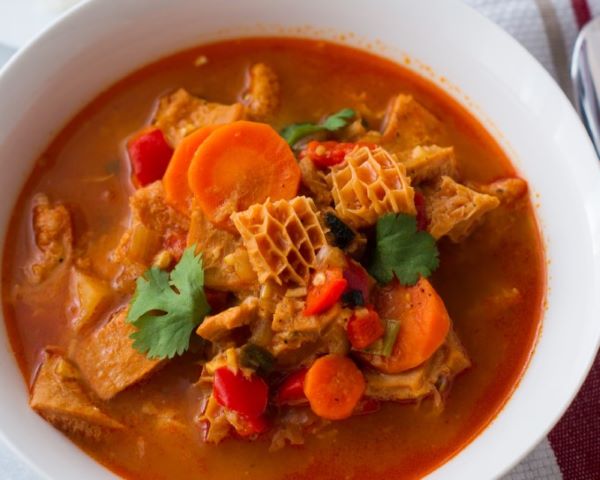
Mondongo is one of those dishes that inspires deep loyalty from the people who grew up eating it and genuine curiosity from those who haven’t tried it yet. If you are searching for the best guiso de mondongo near me, you are looking for a slow-cooked tripe stew that appears across Latin America and the Caribbean under slightly different names and with regional variations, but always with the same core purpose: a hearty, deeply flavored stew built on time and patience. This guide covers what the dish is, how to evaluate a good version, and where to find it.
What Is Guiso De Mondongo?
Mondongo refers to tripe, specifically the honeycomb stomach lining of beef or pork, cleaned and slow-cooked until tender. Guiso de mondongo is a stew built around this protein, simmered with vegetables, aromatics, and spices until the tripe becomes tender enough to cut with a spoon and the broth develops the kind of depth that only long cooking produces.
The dish exists across Latin America, the Caribbean, and parts of Spain under various names. In Colombia it is called mondongo. In Puerto Rico and the Dominican Republic it is mondongo or mondongo a la criolla. In Venezuela and Panama it is also widely eaten. Each version has regional characteristics but shares the same foundation: slow-cooked tripe in a rich, aromatic broth.
A typical guiso de mondongo includes:
- Cleaned honeycomb tripe, cut into strips
- Chorizo or pork ribs for additional depth
- Potato, yuca, or plantain
- Corn on the cob rounds
- Tomato, onion, garlic, and peppers (the sofrito base)
- Cumin, oregano, and bay leaf
- Fresh cilantro or culantro added at the end
The stew cooks for at least two to three hours, and many cooks start it the day before to let the flavors develop fully. The tripe absorbs the aromatics and becomes tender while contributing its own distinctive collagen-rich texture to the broth.
What Makes a Great Guiso De Mondongo
When searching for the best guiso de mondongo near me, these are the markers that separate a well-made version from a mediocre one.
The tripe texture. This is the most important variable. Tripe that is undercooked is rubbery and unpleasant. Tripe that is properly cooked has a soft, slightly gelatinous texture that yields easily to a spoon without falling apart completely. Getting this right requires sufficient cooking time and a gentle simmer rather than a hard boil.
The broth depth. Great guiso de mondongo has a broth that is rich, slightly thick from the collagen released by the tripe, and deeply seasoned from the sofrito base and spices. A thin or pale broth indicates insufficient cooking time or a weak aromatic base.
The vegetables. The potato, yuca, or plantain in the stew should be fully cooked and have absorbed some of the broth flavor. They should not be mushy, but they should be soft enough to break apart easily. Corn rounds add sweetness and texture contrast.
Fresh herb finish. Cilantro or culantro added at the end brightens the entire stew and adds a fresh note that contrasts the richness of the broth. This finishing touch is standard in Colombian and Caribbean versions and its presence signals a kitchen following traditional technique.
Where to Find the Best Guiso De Mondongo Near Me
Colombian restaurants. Colombia is particularly well-known for mondongo, and Colombian restaurants in the US almost always carry it. Search “Colombian restaurant near me” and check the menu for mondongo or sopa de mondongo. It frequently appears as a specialty weekend soup.
Puerto Rican and Dominican restaurants. Caribbean versions of guiso de mondongo appear on menus at Puerto Rican and Dominican restaurants, often listed as mondongo or mondongo a la criolla.
Venezuelan and Panamanian restaurants. Also strong sources for guiso de mondongo, as the dish is deeply embedded in both culinary traditions.
Latin American restaurants with weekend specials. Mondongo is often prepared as a weekend specialty rather than a daily menu item because of the long preparation time. Call ahead and ask whether it is available on Saturday or Sunday rather than showing up expecting it on a weekday.
Latin grocery stores with prepared food. Some larger Latin grocery stores prepare mondongo as a hot food item, particularly on weekends, in areas with significant Colombian, Dominican, or Puerto Rican populations.
Cities With the Best Access
Cities with the largest Latin American communities offer the best chance of finding the best guiso de mondongo near me. New York (particularly the Bronx, Queens, and upper Manhattan), Miami, Chicago, Houston, Los Angeles, and Orlando all have strong concentrations of Colombian, Dominican, Puerto Rican, and Venezuelan restaurants where mondongo appears regularly.
Regional Variations Worth Knowing
Part of what makes searching for the best guiso de mondongo near me interesting is that the dish varies meaningfully by country of origin, and knowing those differences helps you choose the right restaurant for the version you want.
Colombian mondongo is typically the richest and most vegetable-forward. The broth is deep orange from the sofrito and paprika, the stew is thick, and the vegetables are plentiful. It is often served with a side of white rice and patacones (fried plantain). Colombian mondongo is the version most commonly found at restaurants in the US because Colombian immigration has been among the largest from South America.
Puerto Rican mondongo a la criolla uses achiote (annatto) in the sofrito, giving the broth a distinct reddish color and earthiness. Potatoes and plantain are common additions. The flavor is slightly sharper from the addition of sazón and sofrito that includes recao (culantro). Puerto Rican versions often include pig’s feet alongside the tripe.
Dominican sancocho de mondongo blurs the line between mondongo and sancocho, incorporating the tripe into the broader stew tradition with root vegetables, plantain, and corn. The flavor is warm and savory with a focus on yuca and ñame as the primary starches.
Venezuelan mondongo tends to be spiced differently, with more oregano and black pepper prominent in the broth. Venezuelan versions often include garbanzos (chickpeas) as an addition not commonly found in Colombian or Caribbean versions.
Understanding these distinctions helps you ask the right questions when you find a restaurant that serves mondongo. Knowing which version you are getting prepares you for the experience and helps you evaluate whether it is being made authentically for that tradition.
- The best guiso de mondongo near me is a slow-cooked Latin American tripe stew built on a sofrito base with vegetables, corn, and spices. It requires long cooking and deep seasoning.
- Tripe texture is the most important quality indicator. It should be soft and slightly gelatinous, never rubbery or hard.
- The broth should be rich and slightly thick from collagen released during cooking. A thin broth indicates insufficient simmering time.
- Colombian restaurants are the most reliable US source, as mondongo is one of Colombia’s signature dishes. Puerto Rican, Dominican, Venezuelan, and Panamanian restaurants also serve strong versions.
- Guiso de mondongo is often a weekend specialty because of preparation time. Call ahead before expecting it on a weekday.
- New York, Miami, Chicago, Houston, and Los Angeles offer the widest access to authentic guiso de mondongo near me through the density of their Latin American restaurant scenes.
- Fresh cilantro or culantro added at the end of cooking is a traditional technique that brightens the stew. Its presence signals a kitchen following proper method.
- If online search returns limited results, search specifically for Colombian or Puerto Rican restaurants and ask about weekend soup specials.