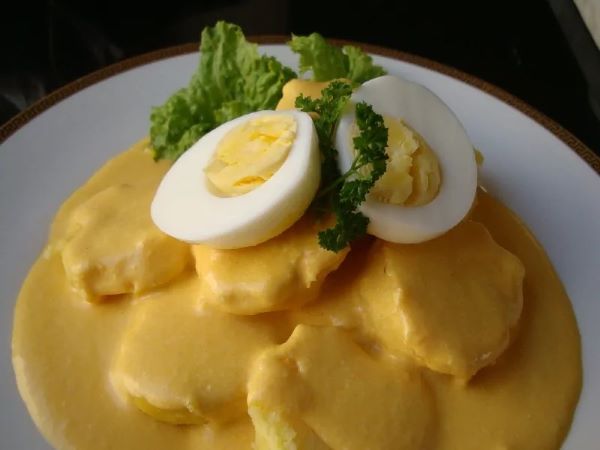
Papa a la huancaina is one of the dishes that defines Peruvian cooking for people who know the cuisine beyond ceviche. Cold boiled potatoes covered in a bright yellow sauce made from aji amarillo, fresh cheese, and evaporated milk, served on a bed of lettuce with a slice of hard-boiled egg and a black olive on top. It sounds simple. It also requires getting several things right simultaneously, and when a kitchen takes shortcuts on the sauce or uses the wrong chili, the dish falls flat in ways that are easy to detect once you know what the correct version tastes like.
If you have been searching for the best papa a la huancaina near me and coming up with versions that are either too bland or too thick or missing the characteristic color and warmth of the original, this guide gives you a clearer path to finding and evaluating the real thing.
What Papa a la Huancaina Actually Is
The name comes from Huancayo, a city in the central Andean highlands of Peru, though the dish is now eaten across the country and considered part of the broader Peruvian national culinary identity. The sauce, called salsa huancaina, is the defining element. It is built from aji amarillo, the bright orange-yellow Peruvian chili that is fruity, moderately hot, and unlike any other chili in flavor, blended with queso fresco or a similar fresh white cheese, evaporated milk, and sometimes a few crackers or bread to give the sauce body. The result is a vivid yellow-orange sauce that is creamy, slightly spicy, and fruity in a way that no other sauce in South American cooking replicates.
The potatoes are boiled in salted water until fully tender, then cooled and sliced into rounds. They go on the lettuce base, and the sauce is poured generously over and around them. Hard-boiled egg and black olives complete the plate. Some versions add a few cancha, which are toasted dried corn kernels, for texture.
The aji amarillo is not substitutable. A huancaina sauce made with a different chili will taste different in ways that are immediately noticeable to anyone familiar with the dish. The fruity, floral heat of aji amarillo is specific to this pepper and is what gives the sauce its character. A kitchen that does not have access to aji amarillo or aji amarillo paste cannot make a proper papa a la huancaina.
When you search for the best papa a la huancaina near me, the color of the sauce and the flavor of the aji amarillo are the primary quality markers to evaluate.
Where to Find It
Peruvian restaurants are the only reliable source. Papa a la huancaina appears on virtually every Peruvian restaurant menu as a starter, and the quality depends almost entirely on whether the kitchen is using real aji amarillo or aji amarillo paste and making the sauce from scratch rather than using a commercial premix.
Peruvian cevicherias often carry papa a la huancaina as a cold starter alongside ceviche and other cold preparations. These restaurants tend to have well-developed cold kitchen programs and are often the best source for this specific dish.
Peruvian home cooks and community vendors selling through Instagram and Facebook batch orders regularly include papa a la huancaina as a cold starter or side dish in their weekly offerings. Home cooks from Peru who make the sauce from scratch with aji amarillo paste will produce a version equal to or better than most restaurant preparations.
Latin American grocery stores with prepared food sections sometimes carry papa a la huancaina, particularly in cities with Peruvian communities. Check the cold prepared food section rather than the hot food counter since this is a cold dish.
How to Search More Effectively
A direct search for the best papa a la huancaina near me will surface Peruvian restaurants in your area. Here is how to identify the ones making it properly:
Search Google Maps for Peruvian restaurant and browse menus for papa a la huancaina in the starters section. A restaurant that describes the sauce ingredients, including aji amarillo or yellow chili, is being transparent about its preparation in a way that suggests it is making the sauce with the right ingredients.
Search Yelp for Peruvian restaurants and read reviews that mention papa a la huancaina or huancaina sauce specifically. Reviewers who know the dish will comment on the color of the sauce, whether it had the right level of heat and fruitiness from the aji amarillo, and whether the potatoes were properly cooked.
Search Instagram with “papa huancaina” plus your city name. Peruvian restaurant accounts and home cook vendors post photos of this dish regularly, and the vivid yellow-orange color of a properly made sauce is one of the most visually distinctive elements in Peruvian food photography.
Ask any Peruvian restaurant directly whether they make the huancaina sauce in-house from aji amarillo. A kitchen using fresh or paste aji amarillo will confirm it immediately. A kitchen using a commercial packet or premix may be vague or describe a different process.
What Good Papa a la Huancaina Should Look Like
Once you find a source and the plate arrives, a few things confirm whether the preparation was done properly.
The sauce color. Vivid yellow-orange, almost the color of a ripe mango or a golden sunset. The color comes from the aji amarillo itself and is one of the most striking visual elements of Peruvian cooking. A pale yellow or white sauce was made without sufficient aji amarillo or with a different pepper entirely. A dull, brownish sauce suggests oxidation or a premix that does not use real aji amarillo.
The sauce consistency. Pourable but thick, coating the potatoes generously without running off immediately. A sauce that is too thick and paste-like was made with too much bread or cracker for body. A sauce that is too thin runs off the potatoes and pools at the base of the plate. The correct consistency falls between these two extremes.
The sauce flavor. Creamy from the cheese and evaporated milk, fruity and moderately spicy from the aji amarillo, and slightly salty from the cheese. The heat should be noticeable but not sharp, building gently rather than hitting immediately. A sauce that tastes only of cheese and cream without any fruity chili warmth was made with insufficient aji amarillo.
The potatoes. Fully cooked through and cooled, with a texture that is tender without being waterlogged. Yellow-fleshed potato varieties are traditional and produce a better result than waxy white potatoes. The potato should hold its shape when sliced rather than crumbling.
The presentation. Lettuce base, potato rounds, sauce poured generously, hard-boiled egg, and black olive on top. A plate missing the egg and olive may still taste good but is not presenting the dish in its complete traditional form.
Ordering Tips
Papa a la huancaina is a cold starter. Order it at the beginning of a Peruvian meal before hot dishes arrive. It works particularly well alongside ceviche as part of a cold starter spread.
The dish is served at room temperature or slightly cool, not refrigerator-cold. If it arrives very cold, let it sit for a few minutes before eating. The aji amarillo flavor is more perceptible when the sauce is at room temperature than when it is chilled.
Ask the server whether the huancaina sauce is made fresh or comes premixed. The answer tells you what to expect. A kitchen making it fresh will have a sauce that tastes brighter and more complex than one from a commercial premix.
Pair with a glass of chicha morada, the purple corn drink that is traditional in Peruvian restaurants, or with a crisp white wine that has enough acidity to complement the creamy, spiced sauce.
Pricing Expectations
A starter portion of the best papa a la huancaina near me at a Peruvian restaurant typically runs between $10 and $18 depending on the city and the restaurant’s positioning. Casual cevicherias tend to price it at the lower end. Higher-end Peruvian restaurants in major cities may charge more, particularly if they use premium ingredients or present it with additional components. Home cook and vendor versions are typically in the $8 to $14 range per portion.
Key Takeaways
- The best papa a la huancaina near me is most reliably found at Peruvian restaurants and cevicherias that make the huancaina sauce from scratch using aji amarillo rather than commercial premix.
- The sauce is made from aji amarillo, fresh white cheese, and evaporated milk blended into a creamy, vivid yellow-orange sauce. The aji amarillo is not substitutable and is responsible for both the color and the fruity heat of the dish.
- The sauce color is the most immediate quality indicator. Vivid yellow-orange means real aji amarillo was used. Pale yellow or white means it was not.
- Ask directly whether the sauce is made in-house from aji amarillo. A confident answer is a positive signal.
- Search Instagram with “papa huancaina” plus your city name. The distinctive sauce color makes a properly made version identifiable from a photo immediately.
- Serve and eat at room temperature rather than refrigerator-cold. The aji amarillo flavor is more perceptible when the sauce is not chilled.
- Pair with chicha morada or a crisp white wine with enough acidity to cut through the creamy sauce.
- Expect to pay $10 to $18 at a sit-down Peruvian restaurant and $8 to $14 per portion from a home cook or vendor.