Hummus with pita is everywhere, which is precisely the problem. The ubiquity of commercial hummus in grocery stores and the ease of adding it to any Mediterranean-adjacent restaurant menu means that most people have eaten dozens of versions of this dish without ever encountering one that makes them understand why it has been a staple across the Middle East and Mediterranean for centuries.
Good hummus, made from properly cooked chickpeas blended with quality tahini and lemon while still warm, is a smooth, rich, slightly tangy preparation that is more complex than any commercial version and genuinely satisfying rather than merely adequate. Paired with fresh pita bread warm from the oven or griddle, it is a combination worth actively seeking out. If you have been searching for hummus with pita near me and settling for whatever is available, this guide helps you find a version worth the effort.
What Good Hummus Actually Involves
The quality gap between hummus made from properly prepared dried chickpeas and commercial hummus from a plastic container is one of the largest quality gaps in the prepared food world. Understanding what creates that gap helps you identify which restaurants are making it properly.
The chickpeas. Hummus made from dried chickpeas that have been soaked overnight and cooked until very tender, almost past what most people consider done, produces a smooth, rich base that commercial canned chickpeas cannot match. The chickpeas should be cooked until they crush between two fingers with no resistance at all. Undercooked chickpeas cannot be blended into the smooth, almost silky texture that distinguishes good hummus. Restaurants that make hummus from dried chickpeas cooked in-house produce a notably better result than those using canned chickpeas, which are convenient but produce a denser, starchier texture.
The tahini. Good tahini is made from lightly roasted sesame seeds ground into a smooth paste. It should smell nutty and slightly bitter and flow from the jar when tilted. Cheap tahini from over-roasted sesame has a harsh bitterness that overwhelms the hummus rather than adding depth. A hummus made with high-quality tahini in a generous ratio tastes of sesame throughout, which is correct. A hummus with minimal tahini tastes only of chickpea paste.
The lemon. Fresh lemon juice rather than bottled is non-negotiable in a properly made hummus. Fresh lemon has brightness and a slight bitterness from the zest oils that bottled lemon juice does not replicate. The lemon in hummus should be perceptible as an acid note that lifts the tahini and chickpea flavors.
The temperature. Hummus freshly blended from warm chickpeas is smoother and more cohesive than refrigerated hummus served cold. A restaurant that makes hummus to order or serves it at room temperature from a fresh batch will produce a noticeably silkier result than one serving refrigerator-cold commercial product.
The pita. Fresh pita bread, either warm from an oven or toasted briefly, has a softness and slight chewiness that makes it the ideal vehicle for hummus. Stale, dry pita is one of the most common disappointments in this combination and reflects a kitchen that does not prioritize the bread component.
When you search for hummus with pita near me, asking whether the hummus is made in-house from dried chickpeas is the single most productive question before ordering.
Where to Find It
Lebanese, Israeli, and Middle Eastern restaurants are the most reliable source for properly made hummus with pita near me. These are cuisines where hummus occupies a central position, and restaurants that take their culinary tradition seriously will make it from scratch daily with good tahini and fresh lemon.
Greek restaurants sometimes carry excellent hummus as part of a meze spread, though Greek hummus may be slightly different in character from Lebanese or Israeli versions, often less tahini-forward.
Palestinian and Syrian restaurants in cities with Middle Eastern communities produce some of the best hummus available because the dish is integral to those food cultures and the standards are maintained by community expectations.
Israeli-style hummus bars have emerged in several major cities and specialize specifically in hummus as the primary product. These spots typically make hummus from dried chickpeas daily, serve it warm, and pair it with fresh pita baked on the premises. If your city has one of these, it is the most reliable source for excellent hummus.
Turkish restaurants sometimes carry a good hummus as part of a meze selection. Turkish hummus tends to be similar in character to Lebanese versions and is worth trying at Turkish restaurants with serious meze programs.
How to Search More Effectively
A search for hummus with pita near me will return a wide range of results including fast casual chains, Mediterranean restaurants, and dedicated Middle Eastern spots. Here is how to identify the ones making hummus properly:
Search Google Maps for Lebanese restaurant, Israeli restaurant, or Middle Eastern restaurant in your city. Browse menus for hummus and look for descriptions that mention house-made, from scratch, or daily preparation. A restaurant that emphasizes the freshness of its hummus in the menu description is making a specific claim about its preparation process.
Search Yelp for Middle Eastern restaurants and read reviews that specifically mention hummus texture, tahini flavor, and whether the pita was fresh. Reviewers who know good hummus will describe the smoothness, the sesame depth, and whether the lemon was present as an acid note.
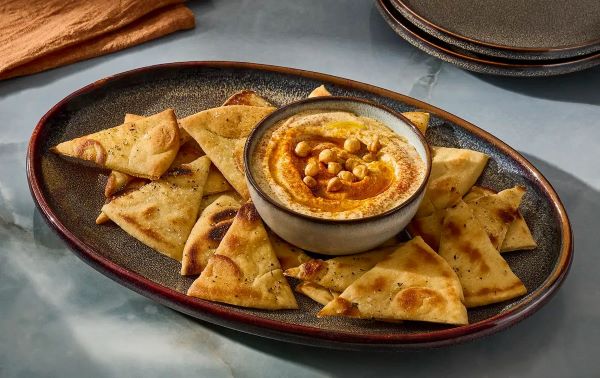
Search Instagram with “hummus” plus your city name. Middle Eastern restaurants and dedicated hummus spots post photos regularly, and a proper serving of hummus, a bowl with a smooth surface, a drizzle of olive oil, whole chickpeas scattered on top, and warm pita alongside, is visually distinctive from a commercial product scooped from a container.
Ask any restaurant whether the hummus is made in-house from dried chickpeas or from canned chickpeas. This single question produces the most useful information. A kitchen cooking dried chickpeas from scratch will answer with specifics about their process.
What Good Hummus with Pita Should Look Like
Once you find a source and the plate arrives, a few things tell you whether the kitchen made it properly.
The surface. Smooth, with a slight sheen from the olive oil drizzle. A properly made hummus, blended thoroughly with good tahini, has an almost silky surface texture with no graininess or rough patches visible. Grainy or rough texture indicates undercooked chickpeas or insufficient blending.
The color. Off-white to pale beige, slightly warmer in tone than commercial hummus, which tends toward a grayish-white. Fresh hummus from properly cooked chickpeas with good tahini has a warmer, creamier color.
The flavor. Chickpea as the base, sesame from the tahini running through the entire dish, lemon as an acid note, and garlic as a background warmth. All four elements should be present and balanced. A hummus that tastes primarily of plain chickpea paste was made with insufficient tahini. A hummus without any lemon character was made with inadequate fresh lemon juice.
The pita. Soft and pliable, slightly warm, with a slight chew when torn. Fresh pita should have some flexibility rather than cracking when bent. Stale pita cracks rather than bending and is dry on the interior when torn open.
The toppings. A proper restaurant serving will include a drizzle of good olive oil over the hummus surface, sometimes whole cooked chickpeas, paprika, and fresh parsley. These toppings are part of the serving format and indicate a kitchen thinking about the dish as a complete plate.
Ordering and Eating Tips
Order hummus with pita as a starter to share rather than an individual portion. The standard restaurant serving is sized for sharing before a main course and works best in that context.
Ask the server to bring the pita warm if it is not automatically served that way. Warm pita against room-temperature or slightly warm hummus is the ideal combination. Cold pita and cold hummus is significantly less satisfying.
Eat the hummus by scooping with torn pieces of pita rather than using utensils. The manual process of tearing pita and dragging it through the hummus allows you to control how much hummus you pick up in each bite and to feel the texture of the hummus directly.
Do not refrigerate leftover hummus and then eat it cold. If you have leftover hummus from a restaurant, allow it to come to room temperature before eating. Cold hummus tastes significantly more flat and starchy than room temperature hummus from the same batch.
Pricing Expectations
Hummus with pita at a dedicated Middle Eastern restaurant typically runs between $9 and $18 as a starter depending on the size of the serving and the market. Restaurants that make hummus from dried chickpeas with premium tahini tend to be at the higher end of that range. Fast casual versions at chain Mediterranean restaurants run $6 to $10.
Key Takeaways
- Finding quality hummus with pita near me is most reliable at Lebanese, Israeli, Palestinian, and Syrian restaurants that make hummus from scratch daily using dried chickpeas, quality tahini, and fresh lemon juice.
- The most important question to ask any restaurant is whether the hummus is made in-house from dried chickpeas. This single piece of information predicts the quality more reliably than any other factor.
- Good hummus tastes of chickpea, sesame, lemon, and garlic in balance. A version that tastes only of chickpea paste was made with insufficient tahini or fresh lemon.
- A smooth, slightly warm, off-white hummus with a sheen from good olive oil is visually different from commercial product. Grainy texture indicates undercooked chickpeas or insufficient blending.
- Fresh, warm, pliable pita that bends rather than cracking is as important as the hummus quality. Stale pita that cracks when bent is one of the most common disappointments in this pairing.
- Search Instagram with “hummus” plus your city name and specifically look for dedicated hummus bars or Israeli-style hummus restaurants in your city, which specialize in this single dish and typically produce the best versions.
- Eat at room temperature. Cold hummus and cold pita are significantly less satisfying than the same components served at proper temperature.
- Expect to pay $9 to $18 at a dedicated Middle Eastern restaurant for a properly made version.