Pernil is Puerto Rican slow-roasted pork shoulder, and it is one of the most satisfying things in the broader Latin American culinary world when it is made properly. The pork marinates in a mixture of garlic, oregano, cumin, vinegar, and olive oil, called adobo, for at least 24 hours and often longer, before going into the oven at low heat for several hours until the meat is completely tender and pulls apart without resistance. The skin, called cuero, transforms during this long roast into something that sounds impossible: completely rigid, blistered, and crackling, a pork rind that shatters when you press it and has a flavor that is intensely savory from the long time spent above the rendered fat.
If you have been searching for the best pernil puerto rican near me and finding either no results or versions that do not have the right bark on the exterior or the right tenderness inside, this guide helps you narrow your search.
What Pernil Puerto Rican Actually Is
Pernil in Puerto Rican cooking refers specifically to the pork shoulder, also called the picnic shoulder or the pernil in Spanish, and the Puerto Rican preparation of it is one of the most deeply flavored pork dishes in Latin American cooking.
The preparation begins with the adobo marinade. Garlic is the central component, used in significant quantity and typically made into a paste with salt, dried oregano, cumin, black pepper, vinegar, and olive oil. Deep slits are cut into the pork shoulder through the skin, and the adobo paste is pressed into these slits so the marinade penetrates into the flesh of the meat rather than remaining only at the surface. The whole shoulder then marinates in the refrigerator for a minimum of 24 hours, and experienced pernil cooks will argue that 48 to 72 hours produces a noticeably more flavorful result.
The cooking is done at low temperature, typically around 325 degrees Fahrenheit, for three to five hours depending on the size of the shoulder, until the internal temperature of the meat reaches a point where the collagen has fully converted and the pork pulls apart without resistance. The final step is the most dramatic: the oven temperature is raised to very high heat for the last 20 to 30 minutes, which blisters the skin into the crackling cuero that is one of the most prized elements of the finished pernil.
The cuero is not merely a bonus. For Puerto Ricans who grew up eating pernil, the crackling skin is one of the primary points of the dish, and a pernil served without properly developed cuero is an incomplete version regardless of how well the interior meat was cooked.
When you search for the best pernil puerto rican near me, the developed cuero alongside the properly marinated, tender interior meat are the two quality markers that confirm you have found a kitchen making it the right way.
Where to Find It
Puerto Rican restaurants are the primary source. Any Puerto Rican restaurant that takes its cooking seriously will carry pernil as a permanent or rotating menu item, particularly on weekends when the long cooking time is more practical. A restaurant that lists pernil alongside arroz con gandules, tostones, and other traditional Puerto Rican dishes is operating with a full traditional menu.
Puerto Rican fondas and casual lunch spots in cities with Puerto Rican communities, particularly in New York, New Jersey, Florida, and Connecticut, serve pernil as a regular main course. These informal restaurants tend to cook pernil in large quantities on weekends and the quality is often very high because the volume demands consistency.
Puerto Rican home cooks and community vendors are among the most reliable sources in cities where dedicated Puerto Rican restaurants are scarce. Pernil is a dish that home cooks make for family gatherings and holidays, and the home versions marinated for longer and cooked with more care than many restaurant versions are often superior. Instagram and Facebook groups for Puerto Rican expats in your city will surface vendors who sell pernil by the pound on weekends.
Latin American grocery stores and deli counters in cities with Puerto Rican communities sometimes sell pernil by the pound as a prepared item, particularly on weekends. The quality varies, but stores with a dedicated Puerto Rican clientele tend to maintain standards that reflect community expectations.
How to Search More Effectively
A search for the best pernil puerto rican near me will surface Puerto Rican restaurants in your area. Here is how to identify the ones making it properly:
Search Google Maps for Puerto Rican restaurant in your city and browse menus and photo sections. A photo of properly made pernil shows a deeply browned exterior with visible blistered skin and dark, rendered crackling alongside shredded, tender meat. These visual cues are immediately distinguishable from a poorly made version with pale, soft skin and dry meat.
Search Yelp for Puerto Rican restaurants and read reviews that mention pernil specifically. Reviewers will describe whether the cuero was properly crackling, whether the meat was properly marinated and tender, and whether the garlic and oregano flavor ran through the interior of the pork.
Search Instagram with “pernil puertorriqueno” or “pernil boricua” plus your city name. Puerto Rican restaurant accounts and home cook vendors post photos of pernil for weekend service, and a properly developed cuero is visually unmistakable in a photo.
Search Facebook for Puerto Rican community groups in your city and ask where to find the best pernil. Puerto Ricans have strong opinions about this dish and will give you specific, detailed recommendations with context about what makes each source worth visiting.
What Good Pernil Puerto Rican Should Look Like
Once you find a source, a few things confirm the quality.
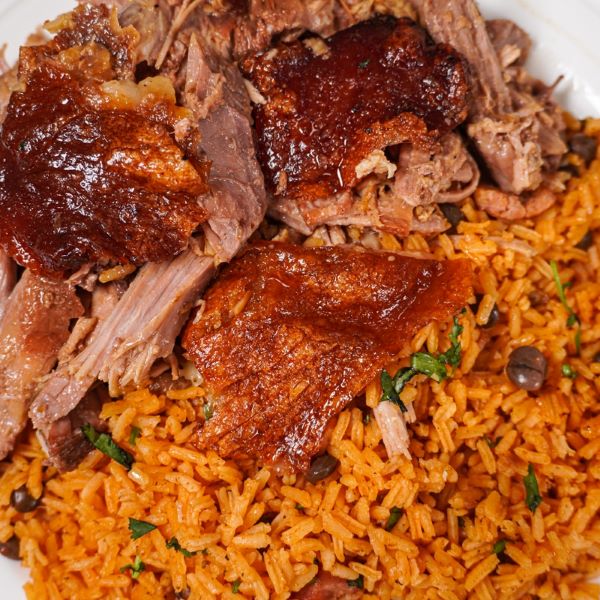
The cuero. Blistered, rigid, and shattering when pressed or cut. A properly developed pork crackling should break with an audible snap rather than bending or being chewy. The color should be deep mahogany to dark brown, reflecting the long time it spent above the rendered fat and the high heat finish. A pale, soft, or chewy skin was either not cooked at high enough heat for the final stage or was not properly salted during marination.
The meat. Falling apart without resistance when pressed or pulled, deeply marinated throughout rather than only at the surface, and fragrant with garlic, oregano, and cumin. The adobo should be present in the flavor of the meat at the center of the shoulder, not only near the surface where the slits were cut. A properly long marination produces flavor that runs all the way through.
The fat. Rendered and flavorful, present in the pulled meat as richness rather than excess. Pork shoulder has enough intramuscular fat that a properly cooked pernil is naturally juicy without being greasy. Pools of liquid fat on the plate indicate the final temperature was too low to render the fat completely.
The garlic and oregano. Present in every bite. The adobo marinade is not a surface treatment but a flavor agent that penetrates the meat during the long marination period. Both the garlic and the oregano should be detectable throughout the pork, not only at the exterior.
The color. Deep brown to dark on the exterior from the long roast, with a slightly lighter interior that shows the progression from surface color to the pale, juicy inner pork.
Ordering and Eating Tips
Order pernil with arroz con gandules, which is Puerto Rican rice with pigeon peas, and tostones, which are twice-fried green plantains. This combination is the traditional Puerto Rican plate and the flavors of the three components are balanced against each other in a way that eating any one alone does not achieve.
Ask the server for a piece with cuero included. Some restaurants serve mixed portions and not every serving will include a piece of the crackling skin. Asking specifically ensures you get one of the most valuable parts of the dish.
If ordering pernil for a gathering or large group, call ahead. Most restaurants that make pernil properly cook it in large whole shoulders that require several hours of preparation. Same-day orders are sometimes possible but 24 hours of advance notice is more reliable.
Eat the cuero immediately. Crackling pork skin softens within minutes of being exposed to steam from the meat alongside it. The best crackling experience is in the first few minutes after serving.
Pricing Expectations
A plate of the best pernil puerto rican near me at a Puerto Rican restaurant typically runs between $16 and $28 depending on the market, the portion size, and what is included. Fondas and casual Puerto Rican lunch spots tend to be at the lower end of that range. Home cook and vendor versions sold by the pound run between $12 and $20 per pound, which is practical for feeding a group.
Key Takeaways
- The best pernil puerto rican near me is most reliably found at Puerto Rican restaurants and fondas that cook it on weekends, at Latin American deli counters in cities with Puerto Rican communities, and through Puerto Rican home cook vendors on Instagram and Facebook.
- Pernil is a pork shoulder marinated in a garlic, oregano, cumin, and vinegar adobo for 24 to 72 hours, then slow-roasted until the meat is completely tender and the skin transforms into blistered, shattering crackling called cuero.
- The cuero is not optional. A version without properly developed crackling is missing the element that Puerto Ricans consider one of the primary rewards of the dish.
- The garlic and oregano flavor should run through the interior of the meat, not just sit at the surface. Interior flavor confirms a proper extended marination.
- Search Instagram with “pernil puertorriqueno” plus your city name and check Puerto Rican community Facebook groups for specific restaurant and home cook recommendations.
- Ask for a serving that includes cuero. Not every portion automatically includes crackling skin and asking specifically ensures you receive this component.
- Eat the cuero immediately after serving. Crackling softens within minutes from the steam of the meat alongside it.
- Expect to pay $16 to $28 at a sit-down restaurant and $12 to $20 per pound from a home cook or vendor selling for large groups or gatherings.