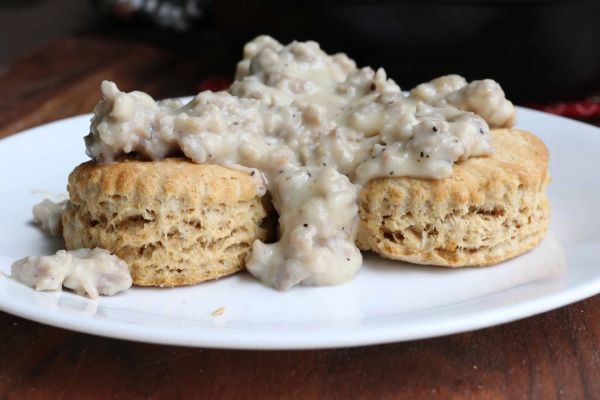
Biscuits and gravy is one of the most straightforward dishes in American comfort food and one of the most frequently done poorly outside of its Southern heartland. The concept requires exactly two components done well: a flaky, buttery, made-from-scratch biscuit and a thick, sausage-laden cream gravy seasoned assertively with black pepper. When a kitchen gets both right, biscuits and gravy is one of the most deeply satisfying breakfast or brunch plates available at any price point. When either is wrong, the whole plate falls apart.
A commercial biscuit mix biscuit with powdered gravy is technically biscuits and gravy but bears no meaningful relationship to the dish as it exists in its best form. Finding great biscuits and gravy near me means knowing which restaurants take both components seriously enough to make them from scratch.
What Biscuits and Gravy Actually Involves
The biscuit in a proper biscuits and gravy comes from a tradition of Southern American baking that prioritizes tenderness and layers above everything else. The ingredients are simple: soft-wheat flour, cold fat, buttermilk, salt, and leavening. The process is where quality is determined. The fat must be cold when it is cut into the flour, producing distinct pockets of fat that steam during baking and separate the dough into flaky layers. The mixing must be minimal, just enough to bring the dough together without developing the gluten that would make the biscuit tough and bread-like rather than tender and flaky. The biscuits are cut and baked at high heat until the exterior is golden and the interior has risen into distinct layers visible when the biscuit is pulled apart.
A biscuit made from a commercial mix cannot replicate this process. Commercial mixes use pre-blended ingredients that produce a uniform, slightly dense product without the layer structure that defines a scratch-made Southern biscuit. The difference is apparent both visually and texturally the moment you pull a scratch biscuit apart and see the layers.
The gravy in a proper biscuits and gravy is made from browned breakfast sausage, the rendered fat left in the pan after browning, flour cooked briefly in that fat to make a roux, and then milk or cream whisked in gradually until the gravy thickens. The sausage goes back into the gravy along with a substantial amount of freshly cracked black pepper. The finished gravy should be thick enough to pour slowly and coat the back of a spoon, visibly loaded with sausage pieces, and the black pepper should be assertively present.
The black pepper is structural. Biscuits and gravy without adequate black pepper is a flat, sweet-savory dish without the warmth and complexity that makes it worth eating. This is the most common quality failure in versions made outside of the American South, where the seasoning instinct for this dish is less ingrained.
When you search for biscuits and gravy near me, asking whether both the biscuits and the gravy are made from scratch is the most useful pre-ordering question.
Where to Find It
Southern-style breakfast and brunch restaurants are the most reliable source. A restaurant that describes itself as Southern kitchen, country cooking, or Appalachian food will treat biscuits and gravy as a central and serious menu item rather than an afterthought.
Long-established American diners with fixed menus that have been serving biscuits and gravy for decades often develop consistent, practiced results. Volume and repetition produce a gravy recipe that has been adjusted and perfected over many years of service.
Brunch-focused restaurants with a stated commitment to scratch cooking carry biscuits and gravy as a weekend offering. A brunch menu that specifies house-made biscuits or fresh-baked biscuits in the menu language is making a claim worth holding them to.
BBQ restaurants and smokehouse kitchens in the South and in cities with strong Southern BBQ culture sometimes carry biscuits and gravy as a breakfast or morning side item, using the same approach to seasoning and fat that defines their main cooking.
Farmers market breakfast vendors in many cities fry biscuits to order and make small batches of gravy throughout the morning. These vendors tend to use local sausage and high-quality flour, and the limited production volume means the quality stays consistent throughout service.
How to Search More Effectively
A search for biscuits and gravy near me will surface hundreds of options from fast food chains to fine dining interpretations. Here is how to find the ones making it properly:
Search Google Maps for Southern restaurant, Southern breakfast, or country cooking restaurant in your city. Browse menus specifically for language that indicates scratch preparation: house-made biscuits, hand-rolled biscuits, or made-from-scratch gravy are the phrases to look for.
Search Yelp for breakfast restaurants and filter specifically for biscuits and gravy reviews. Reviewers who order this dish consistently describe the biscuit texture in detail. Phrases like flaky, layered, buttery, and distinct layers confirm scratch preparation. Phrases like dense, uniform, or bread-like suggest commercial mix.
Search Instagram with “biscuits and gravy” plus your city name. Scratch-made biscuits are visually distinctive: the layers visible at the split point, the golden exterior with a slight rise, and the texture are immediately apparent in a close-up photo. A flat, uniform-looking biscuit in a photo suggests commercial mix.
Ask the restaurant directly whether biscuits are made from scratch and whether the gravy is made from browned sausage and a roux. A kitchen doing both from scratch will answer with specific detail about their fat choice, their flour, and their sausage. A kitchen using shortcuts will either confirm it or deflect with a vague answer.
What Good Biscuits and Gravy Should Look Like
Once you find a source and the plate arrives, a few things confirm the quality immediately.
The biscuit cross-section. When you split the biscuit, distinct horizontal layers should be visible inside, separated into thin, flaky sheets. The exterior should be golden on top and bottom. The interior should be slightly steamy and soft. No distinct layers visible and a uniform, dense interior means commercial mix or overworked dough.
The biscuit flavor. Slightly tangy from the buttermilk, faintly buttery, and good enough to eat without the gravy. A scratch-made buttermilk biscuit has a flavor independent from whatever is poured over it. A commercial mix biscuit tastes primarily of salt and leavening agent.
The gravy color. Off-white to pale tan, with visible pieces of browned sausage distributed throughout. A gray or very light gravy indicates the sausage was not browned before the roux was made, which skips the most flavor-developing step. A very dark gravy means the flour was overcooked.
The gravy viscosity. Thick, pourable, settling around the biscuit rather than running immediately to the edges of the plate. The gravy should hold its shape on the biscuit for a moment before slowly spreading. A watery gravy was not reduced sufficiently. A gravy so thick it barely moves was cooked with too much flour or reduced too far.
The black pepper. Visible as dark flecks throughout the gravy and detectable as warmth from the first bite. Biscuits and gravy without sufficient black pepper is one of the most common quality failures outside of its home region. The pepper is not a garnish.
Ordering and Eating Tips
Order biscuits and gravy at breakfast or brunch rather than later in the day. Biscuits are best fresh from the oven, and kitchens that make them from scratch typically bake throughout the morning and may not have fresh biscuits available in the afternoon.
Ask whether biscuits are baked to order or in timed batches throughout service. A kitchen baking in small batches throughout morning service will have consistently fresh biscuits available across a longer window. A kitchen that bakes one large batch at opening will have less fresh product as service progresses.
Request extra gravy on the side. The gravy is the richest and most complex component of the dish, and having additional gravy available for the second half of the plate, when the biscuit has absorbed the initial pour, is worth the small additional cost.
Pair with black coffee. The richness of the sausage gravy and the buttermilk biscuit work best against a plain, unsweetened coffee. A sweet or milky coffee competes with rather than complements the flavors of a properly made plate.
Pricing Expectations
A plate of biscuits and gravy near me at a Southern breakfast restaurant typically runs between $8 and $16 depending on the portion size and the market. Gastropubs and elevated brunch restaurants that use premium sausage and specialty flour price it at the higher end. Classic diners and diner-style breakfast spots tend to price it lower while still producing excellent scratch versions. Fast food and chain versions run $5 to $8 but do not represent the quality of a scratch-made plate.
Key Takeaways
- Finding quality biscuits and gravy near me is most reliable at Southern-style breakfast restaurants, long-established diners, and brunch-focused restaurants that explicitly describe scratch preparation in their menu language.
- Both components must be made from scratch. A commercial mix biscuit and a powdered gravy are not the dish in its meaningful form.
- Distinct visible layers in the split biscuit confirm scratch preparation. A uniform, dense interior without layers indicates commercial mix or overworked dough.
- Black pepper in assertive quantity is structural, not decorative. Gravy without sufficient black pepper is the most common quality failure outside of the American South.
- Ask directly whether biscuits are made from scratch and whether the gravy is built from browned sausage and a roux. Specific answers confirm proper preparation.
- Order at breakfast or brunch when biscuits are freshest. Ask whether biscuits are baked in batches throughout service.
- Pair with black coffee for the best flavor balance against the rich sausage gravy.
- Expect to pay $8 to $16 at a Southern breakfast or brunch restaurant for a properly made scratch version.