Tacu tacu is one of those dishes that started as a way to use leftovers and became something people specifically cook from scratch because the result is worth making intentionally. Rice and beans, mixed together and fried in a pan until a crust forms on the outside while the inside stays soft and slightly creamy. It is Peruvian comfort food at its most practical and most satisfying, and it has enough variation in preparation and accompaniment that finding the best tacu tacu near me means knowing both what the dish is and what gets served alongside it.
What Tacu Tacu Actually Is
Tacu tacu has roots in Afro-Peruvian cooking, part of the broader culinary tradition brought to Peru by enslaved Africans who created dishes from available ingredients, often what remained from previous meals. The basic preparation combines cooked white rice with cooked beans, typically canary beans called frijoles canarios or sometimes black beans, along with sofrito made from onion, garlic, aji amarillo, and tomato. This mixture is formed into a thick patty or log shape and fried in oil until a crust develops on both sides while the interior remains soft and cohesive.
The aji amarillo is a defining ingredient. It adds the characteristic golden color and fruity heat that appears throughout Peruvian cooking, and its presence in the tacu tacu distinguishes it from similar rice and bean preparations in other Latin American traditions. A tacu tacu made without aji amarillo or aji amarillo paste lacks the color and flavor profile that makes the dish specifically Peruvian.
The accompaniments are where tacu tacu becomes a complete meal. It is commonly served with lomo saltado, the stir-fried beef and vegetable dish that is one of Peru’s most recognized preparations. It also appears alongside a fried egg, with fried fish or shrimp on top, with a creamy sauce like huancaina or ocopa poured over, or as part of a combination plate. The tacu tacu itself is the starchy base, and whatever goes with it defines whether you are having a light meal or a substantial one.
When you search for the best tacu tacu near me, the crust on the outside, the soft interior, the aji amarillo flavor, and the accompaniment that completes the plate are the elements worth evaluating.
Where to Find It
Peruvian restaurants are the primary and most reliable source. Tacu tacu appears on Peruvian menus in cities with established Peruvian communities and is one of the dishes that distinguishes a restaurant with a genuine Afro-Peruvian food program from one with a more limited menu. A restaurant that carries tacu tacu alongside lomo saltado, ceviche, and papa a la huancaina is operating with a comprehensive Peruvian menu.
Peruvian fondas and casual lunch spots sometimes feature tacu tacu as a daily special rather than a permanent menu item. These casual restaurants rotate their offerings based on what makes sense for the day’s service, and tacu tacu appears as a lunch special frequently in Peruvian home-cooking contexts.
Peruvian home cooks and community vendors selling through Instagram and Facebook batch orders are a strong source in cities where dedicated Peruvian restaurants are scarce. Tacu tacu is a practical batch-cook item because it can be made in quantity, holds well, and reheats effectively when pan-fried again before serving.
Latin American community events and food festivals with Peruvian representation sometimes feature tacu tacu as part of a broader traditional food offering. These events are worth checking because the food is often made by home cooks who prepare the dish regularly.
How to Search More Effectively
A direct search for the best tacu tacu near me will surface Peruvian restaurants in your area. Here is how to identify the ones making it well:
Search Google Maps for Peruvian restaurant in your city and browse menus for tacu tacu. A menu that describes the accompaniments alongside the tacu tacu, whether lomo saltado, fried egg, or seafood, indicates the kitchen is thinking about the dish as a complete plate rather than an isolated item.
Search Yelp for Peruvian restaurants and read reviews that mention tacu tacu specifically. Reviewers who know the dish will describe whether the outside crust was properly formed, whether the interior was soft and cohesive, and whether the aji amarillo flavor was present. These details appear in reviews from diners who order it regularly.
Search Instagram with “tacu tacu” plus your city name. Peruvian restaurant accounts and home cook vendors post photos of this dish, and a photo showing a golden, well-crisped exterior alongside a colorful accompaniment tells you more than any menu description.
Search Facebook for Peruvian community groups in your city and ask directly where to find the best tacu tacu. Peruvians are specific about which restaurants make this dish properly and will give you direct recommendations.
What Good Tacu Tacu Should Look Like
Once you find a source, a few specific things confirm the quality.
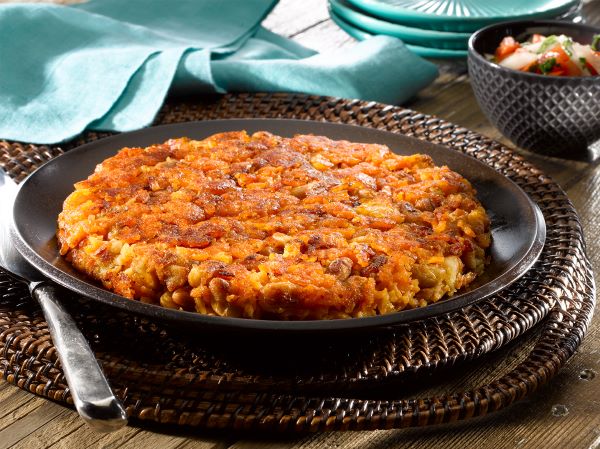
The exterior crust. Golden brown on both sides, with a visible and consistent crust that holds its shape when the plate is moved. The crust should be slightly firm to the touch and have some resistance before giving way. A pale, soft exterior means the tacu tacu was not fried at sufficient temperature or for long enough on each side.
The interior. Soft, slightly creamy from the mashed bean component, and cohesive enough to hold together without crumbling when cut. The rice grains should be visible within the soft bean matrix rather than having been completely mashed into a uniform paste. A crumbly interior that falls apart when cut was not properly bound before frying.
The color. Golden to slightly orange throughout the interior from the aji amarillo in the sofrito. A white or pale interior indicates the aji amarillo was used in insufficient quantity. The color should be visible from the first cut and should run through the entire interior, not just appear at the surface.
The aji amarillo flavor. Fruity and warm, present in every bite alongside the earthiness of the beans and the starchiness of the rice. If the tacu tacu tastes only of rice and beans without any chili warmth or fruitiness, the aji amarillo was either absent or used in insufficient quantity.
The accompaniment. Whatever is served alongside should be properly made in its own right. Lomo saltado should have properly seared beef, wilted onion and tomato, and soy and vinegar seasoning. A fried egg should have a runny yolk. Shrimp or fish on top should be freshly cooked. A poorly made accompaniment undermines the tacu tacu regardless of how well the base was prepared.
Ordering and Eating Tips
Tacu tacu is a substantial, filling dish. Order it as a main course rather than as a side or starter. Combined with lomo saltado or another protein accompaniment, it is a full meal.
Ask the restaurant which bean variety they use. Canary beans produce a slightly sweet, creamy interior that is the traditional preparation. Black beans produce a more robust, earthier flavor. Both are legitimate, but knowing which you are getting helps set flavor expectations.
If you are ordering takeout or pickup from a home cook, ask how to reheat it for the best result. The correct method is to pan-fry with a small amount of oil over medium-high heat until the exterior crisps again. Microwaving softens the crust and changes the texture significantly.
Eat the tacu tacu and its accompaniment together in the same bite whenever possible. The tacu tacu is designed as a base for the sauce, protein, or egg that goes with it, and eating them separately misses the intended combination.
Pricing Expectations
A full plate of the best tacu tacu near me at a Peruvian restaurant, including the accompaniment, typically runs between $16 and $26 depending on the market, the restaurant’s positioning, and what the accompaniment includes. Versions with lomo saltado or seafood tend to be at the higher end. Home cook and vendor versions sold by the portion run between $12 and $18.
Key Takeaways
- The best tacu tacu near me is most reliably found at Peruvian restaurants with comprehensive menus that include Afro-Peruvian preparations, and at home cook vendors from Peruvian communities who prepare it as a regular batch-cook item.
- Tacu tacu is a Peruvian fried rice and bean cake with aji amarillo in the sofrito base. The aji amarillo is not optional and gives the dish its characteristic golden color and fruity warmth.
- A golden brown exterior crust that holds its shape and a soft, cohesive interior with visible rice grains are the primary texture quality markers.
- The orange-golden color running through the interior confirms sufficient aji amarillo was used. A pale white interior means it was not.
- Search Instagram with “tacu tacu” plus your city name and check Peruvian community Facebook groups for specific restaurant recommendations.
- Reheat leftovers by pan-frying with a small amount of oil. Microwaving softens the crust and removes the textural contrast that makes the dish worth eating.
- Eat the tacu tacu and its accompaniment together. The dish is designed as a base and should not be eaten in isolation from the protein or sauce that completes the plate.
- Expect to pay $16 to $26 at a sit-down Peruvian restaurant and $12 to $18 per portion from a home cook or community vendor.