Sopa de ajo is the kind of dish that surprises people who expect garlic soup to be a one-note proposition. A bowl of properly made sopa de ajo is layered, deeply savory, and warming in a way that makes it feel like it has been doing this for centuries, which it more or less has. This is one of the oldest dishes in the Spanish culinary tradition, a peasant soup built from stale bread, garlic, olive oil, paprika, and water or stock, finished with an egg poached directly in the broth. The result is humble in ingredient and complex in flavor, and the difference between a version made with care and one produced as an afterthought is easy to taste.
If you have been searching for the best sopa de ajo near me and coming up with generic garlic soups or cream-based versions that bear no resemblance to the Spanish original, this guide helps you find the right thing.
What Sopa de Ajo Actually Is
Sopa de ajo is Castilian in origin, with its heartland in the meseta, the high plateau of central Spain where winters are harsh and simple ingredients need to do a lot of work. The core preparation has not changed much in centuries. Sliced garlic is cooked in olive oil in a clay pot until golden. Smoked paprika goes in briefly, then stale bread, torn or sliced, is added and absorbs the flavored oil. Water or a light stock follows, and everything simmers together until the bread breaks down and thickens the broth. An egg, sometimes two, is cracked directly into the broth at the end and poached in the residual heat.
The paprika is not optional. A good Spanish smoked paprika, pimenton de la Vera, gives sopa de ajo its characteristic red-orange color and its smoky depth. Sweet paprika produces a different character. Hot paprika adds heat. The classic version uses sweet smoked paprika, and the smoke is a defining flavor element that cannot be replicated with any substitution.
The bread is equally important. Stale bread that has dried out properly absorbs the broth without turning to paste. Fresh bread disintegrates too fast and produces a gluey texture rather than the slightly thickened, bread-rich broth of a proper sopa de ajo. Some versions add a small amount of serrano ham or chorizo, which adds depth and fat to the broth. The egg is the final element, added at the end so it poaches gently and the yolk remains slightly runny when served.
When you search for the best sopa de ajo near me, the presence of smoked paprika, properly prepared stale bread, and a poached egg in the broth are the markers of an authentic version.
Where to Find It
Spanish restaurants with Castilian or traditional menus are the primary source. A restaurant that references Castile, La Mancha, or central Spanish cooking on its menu is more likely to carry sopa de ajo as a serious dish than a general tapas bar that adds it to fill out a soups section.
Spanish tapas bars with seasonal or rotating menus sometimes carry sopa de ajo as a winter offering. The dish is fundamentally cold-weather food and kitchens that think seasonally will add it to the menu in autumn and winter.
Restaurants specializing in cocina de cuchara, which is the Spanish term for spoon food or comfort soups and stews, are worth seeking out. A restaurant that describes its cooking in these terms understands the tradition sopa de ajo comes from.
Spanish cultural events and community dinners sometimes feature sopa de ajo as part of a traditional food program. These events, organized by cultural associations or Spanish community groups, are worth checking for authentic versions prepared by home cooks.
How to Search More Effectively
A search for the best sopa de ajo near me will return Spanish restaurants in your area. Here is how to find the ones making it properly:
Search Google Maps for Spanish restaurant and look for menus that list sopa de ajo in a soups or starters section. A restaurant that describes the ingredients, including bread, garlic, paprika, and egg, in the menu description is being transparent about the preparation in a way that casual listings are not.
Search Yelp for Spanish restaurants and read reviews that mention sopa de ajo specifically. Reviewers who know the dish will comment on whether the broth was smoky from the paprika, whether the bread was properly incorporated, and whether the egg was poached correctly.
Search Instagram with “sopa de ajo” plus your city name. Spanish restaurant accounts that carry this dish with pride post photos, and the distinctive red-orange color from the smoked paprika and the visible poached egg make it identifiable immediately.
Ask restaurants directly whether their sopa de ajo uses pimenton de la Vera. A kitchen that uses authentic smoked Spanish paprika will know what you mean and confirm it without confusion. A kitchen using generic paprika powder will either not recognize the term or give a vague answer.
What Good Sopa de Ajo Should Look Like
Once you find a restaurant or source, a few things confirm whether the preparation was done properly.
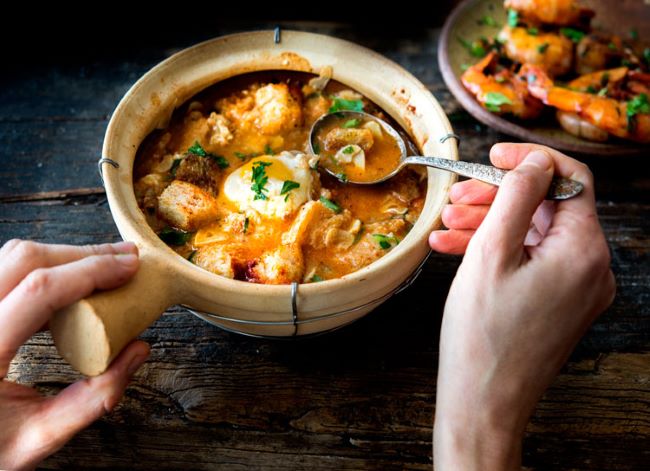
The color. Deep red-orange from the smoked paprika, not pale yellow or brown. The paprika blooms in the olive oil during cooking and distributes its color throughout the broth. A pale sopa de ajo either used insufficient paprika or added it too late in the process.
The broth. Rich and slightly thickened from the dissolved bread, with visible pieces of bread that have softened but not completely disintegrated. The broth should coat a spoon slightly and have enough body to feel substantial without being as thick as a puree.
The garlic. Present in flavor throughout but not sharp or raw-tasting. Properly cooked garlic in olive oil becomes sweet and mellow, and its flavor infuses the broth rather than sitting on top of it as a sharp bite.
The smoke. The smoked paprika contributes a gentle smokiness that runs through every spoonful. If the soup tastes only of garlic and bread without any smoky depth, the paprika used was not the smoked variety or was used in insufficient quantity.
The egg. Set white with a yolk that is still slightly fluid when broken. The egg should be poached in the broth rather than scrambled into it. A broken, distributed egg in the broth means it was stirred after adding, which is incorrect. The whole, gently poached egg presented in the bowl is part of the dish’s character.
Ordering Tips
Order sopa de ajo as a starter rather than a main course. It is filling enough to be a meal alongside bread, but in a restaurant context it works best as the first course before a meat or fish main.
Ask whether the broth uses water or chicken stock as the base. Traditional versions use water, which keeps the garlic and paprika as the dominant flavors. Stock adds depth but also adds a competing flavor layer. Both are acceptable, but knowing which you are getting helps you set expectations.
Eat it hot and immediately. Sopa de ajo cools quickly and the bread continues absorbing liquid as it sits. The egg yolk also continues cooking in the residual heat of the broth. A bowl eaten within five minutes of arriving at the table is significantly better than one that has been sitting for ten.
Pair with a glass of red wine from Ribera del Duero or Rioja, both of which have the tannic structure to complement the rich, smoky broth without being overwhelmed by the garlic.
Pricing Expectations
A bowl of the best sopa de ajo near me at a Spanish restaurant typically runs between $10 and $18 as a starter. Restaurants that make it in a traditional clay pot and serve it tableside tend to be at the higher end of that range. Casual tapas bars price it closer to $10 to $13. Home cook and community event versions are usually offered at a lower price point when they appear at organized dinners or food events.
Key Takeaways
- The best sopa de ajo near me is most reliably found at Spanish restaurants with Castilian or traditional cocina de cuchara menus rather than general tapas bars that carry it as a filler item.
- Sopa de ajo is made from stale bread, sliced garlic cooked in olive oil, smoked paprika, water or stock, and a poached egg. The smoked paprika is not optional and gives the soup its defining color and flavor.
- The red-orange color from smoked paprika and the whole poached egg in the broth are the two most immediate quality markers. A pale soup or a scrambled egg in the broth both indicate shortcuts.
- Ask whether the kitchen uses pimenton de la Vera. A confident answer confirms the right paprika is being used. Vague answers suggest a generic substitute.
- Search Instagram with “sopa de ajo” plus your city name. The distinctive color of a properly made version makes it identifiable in photos immediately.
- Eat it hot and immediately after it arrives. The bread absorbs liquid as it sits and the egg yolk continues cooking in the residual heat.
- Pair with Ribera del Duero or Rioja red wine for the best complement to the smoky, garlic-rich broth.
- Expect to pay $10 to $18 as a starter at a Spanish restaurant, with clay pot presentations at the higher end of that range.