Pho has crossed over from a niche Vietnamese staple to one of the most searched comfort foods in the country, and for good reason. A properly made bowl is deeply satisfying in a way that is hard to describe until you have had one. But the quality gap between a great bowl and a mediocre one is wide, and knowing what to look for when searching for the best pho near me makes a real difference in whether you walk away converted or confused about what the fuss is about. This guide helps you search smarter and order with confidence.
What Is Pho?
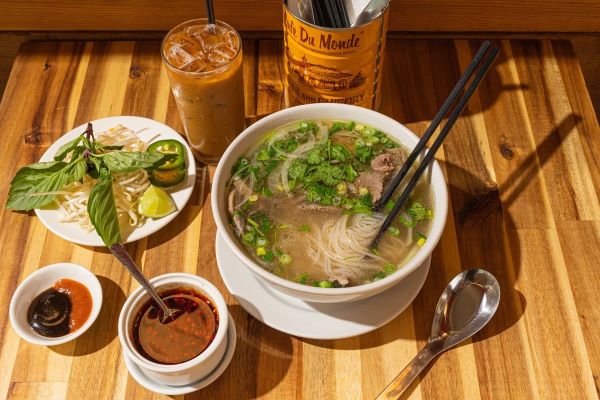
Pho (pronounced “fuh,” not “foe”) is a Vietnamese noodle soup built on a slow-simmered broth, flat rice noodles, and protein. The two most common versions are pho bo (beef) and pho ga (chicken). The broth is the centerpiece and what makes or breaks every bowl. It takes hours, sometimes days, to develop through slow-simmering beef bones, charred ginger and onion, and whole spices like star anise, cinnamon, cloves, and cardamom.
The result is a broth that is simultaneously savory, slightly sweet, aromatic, and deeply layered. Great pho broth is clear but complex. It should not taste heavy or greasy.
What Separates a Great Bowl from a Mediocre One
When you’re looking for the best pho near me, knowing what to evaluate helps you spot quality quickly.
The broth. This is everything. Great pho broth has depth, fragrance, and a clean finish. If the broth tastes flat, overly salty, or like it came from a packet, the rest of the bowl cannot save it. The fat content should be present but light enough that the broth still looks mostly clear.
The noodles. Fresh or properly prepared rice noodles should be soft but not mushy, with a slight chew. Overcooked noodles that turn into a clump at the bottom of the bowl are a sign the kitchen is cutting corners.
The protein. For beef pho, options typically include rare sliced beef (tai) added raw to the bowl and cooked by the hot broth, brisket, tendon, tripe, and meatballs. The rare beef should be fresh, thin, and evenly sliced. Brisket should be tender without being dry.
The table herbs and garnishes. A good pho restaurant brings a plate of fresh accompaniments: bean sprouts, fresh basil, sliced jalapeño, lime wedges, and sometimes culantro. These are not optional extras. They are part of the experience and let you adjust the flavor as you eat.
How to Find the Best Pho Near Me
Google Maps with photo review filtering. Search “pho near me” on Google Maps, then scroll through photos before committing. Bowl photos reveal more than written reviews. A clear, amber-toned broth with a generous herb plate is a good sign. A murky brown broth or sparse garnish tray is a warning.
Yelp’s filter by Vietnamese cuisine. Filter by Vietnamese restaurants, sort by rating with at least 50 reviews, and look for places where reviewers specifically mention the broth. Generic praise is not as useful as specific comments about the soup base.
Ask Vietnamese community members or local Facebook groups. The best pho near me for any given area is often known within the Vietnamese community long before it shows up prominently on review apps. Local food groups on Facebook or Nextdoor will often have strong opinions and personal recommendations.
Look for specialty shops over all-in-one menus. Restaurants that focus specifically on pho and a short menu of Vietnamese noodle dishes almost always outperform the ones offering pho alongside sushi, pad thai, and general Asian fusion. A focused menu usually means a kitchen that has invested in the broth.
What to Order as a First-Timer
If you are new to pho, start with a medium-sized bowl of pho tai (rare beef slices). It is the most common entry point and showcases the broth without overwhelming you with unfamiliar cuts. Add the bean sprouts and herbs as the restaurant brings them, squeeze in lime, and taste the broth on its own before adding hoisin or sriracha. Understanding the base flavor first helps you appreciate what makes a bowl well-made.
Tips for Getting the Most Out of the Bowl
- Stir the bowl gently when it arrives. The spices in the broth settle, and a light stir distributes them.
- Add herbs and sprouts early enough that they soften slightly in the broth rather than sitting raw on top until the end.
- Hoisin and sriracha are meant to be dipped into or used sparingly, not poured into the broth wholesale. Adding too much early masks the flavor of the soup.
- If the restaurant offers bone marrow as an add-on, it enriches the broth significantly and is worth trying at least once.
Regional Variations Worth Knowing
Pho varies by region of Vietnam, and you may notice these differences when searching for the best pho near me across different restaurants.
Northern-style pho (Hanoi) uses a cleaner, more delicate broth with fewer garnishes. The seasoning is subtle, the noodles are slightly wider, and the bowl is typically more restrained in flavor. It is considered the traditional original.
Southern-style pho (Saigon/Ho Chi Minh City) is sweeter, more fragrant, and comes with a larger garnish plate. The broth has more spice, the bowls are bigger, and the sweetness from the charred onion and rock sugar is more noticeable. Most Vietnamese-American restaurants serve a southern-influenced version, which is why the herb plate and hoisin are standard.
Knowing this helps explain why two restaurants that both serve “pho” can taste noticeably different from each other. Neither is wrong. They represent different regional traditions, and your preference will develop after trying both styles.
- Finding the best pho near me starts with evaluating the broth. Everything else in the bowl is secondary to whether the broth has depth, clarity, and genuine aromatic complexity.
- Look for restaurants that specialize in pho or Vietnamese noodle dishes rather than broad Asian menus. Focused menus typically mean more time and investment in the broth.
- Use Google Maps photo filtering and Yelp reviews that specifically mention the broth quality rather than generic praise.
- Local Vietnamese community recommendations and neighborhood food groups often surface the best pho near me faster and more accurately than review platforms alone.
- For first-timers, pho tai (rare beef) in a medium-sized bowl is the best starting point. Taste the broth before adding condiments.
- Fresh accompaniments matter. A restaurant that brings a full herb plate with sprouts, basil, jalapeño, and lime is taking the dish seriously.
- Hoisin and sriracha are meant to be used as accents. Adding too much early covers the flavor of a broth that someone spent hours building.
- The noodle texture and protein quality matter, but no amount of good toppings saves a flat or over-salted broth. Start your evaluation there.