There is a moment when you bite into a properly made milanesa argentina and understand why Argentines consider it a national dish. The crust shatters just enough. The meat underneath is thin, tender, and seasoned all the way through. It is not complicated food, but it is food that requires care. A rushed version gives you a greasy slab with a coating that falls off. A good one is something you think about afterward.
If you have been searching for the best milanesa argentina near me and keep landing on generic results or Italian-American restaurants offering something with the same name but a completely different product, this guide breaks down where to actually look and what to expect when you find it.
What Is Milanesa Argentina and Why It Stands Apart
The milanesa came to Argentina through Italian immigration in the late 19th and early 20th centuries. It shares its origin with the Milanese cotoletta, but over decades it became its own thing entirely. The Argentine version uses thinner cuts of beef, usually top round or silverside, pounded flat and marinated before breading. The marinade typically includes egg, garlic, parsley, and sometimes milk. That step is what separates it from a generic breaded cutlet. The meat absorbs the seasoning before it ever hits breadcrumbs.
The breadcrumbs are fine, not panko. The frying fat matters too. Argentine home cooks and restaurants that do it seriously use enough oil to shallow-fry properly, not a thin coating in a dry pan.
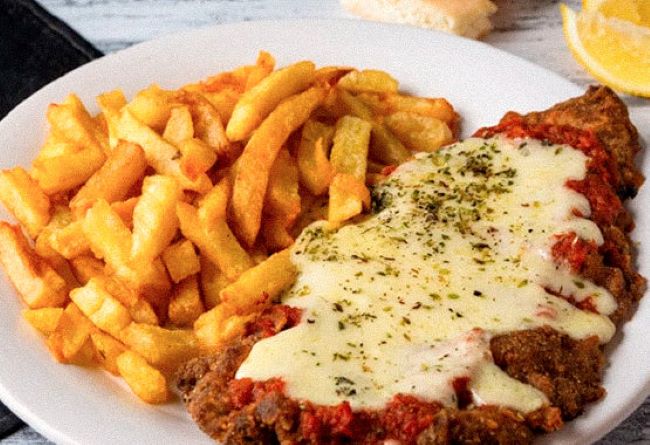
There are several common variations. The milanesa a la napolitana adds tomato sauce, ham, and melted cheese on top and goes under a broiler. The milanesa a caballo sits under a fried egg. Both are common on Argentine restaurant menus and worth knowing before you order.
When you search for the best milanesa argentina near me, the goal is to find a kitchen that understands these specifics rather than one that just puts a breaded cutlet on the menu with an Argentine flag next to it.
Where to Search First
Argentine restaurants are the obvious starting point, but they are not always easy to find depending on where you live. Cities with significant South American immigrant populations, like Miami, New York, Los Angeles, Chicago, and Houston, tend to have dedicated Argentine restaurants. Some are casual parrillas focused on grilled meats, and many of those also carry milanesa as a staple menu item.
South American restaurants broadly are worth checking. Uruguayan restaurants almost always carry milanesa since the dish is equally embedded in Uruguayan food culture. Peruvian and Chilean restaurants sometimes carry it too, though the preparation may differ slightly.
Argentine-owned bakeries and delis sometimes serve milanesa sandwiches, called milanesa en pan or milanesa sandwich, particularly at lunch. These are a legitimate way to find the dish outside of a full restaurant setting and are often where you find the most honest, everyday version.
Food trucks and pop-up vendors serving South American street food have grown in many cities. A search for Argentine food markets or Latin food festivals in your area can surface vendors who specialize in exactly this.
How to Search More Effectively
A basic search for the best milanesa argentina near me will return a mix of results with varying relevance. Here are more targeted approaches:
Search Google Maps for “Argentine restaurant” in your city and then manually check menus. Many restaurant listing pages allow menu browsing, and milanesa will show up clearly if the kitchen carries it.
Search Yelp using the Argentine cuisine filter. Read recent reviews specifically mentioning milanesa rather than just overall ratings. A restaurant praised for its asado may or may not put equal effort into its milanesa.
Search Instagram with your city name and “milanesa argentina.” Home cooks who sell through social media and small restaurant accounts often post food photos that do not surface in standard search results.
Ask in local Facebook groups focused on South American expats or Latin American food. These communities know where the best version of any specific dish is better than any algorithm does.
Check whether any Argentine cultural associations or community centers in your area host food events. These are often where you find home-cooked versions that rival or outperform restaurant options.
What a Proper Milanesa Argentina Should Look Like
Once you find a place that serves it, knowing what you are looking for helps you evaluate the quality before the second bite.
The cutlet. It should be thin, around half a centimeter or less. Thick milanesas usually mean the meat was not pounded properly, and the result is uneven cooking where the outside is done before the center is fully cooked through.
The crust. Even, golden brown across the entire surface. No pale patches, no burnt edges. The coating should stay attached to the meat when you cut it, not slide off in a sheet.
The seasoning. You should taste garlic and parsley in the meat itself, not just the coating. If the milanesa tastes only of breadcrumbs and frying oil, the marination step was skipped or rushed.
The texture inside. Tender and moist. If the meat is dry or chewy, it was either overcooked or cut from a tough part of the animal without proper preparation.
The oil. The finished milanesa should not sit in a pool of grease. Properly fried at the right temperature, it absorbs minimal oil and the crust stays crisp rather than soggy.
Ordering Tips Once You Arrive
When you find a restaurant serving the best milanesa argentina near me, a few things are worth confirming before you order.
Ask what cut of meat they use. Top round and silverside are traditional. Chicken milanesa is also common and entirely legitimate. Pork is less traditional but not unheard of. Vague answers about “beef” without specifics can mean varying quality depending on what the kitchen has available that day.
Ask about the napolitana. If you want milanesa a la napolitana, ask whether the cheese is melted to order or pre-assembled. Fresh to order is better.
Consider the side dishes. Traditional pairings include mashed potatoes, fries, or a simple green salad. Some Argentine restaurants serve it with puree de papas, which is a richer mashed potato made with butter and cream. Either works. A restaurant that pairs milanesa with something incongruous probably is not thinking about the dish in a traditional way.
Lunch versus dinner. Many Argentine restaurants serve milanesa more prominently at lunch as a daily special. If you are going for dinner, confirm it is on the evening menu.
What to Expect on Pricing
The best milanesa argentina near me at a proper Argentine restaurant will typically run between $18 and $32 for a full plate with sides, depending on the city and the restaurant’s positioning. A milanesa sandwich from a deli or lunch counter will be significantly less, often in the $10 to $16 range.
Be cautious about very cheap versions from non-specialized kitchens. A $10 restaurant milanesa at a place that primarily serves something else is probably not going through the full marination and preparation process.
Key Takeaways
- The best milanesa argentina near me is most reliably found at Argentine or Uruguayan restaurants, South American delis, and pop-up vendors at Latin food markets rather than through general search results alone.
- A proper milanesa argentina uses thinly pounded beef marinated in egg, garlic, and parsley before breading. The marinade step is what gives it flavor that generic breaded cutlets lack.
- Search Google Maps for Argentine restaurants specifically and check menus manually. Overall restaurant ratings do not tell you how seriously a kitchen treats this one dish.
- Instagram and local South American community Facebook groups surface real-time recommendations that search engines miss.
- A well-made milanesa has an even golden crust that stays attached, seasoning in the meat itself, and a moist interior. Thick, dry, or greasy versions indicate shortcuts in preparation.
- Milanesa a la napolitana, with tomato sauce, ham, and melted cheese, is the most popular variation and worth trying if the kitchen does it fresh to order.
- Expect to pay $18 to $32 for a full plate at a sit-down Argentine restaurant, or $10 to $16 for a milanesa sandwich at a deli or lunch counter.
- Lunch is often when milanesa gets the most attention on Argentine menus. Call ahead if you are planning a dinner visit to confirm availability.