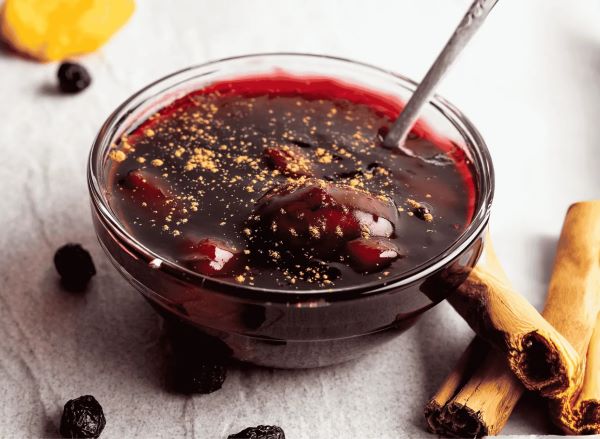
Mazamorra morada does not look like much when you first encounter it. A deep purple pudding in a bowl, sometimes served warm, sometimes at room temperature, with a thick texture somewhere between a fruit compote and a loose jelly. Then you taste it and the combination of purple corn, dried fruit, cinnamon, and clove hits in a way that is unlike almost anything else in the dessert world. It is ancient food. Purple corn has been cultivated in the Andes for thousands of years, and some form of this preparation has existed in Peruvian cooking long before Spanish colonization introduced ingredients like cinnamon and quince.
If you have been searching for the best mazamorra morada near me and keep coming up empty or finding versions that taste flat and oversugared, this guide helps you look in the right places and know what you are tasting when you find it.
What Mazamorra Morada Actually Is
Mazamorra morada is a Peruvian dessert pudding made by simmering purple corn, dried fruits, and spices together in water until the liquid extracts the deep anthocyanin pigment from the corn and develops a complex fruity flavor. The liquid is then strained, sweetened with sugar, thickened with sweet potato starch or cornstarch, and returned to the heat until it reaches a pudding consistency. Dried fruits, typically diced quince, dried peaches, pineapple, and prunes, go back into the finished pudding along with fresh fruit like sliced apple or pear.
The spice profile is warm and layered: cinnamon sticks, cloves, and sometimes a touch of orange peel or lemon verbena added during the simmering stage. The result has a flavor that is simultaneously fruity, slightly tannic from the corn, warm from the spices, and sweet without being cloying when made correctly.
Mazamorra morada is closely linked to arroz con leche in Peruvian dessert culture. The two are often served together in a pairing called combinado, half rice pudding and half purple corn pudding side by side. Many Peruvian restaurants that carry one will carry both.
When you search for the best mazamorra morada near me, the depth of the purple color and the complexity of the spice are the first two things worth evaluating when it arrives.
Where to Find It
Peruvian restaurants are the primary and most reliable source. Peru has one of the most internationally recognized culinary scenes in Latin America, and Peruvian restaurants have expanded considerably across the United States over the past decade. Cities with established Peruvian communities, including Miami, Los Angeles, New York, Washington D.C., Houston, and Chicago, have multiple options to choose from. Even in smaller cities, a single well-established Peruvian restaurant will almost always carry mazamorra morada as a standard dessert.
Peruvian bakeries and cevicherias sometimes carry mazamorra morada as a prepared dessert sold by the cup. These casual spots can be a more accessible and often equally authentic source compared to sit-down restaurants.
Latin American grocery stores with a Peruvian customer base sometimes sell prepared mazamorra morada in the deli or prepared foods section. Quality varies, but in areas without many restaurant options this is worth checking.
Peruvian home cooks and community vendors are a strong source in cities with Peruvian communities. Instagram and Facebook groups for Peruvians living in your city will surface vendors who sell mazamorra morada by the container, particularly around Peruvian national holidays when demand for traditional desserts increases.
How to Search More Effectively
A direct search for the best mazamorra morada near me will return Peruvian restaurants in your area, but may miss smaller spots and home vendors who do not optimize their listings around this specific dessert. Here is how to find more options:
Search Google Maps for Peruvian restaurant in your city and browse menus for mazamorra morada under the dessert section. Many Peruvian restaurants list their full dessert menu on their listing page.
Search Yelp for Peruvian food in your area and read reviews that mention desserts or mazamorra specifically. Diners who order it will describe the texture, the sweetness level, and whether the fruit inside was well-prepared.
Search Instagram with “mazamorra morada” plus your city name. Peruvian restaurant accounts and home cook vendors post photos of this dessert regularly, and the color alone makes it visually distinctive in a feed.
Search Facebook for Peruvian community groups in your city and ask directly. Peruvians living abroad have strong opinions about which local restaurant or home cook makes the most authentic version and will answer specifically.
Check whether any Peruvian cultural events or food festivals are happening in your area. Mazamorra morada is a staple at Peruvian community gatherings and is often served at these events by home cooks who rarely sell through any public-facing channel.
What Good Mazamorra Morada Should Look Like
When the dessert arrives, a few specific things tell you whether the preparation was done properly.
The color. Deep, saturated purple, almost like a concentrated grape juice that has been thickened. A pale or washed-out purple means the corn was not simmered long enough to extract the full pigment. A grayish or brownish tint can indicate the use of artificial coloring or low-quality corn.
The texture. Thick enough to hold a slight shape in the bowl but soft enough to move when the bowl is tilted. It should not be rubbery or stiff, which would indicate too much starch. It should not be runny or watery, which would indicate insufficient thickening or too short a cooking time.
The fruit. Pieces of quince, dried peach, or prune should be visible throughout and fully softened. The fruit should have absorbed some of the purple color and the spiced liquid. Fruit that is still firm or that tastes only of itself without any of the corn or spice influence was added too late in the process.
The spice. Warm and present but not sharp. You should taste cinnamon and a hint of clove in every spoonful without either dominating. A mazamorra morada that tastes only sweet without any spice warmth was made with a minimal or pre-packaged spice blend.
The sweetness. Balanced and not cloying. A properly made version is sweet enough to be a dessert but retains the slight tartness from the fruit and the faint bitterness from the corn. An overly sweet version masks the complexity that makes this dessert interesting.
Ordering and Eating Tips
Mazamorra morada is almost always a dessert course rather than a shared starter. Order it at the end of a Peruvian meal rather than alongside savory dishes.
Ask whether it is served warm or at room temperature. Both are traditional. The warm version emphasizes the spice aromatics. The room temperature version lets the fruit flavors come through more clearly. Some restaurants serve it cold from refrigeration, which dulls both the spice and fruit notes. If given a choice, warm or room temperature is better.
Consider ordering the combinado if it is available. The pairing of mazamorra morada with arroz con leche is a classic combination that balances the fruity, spiced pudding with the mild creaminess of the rice dessert. Eating them alternately in the same bowl is the traditional way.
Do not skip it because of the appearance. The deep purple color is striking but puts some first-time diners off. The flavor is approachable and complex in a way that most desserts are not.
Pricing Expectations
A serving of the best mazamorra morada near me at a Peruvian restaurant typically runs between $6 and $12 as a dessert course. The combinado pairing with arroz con leche is usually in the same price range or slightly higher. Home cook and community vendor versions sold by the cup or container run $4 to $8 per serving and are often made with more care than restaurant versions aimed at high turnover.
Key Takeaways
- The best mazamorra morada near me is most reliably found at Peruvian restaurants, Peruvian bakeries, and home cook vendors who sell through Instagram or community Facebook groups.
- Mazamorra morada is a Peruvian dessert pudding made from purple corn simmered with dried fruits and warm spices, thickened with starch, and sweetened without becoming cloying when made correctly.
- The depth of purple color is a direct indicator of how long the corn was simmered. Pale or washed-out color means the flavor will also be weak.
- Good mazamorra morada has a thick but soft texture, visible and fully softened fruit throughout, and a clear warmth from cinnamon and clove in every spoonful.
- Instagram searches with your city name and Facebook community groups for Peruvians in your area surface vendors and home cooks who do not appear in standard search results.
- Ask whether it is served warm, at room temperature, or cold. Warm or room temperature brings out the spice and fruit complexity better than a refrigerator-cold version.
- Order the combinado if available. Mazamorra morada paired with arroz con leche side by side in one bowl is the traditional Peruvian way to eat it and worth experiencing before ordering them separately.
- Expect to pay $6 to $12 at a Peruvian restaurant, or $4 to $8 per container from a home cook or community vendor.