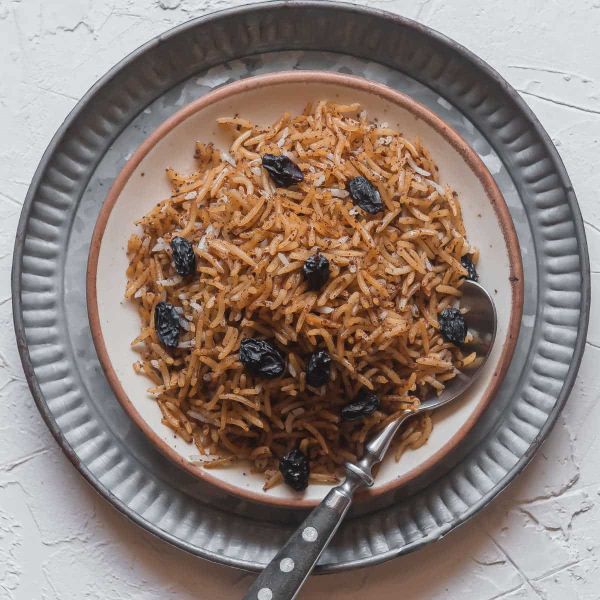
Arroz con coco is one of the defining dishes of Colombian Caribbean coastal cooking, a region that includes Cartagena, Barranquilla, and the broader Costa Atlantica, where coconut milk was historically an abundant local ingredient used to enrich rice in the same way that stock enriches rice in other traditions. It is not a dessert rice despite the coconut. It is a savory, slightly sweet side dish with a richness and fragrance that plain white rice cannot match, and when it is made properly with real coconut milk and cooked patiently enough to let the coconut fat caramelize slightly in the bottom of the pot, it is one of the most satisfying rice preparations in Latin American cooking.
If you have been searching for the best arroz con coco near me and finding only generic coconut-flavored rice that lacks the depth and fragrance of the coastal Colombian version, this guide helps you identify the kitchens making it correctly.
What Arroz con Coco Actually Is
There are two main versions of arroz con coco in Colombian coastal cooking, and knowing the difference helps you order the right one and evaluate the quality.
Arroz con coco blanco is the simpler version. Rice cooked in coconut milk with salt until the liquid is fully absorbed and the rice is fluffy and fragrant. The coconut flavor runs through every grain but the rice remains white or off-white in color. This version is served with fish, fried plantains, and other coastal seafood dishes.
Arroz con coco titoté is the more complex and more distinctively Colombian coastal version. In this preparation, coconut milk is first cooked down in the pot until most of the liquid evaporates and the coconut fat separates and begins to fry the solids. The caramelized coconut solids, called titoté, turn a deep golden-brown and are left in the pot as the rice and additional coconut milk go in. The finished rice has a golden-brown tint from the caramelized coconut, a slightly nutty depth from the caramelization, and a richer overall character than the blanco version. Some versions add sugar and raisins to the titoté version, which adds a sweet note alongside the savory caramelized coconut.
The titoté preparation requires patience and attention. The coconut milk must be stirred and watched carefully during the reduction phase to prevent the solids from burning rather than caramelizing. A kitchen that takes the time to properly develop the titoté produces a rice with a depth and complexity that the shortcut version, which simply adds coconut milk to the rice, cannot replicate.
When you search for the best arroz con coco near me, asking which version a restaurant makes and whether they develop the titoté helps you identify a kitchen committed to the authentic coastal Colombian preparation.
Where to Find It
Colombian restaurants with a coastal focus are the primary source. A restaurant that specifically references Cartagena, Barranquilla, or the Colombian Caribbean coast in its menu description is more likely to carry arroz con coco in the coastal tradition than a general Colombian restaurant focused on the Andean interior.
Colombian seafood restaurants often carry arroz con coco as a standard accompaniment to grilled or fried fish and seafood. The pairing of coconut rice with coastal seafood is one of the defining combinations of Colombian Caribbean cooking, and a restaurant that takes its seafood program seriously will typically make the rice properly.
Colombian home cooks and community vendors from coastal Colombian cities are often the most reliable source in cities where dedicated coastal Colombian restaurants are scarce. Instagram and Facebook groups for Colombians in your city, particularly those from Cartagena, Barranquilla, or the broader Costa Atlantica region, will surface vendors who make arroz con coco the coastal way.
Latin American restaurants with broad menus that include Colombian dishes sometimes carry arroz con coco as an alternative to plain rice. The quality depends on whether the kitchen uses the titoté method or simply adds coconut milk to standard rice preparation.
How to Search More Effectively
A direct search for the best arroz con coco near me will surface Colombian and Latin American restaurants in your area. Here is how to identify the ones making it properly:
Search Google Maps for Colombian restaurant in your city and browse menus for arroz con coco. A menu that describes the rice as coasting-style, coastal, or Cartagena-style is indicating a kitchen aware of the regional tradition. A menu that simply lists coconut rice without any regional context may be making a simplified version.
Search Yelp for Colombian restaurants and read reviews that mention arroz con coco. Reviewers who are familiar with the coastal Colombian version will describe whether the rice had a golden-brown color from the titoté, whether the coconut flavor was deep and slightly caramelized rather than just milky, and whether the rice was served alongside appropriate coastal dishes.
Search Instagram with “arroz con coco” plus your city name. Colombian restaurant accounts and coastal Colombian home vendors post photos of their rice, and the distinctive golden-brown color of a properly made titoté version is immediately visually different from plain coconut milk rice.
Ask any Colombian restaurant whether they make the titoté version or simply cook rice in coconut milk. A kitchen making the titoté version will describe the caramelization process specifically. A kitchen using the shortcut will describe a simpler process or will not recognize the term.
What Good Arroz con Coco Should Look Like
Once you find a source and the rice arrives, a few things confirm the quality.
The color. For arroz con coco titoté, golden-brown rather than white, with the darker flecks of caramelized coconut distributed through the rice. The color should be uneven, slightly darker where the titoté made contact with the grains, lighter elsewhere. A uniformly pale white rice with coconut flavor but no color change indicates the shortcut preparation without caramelization.
The aroma. Distinctly coconut, with a slightly toasted, nutty undertone from the caramelized fat in the titoté version. The coconut aroma should be immediately present when the rice is served and should be complex rather than simply sweet. A flat, milky coconut smell without any toasted depth indicates the titoté step was not completed.
The rice texture. Separate grains that are fully cooked through and slightly glossy from the coconut fat. The rice should be fluffy rather than sticky, with each grain distinct. A properly made arroz con coco is neither mushy nor dry. The coconut milk provides enough moisture during cooking to keep the rice moist without making it gummy.
The raisins. If the version includes raisins, they should be plump and fully hydrated, having absorbed some of the coconut-flavored cooking liquid. Dry, shriveled raisins were added too late or the rice was not cooked with sufficient moisture. Absent raisins in a version that is meant to include them indicates a shortcut in the preparation.
The flavor balance. Savory from the salt and the coconut, with a slight sweetness from the natural sugars in the coconut milk and the caramelized titoté. The sweetness should be background rather than dominant. A very sweet arroz con coco was made with added sugar beyond what the titoté produces naturally, which pushes the rice toward a dessert character rather than a savory side.
Ordering and Eating Tips
Order arroz con coco as a side dish rather than a main course. It is designed to accompany fish, seafood, or other coastal Colombian dishes. The combination of the slightly sweet, caramelized coconut rice alongside fried fish and tostones is the traditional coastal Colombian plate format and eating them together provides the intended flavor balance.
Ask whether the restaurant is serving the titoté version or the blanco version. Both are legitimate, but knowing which you are getting helps you set expectations for the color, aroma, and flavor profile.
Eat the rice while it is still warm. Coconut rice cools quickly and the coconut fat in the titoté version begins to solidify as the temperature drops, changing the texture of the rice. A warm serving is significantly better than a room temperature one.
If the restaurant carries patacones or tostones alongside, order them with the arroz con coco. The combination of the savory, slightly sweet coconut rice and the crispy, salty fried plantain is one of the most satisfying two-component combinations in Colombian coastal cooking.
Pricing Expectations
Arroz con coco as a side dish at a Colombian restaurant typically runs between $4 and $9 depending on the portion and the market. As part of a full coastal Colombian plate with fish or seafood, it is typically included in the main course price of $18 to $28. Home cook and vendor versions included as part of a prepared meal package are usually part of the overall plate price.
Key Takeaways
- The best arroz con coco near me is most reliably found at Colombian restaurants with a coastal or Caribbean focus, and through home cook vendors from Cartagena, Barranquilla, and the Colombian Costa Atlantica region.
- Arroz con coco titoté is the most authentic coastal Colombian version, made by first caramelizing the coconut solids before cooking the rice in the remaining coconut milk, producing a golden-brown, nutty-flavored rice with real depth.
- The golden-brown color and the toasted coconut aroma of the titoté version are the most immediate quality markers. White rice with plain coconut milk flavor indicates the shortcut preparation.
- Ask whether the restaurant makes the titoté version. A kitchen that caramelizes the coconut solids first will describe the process. A kitchen using the shortcut will not recognize the distinction.
- Search Instagram with “arroz con coco” plus your city name and check Colombian community Facebook groups specifically for members from coastal Colombian cities.
- Eat warm. Coconut fat solidifies as the rice cools and the texture changes notably as the temperature drops.
- Pair with fried fish and tostones for the traditional Colombian coastal plate format that makes the coconut rice taste best in context.
- Expect to pay $4 to $9 as a side dish and $18 to $28 for a full coastal Colombian plate that includes the arroz con coco.