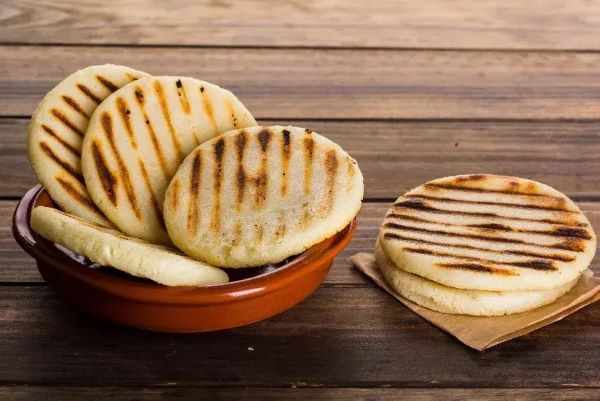
Arepa paisa is the arepa that most people picture when they think of Colombian arepas, and it is also the one most often confused with Venezuelan arepas or with other Colombian regional styles that look similar but eat differently. The Paisa region of Colombia, centered on Antioquia and the coffee-growing municipalities around Medellin, has an arepa tradition that produces a thin, white corn arepa without cheese in the masa, cooked on a dry griddle until golden spots develop, and eaten with butter as it comes off the heat. It is understated food, unadorned and practical, designed to be part of a meal rather than a standalone item. But when it is made from good masa with proper griddle technique and eaten with enough butter to melt into the warm corn surface, it becomes one of those simple foods that makes complete sense.
If you have been searching for the best arepa paisa near me, this guide helps you find and evaluate the real thing.
What Arepa Paisa Actually Is
The arepa paisa belongs to the white corn arepa tradition of the Colombian Andean interior. The key distinction from the arepa antioquena, which is the cheese-integrated version of the same regional style, is the absence of cheese in the masa. The arepa paisa is plain white corn masa, formed into thin discs, and cooked on a dry griddle. It is the simpler, plainer sibling in the same regional tradition.
The masa uses masarepa blanca, precooked white corn flour, mixed with water and a small amount of salt. The mixture is shaped by hand into thin discs, roughly half a centimeter to one centimeter deep and about twelve to fifteen centimeters across, and cooked on a hot dry griddle without oil until golden spots develop on both flat surfaces from direct contact with the hot metal.
The thinness is important. Arepa paisa is significantly thinner than a Venezuelan arepa or an arepa boyacense, and this thinness means it cooks quickly and develops more griddle contact surface relative to its volume, producing a higher ratio of slightly crisped golden exterior to soft corn interior. The result is more griddle character and less doughy interior than a thicker arepa.
Butter applied to the warm surface immediately after cooking is traditional. The butter melts into the corn and adds richness to what would otherwise be a very simple preparation. Some families add a slice of fresh white cheese on top, which is acceptable and common, but the traditional arepa paisa is primarily corn and butter rather than a cheese-forward preparation.
Arepa paisa is eaten at every meal in the Paisa region. For breakfast with hot chocolate or coffee, alongside bandeja paisa as part of the full Paisa plate, with soups, or as a simple snack with butter at any hour. It is bread in the most functional sense of the word for the people who grew up with it.
When you search for the best arepa paisa near me, the thinness, the plain white corn without cheese in the masa, the golden griddle spots, and the butter application are the markers that confirm the traditional Paisa preparation.
Where to Find It
Colombian bakeries and panaderias in cities with Colombian communities are the primary source. A Colombian panaderia that serves a Paisa clientele from Medellin and the surrounding region will make arepa paisa as a standard breakfast and daily item. These bakeries cook arepas on griddles throughout the morning and the best versions are eaten warm with butter immediately after cooking.
Colombian restaurants with Paisa menus sometimes carry arepa paisa as part of a bandeja paisa or as a standalone breakfast item. A restaurant that offers a full bandeja paisa will almost always include the arepa paisa as one of its components, and this is often the most reliable way to encounter it in a restaurant context.
Colombian areperas and street food operations focused on Colombian arepas will carry arepa paisa alongside other regional varieties. An operation that labels and distinguishes between arepa paisa, arepa antioquena, arepa boyacense, and other styles is operating with genuine regional knowledge.
Colombian home cooks and community vendors from the Paisa region are the most authentic source in cities without dedicated Paisa bakeries. Home cooks from Medellin, Manizales, Pereira, and other Paisa cities make arepa paisa as a matter of daily habit and will make and sell them through community networks. Instagram and Facebook groups for Colombian expats, particularly those from Antioquia, are the most productive search channels.
How to Search More Effectively
A direct search for the best arepa paisa near me will return Colombian restaurants and bakeries in your area. Here is how to identify the ones making the proper Paisa version:
Search Google Maps for Colombian bakery in your city and browse photo sections for arepa displays. A bakery that shows thin, white arepas with golden griddle spots in their display is making the Paisa style. A bakery showing thick, cheese-stuffed arepas is making a different regional style.
Search Instagram with “arepa paisa” plus your city name. Colombian bakery accounts and home cook vendors from the Paisa region post photos of their arepas regularly, and the thin, white, simply made Paisa arepa is distinguishable from more elaborate regional styles in a photo.
Search Facebook for Colombian community groups in your city, specifically asking about arepa paisa or Paisa food. Colombians from Antioquia are specific about their regional food and will give you direct recommendations for the most authentic local source.
Ask any Colombian bakery or restaurant directly whether their arepa is the thin plain Paisa style or a thicker style with cheese. This question will immediately distinguish between regional varieties and confirm whether the source makes what you are looking for.
What Good Arepa Paisa Should Look Like
Once you find a source, a few things confirm the quality.
The thickness. Noticeably thin compared to Venezuelan arepas or arepa boyacense. The arepa paisa should be roughly half a centimeter to one centimeter deep, producing a disc that is more like a thick corn tortilla than a corn bread roll. This thinness is structural to the style.
The color. White to off-white throughout the masa, with golden to dark brown spots on the flat surfaces where the griddle contact caramelized the corn. The spots should be irregular and natural-looking, distributed across both sides from even cooking. Uniformly pale arepas without golden spots were cooked at too low a temperature.
The surface texture. Slightly firm where the griddle spots developed, slightly softer in the areas between spots, with a dry rather than oily surface. The arepa paisa is cooked on a dry griddle without oil, and the exterior should reflect this: lightly crisped in places but not greasy.
The plain masa. No visible cheese within the interior when the arepa is broken or bitten. The arepa paisa masa is plain white corn and salt. Any cheese integrated into the interior confirms you have a different regional style. Cheese applied on top as a topping is acceptable in some serving contexts but is not part of the masa itself.
The aroma. Warm toasted corn, simple and direct. The aroma of a freshly cooked arepa paisa should be of the corn itself rather than of dairy. A strong cheese aroma from the interior means a different style was made.
Ordering and Eating Tips
Eat arepa paisa warm, within minutes of coming off the griddle. The corn masa cools quickly and the slight crispness of the griddle spots softens as the arepa reaches room temperature. A warm arepa with melting butter is the intended experience.
Apply butter immediately and generously. The Paisa tradition is not shy with butter on an arepa, and a thin smear that barely coats the surface is not the same experience as a proper application that melts and absorbs into the warm corn. The butter is not a condiment but an integral part of the preparation.
Pair with Colombian hot chocolate or tinto for the traditional Paisa morning context. The arepa alongside coffee or chocolate is the Colombian equivalent of toast with butter alongside morning coffee, and the combination makes both things taste better than either alone.
Order the arepa as part of a bandeja paisa if the restaurant offers it. Eating the arepa paisa alongside the full Paisa plate of rice, beans, ground beef, chicharron, egg, sweet plantain, and avocado is the complete Paisa food experience and gives the arepa its proper context within the meal.
Pricing Expectations
Individual arepa paisa at a Colombian bakery typically runs between $1 and $3 each depending on size and market. As part of a bandeja paisa at a Colombian restaurant, it is included in the full plate price of $16 to $26. Home cook and vendor versions sold through batch orders are often priced similarly to bakery rates.
Key Takeaways
- The best arepa paisa near me is most reliably found at Colombian bakeries serving a Paisa clientele, through home cook vendors from Antioquia and the Eje Cafetero region on Instagram and Facebook, and as a component of a bandeja paisa at Colombian restaurants with traditional Paisa menus.
- Arepa paisa is a thin, plain white corn arepa without cheese in the masa, cooked on a dry griddle until golden spots develop on both surfaces, and eaten with butter while warm. It is thinner than Venezuelan arepas and does not have cheese integrated into the dough.
- The thinness, the plain white corn interior without visible cheese, and the golden griddle spots on both surfaces are the three primary quality markers.
- Ask directly whether the arepa is the thin plain Paisa style or a thicker version with cheese in the masa. This question immediately distinguishes between regional styles.
- Apply butter generously while warm. The butter is not a condiment but an integral part of the traditional Paisa preparation.
- Eat immediately after cooking. The griddle spots soften within minutes as the arepa cools and the best texture is experienced warm.
- Search Instagram with “arepa paisa” plus your city name and check Colombian community Facebook groups specifically for members from Medellin and the Antioquia region.
- Expect to pay $1 to $3 per arepa at a Colombian bakery or from a home cook vendor, with the bandeja paisa plate at a restaurant running $16 to $26.