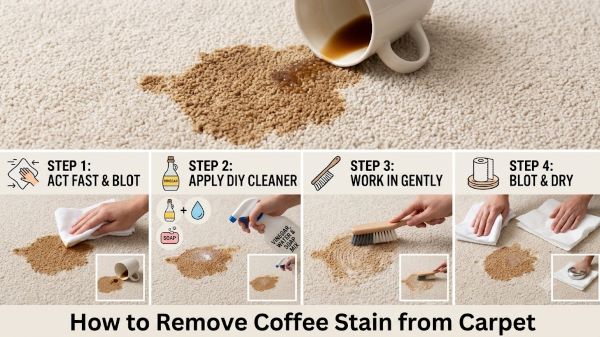
A coffee spill on carpet is the kind of thing that demands immediate attention. The longer it sits, the more the tannins in coffee bond with carpet fibers, and the harder it becomes to remove coffee stain from carpet without leaving a ghost mark. Learning how to remove coffee stain from carpet correctly starts with understanding what the stain is made of. If you’re reading this in a panic with a fresh spill in front of you, start with the blotting step below right now and come back to the rest of the guide in a minute.
Act Fast: The First 60 Seconds Matter
The moment coffee hits carpet, blot it. Do not scrub, rub, or press down hard with a back-and-forth motion. Scrubbing spreads the stain and pushes it deeper into the fibers.
Grab a clean white cloth or paper towels and press firmly over the spill. Lift. Press again. Work from the outer edge of the stain toward the center to prevent spreading. Keep blotting until you’ve absorbed as much liquid as possible.
Once the bulk of the spill is up, you can move into the cleaning phase.
Method 1: Dish Soap and Cold Water
This is the right first step for most fresh coffee stains. It works on the majority of carpet types and uses things most people already have.
What you need:
- 1 tablespoon of dish soap (plain, not a degreaser with bleach)
- 1 cup of cold water
- Clean white cloths or paper towels
Steps:
- Mix the dish soap into the cold water and stir gently.
- Apply a small amount of the solution to the stained area with a cloth. Do not pour directly onto the carpet.
- Blot with a clean section of the cloth, working inward from the edges.
- Rinse by blotting with a cloth dampened with plain cold water to lift the soap residue.
- Blot dry with a fresh cloth. Let the area air dry completely.
Repeat the process if the stain is still visible after the first pass. This method handles most fresh spills on its own.
Method 2: White Vinegar Solution
White vinegar is useful when dish soap alone does not fully lift the stain or when the coffee had milk or sugar in it, which can make it stickier and more resistant.
What you need:
- 1 tablespoon of white vinegar
- 1 tablespoon of dish soap
- 2 cups of warm water
Steps:
- Mix the three ingredients together.
- Apply to the stain with a clean cloth, blotting rather than rubbing.
- Work inward from the edges of the stain.
- Rinse with cold water and blot dry.
The vinegar smell dissipates as the carpet dries. It does not linger.
Method 3: Baking Soda for Dried Coffee Stains
If the stain has already dried before you got to it, the approach changes. Dried coffee stains need to be re-moistened before cleaning agents can work on them effectively.
Steps:
- Dampen the stained area with a small amount of cold water. Just enough to re-wet the stain without soaking the carpet padding below.
- Sprinkle baking soda over the dampened area and let it sit for 5 to 10 minutes. The baking soda helps lift the stain as it dries.
- Vacuum up the baking soda.
- Follow with the dish soap method described in Method 1 above.
For older or deeply set stains, you may need to repeat the process two or three times.
Method 4: Enzyme-Based Carpet Cleaner
When home remedies do not fully remove coffee stain from carpet, an enzyme-based cleaner is the next step up and the most effective over-the-counter option. Products like Folex, Carbona Stain Devils, or OxiClean Carpet Spray are widely available and work by breaking down the organic compounds in coffee at a molecular level.
Follow the product directions carefully. Most require you to apply, let dwell for several minutes, then blot and rinse. These products work particularly well on stains that have been partially treated but left a faint ghost mark.
Does Carpet Type Affect the Method?
Not every carpet responds to the same approach when you try to remove coffee stain from carpet, and knowing your fiber type helps you avoid making the stain worse.
Synthetic fibers (nylon, polyester, olefin) are the most forgiving. They are stain-resistant by nature and respond well to the dish soap and vinegar methods above. Most residential carpet in the US falls into this category.
Wool carpet is more delicate. Avoid vinegar and any strongly alkaline cleaners, as these can damage wool fibers. Stick to mild dish soap and cold water, and call a professional if the stain is deep or large.
Berber or loop pile carpet traps liquid in its construction. Blot very gently and do not over-wet. The loop structure can distort permanently if you scrub. Use minimal solution and let it sit longer rather than applying more force.
Light or white carpet shows coffee stains the most, but it also responds well to hydrogen peroxide (3%) as a follow-up treatment. Apply a small amount to a clean cloth and blot gently. Test on a hidden area first to confirm it does not affect the color before using it on a visible spot.
If you are unsure of your carpet type, the manufacturer’s tag under the edge of the carpet near a wall usually identifies the fiber content.
Do not use hot water. Heat sets protein stains and can permanently bond coffee tannins to carpet fibers. Always use cold or lukewarm water.
Do not scrub. Scrubbing distorts carpet fibers and spreads the stain outward. Always blot.
Do not use bleach on colored carpet. Bleach removes the stain and the carpet color along with it. Even on light carpets, bleach can cause uneven discoloration.
Do not over-wet the carpet. Soaking the carpet allows moisture to reach the padding below, which can cause mold growth and odor. Use enough solution to treat the stain but keep applications light and targeted.
If the Stain Won’t Come Out
Some stains set too deeply before treatment begins, or the carpet fiber type is particularly stain-absorbent. If multiple rounds of home treatment have not fully removed the coffee stain from carpet, a few options remain.
A steam cleaner or carpet extractor used with an appropriate cleaning solution applies more consistent heat and suction than manual blotting, which can pull up residue that cloth methods miss.
Professional carpet cleaning is the final option. A professional can identify your carpet’s fiber type and use the appropriate cleaning agent and method without risk of damage.
Key Takeaways
- The fastest way to remove coffee stain from carpet completely is to act within the first 60 seconds of the spill. The sooner you act, the better the outcome.
- Blot, never scrub. Scrubbing spreads the stain and pushes it deeper into the fibers.
- Dish soap mixed with cold water handles most fresh coffee stains on the first or second pass.
- Adding white vinegar to the solution helps with stains from coffee that contained milk or sugar.
- Dried stains need to be re-moistened with cold water before any cleaning solution can work effectively. Baking soda applied after re-wetting helps lift residue before the main cleaning step.
- Never use hot water when trying to remove coffee stain from carpet. Heat bonds the stain to the fibers permanently.
- Enzyme-based cleaners like Folex or OxiClean Carpet Spray are the best upgrade over home remedies for stubborn or partially treated stains.
- If the stain does not respond to repeated treatment, a carpet extractor or professional cleaning is more effective than continued manual blotting.