A toilet that keeps running is one of the most common household problems, and it’s usually simple to fix. The constant trickling sound means water is leaking from the tank into the bowl or escaping down the drain. Most people assume they need a plumber, but how to fix a running toilet is often something you can handle yourself in ten minutes with no special skills required. Understanding the basics of how to fix a running toilet puts you in control of a repair that many people pay $200 to have done professionally.
A running toilet wastes thousands of gallons of water per year. On top of the environmental impact, it adds up on your water bill. Understanding why is my toilet running and what causes it puts you in position to stop the problem before it becomes expensive.
Why Your Toilet Keeps Running and Why It Matters
When you flush a toilet, the fill valve opens and refills the tank. Once the water reaches a certain level, the valve closes and stops running. A running toilet means this process never completes. The water keeps flowing when it should stop, or the toilet won’t stop running even after the tank is full.
The constant noise is not just annoying. That water has to go somewhere. If water is leaking into the bowl, you’re losing hundreds of gallons monthly. A toilet that won’t stop running might be wasting enough water to raise your water bill by 30 percent or more.
The good news: why does my toilet keep running usually comes down to one of three mechanical failures, and all of them are repairable. You don’t need to be handy. You just need to understand the basic parts and what they do.
The Main Parts: Understanding Your Toilet Tank
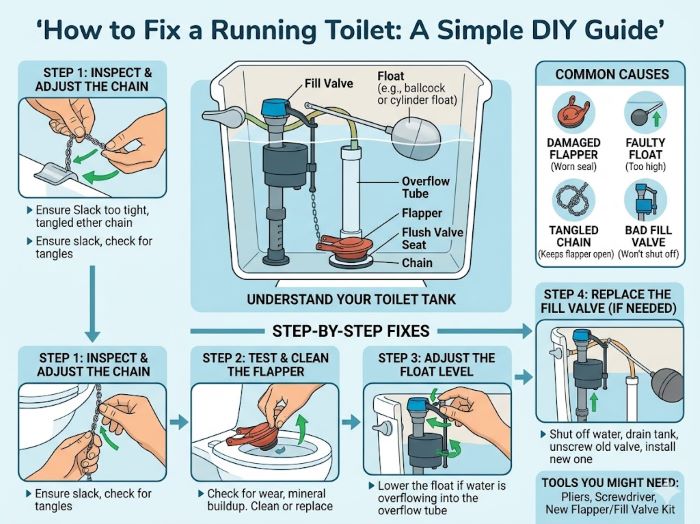
Before we talk about how to stop toilet from running, let’s cover the key components inside your tank.
The fill valve (also called ballcock): This is the valve that opens when you flush and refills the tank with water. It closes when the water reaches the proper level. When it fails, the valve won’t close completely, so water keeps flowing.
The flapper: This is a rubber plug at the bottom of the tank. When you flush, the flapper lifts to let water drain into the bowl. It then settles back down to seal the drain hole. If the flapper doesn’t seal properly, water continuously leaks into the bowl.
The float: This is either a ball on an arm or a cup that rises and falls with the water level. It signals the fill valve when to open and close. If the float is stuck or damaged, the fill valve won’t shut off and your toilet keeps running.
The overflow tube: This is a hollow pipe in the middle of the tank. If water level gets too high, it drains down this tube into the bowl. A clogged or broken overflow tube can be part of the problem.
The flapper chain: This connects the flush handle to the flapper. If it’s too tight or too loose, the flapper may not seal properly.
Now that you know the parts, let’s talk about how to fix a toilet that keeps running.
Step 1: Diagnose the Problem
The first step is figuring out where the water is leaking. Is it going down the drain into the bowl, or is it running through the fill valve?
Is water leaking into the bowl?
Listen to where the sound is coming from. If it’s a slow trickling or hissing coming from inside the tank near the center bottom, water is leaking past the flapper. The flapper is your problem.
Add food coloring or a few drops of dish soap to the tank. If the color moves toward the bowl, you’ve confirmed the flapper is not sealing. This is the most common reason why does my toilet keep running.
Is the fill valve running continuously?
If you hear water rushing or hissing from the fill valve area (usually on the left side of the tank near the inlet pipe), the fill valve is not closing. This is the second most common cause.
Is water running into the overflow tube?
Look at the overflow tube (the hollow pipe in the center). Water should never be flowing into it during normal use. If it is, either the fill valve is not shutting off or the water level is being set too high.
How to Stop Toilet From Running: Flapper Issues
The flapper is the most common culprit. If water keeps running into the bowl, the flapper probably needs replacing. Learning how to fix a running toilet by replacing the flapper is faster than waiting for a plumber and costs a fraction of the price.
Step 1: Turn off the water
Before you do any work, turn off the water supply to the toilet. There’s a small valve behind or beneath the toilet. Turn it clockwise until water stops flowing. If you can’t find it or it doesn’t work, the main water shut-off valve for your house is your backup option.
Step 2: Drain the tank
Flush the toilet to empty the tank. Holding down the flush handle ensures most of the water drains.
Step 3: Remove the old flapper
Look at the bottom of the tank. The flapper sits on the drain hole and is held in place by a hinge or clips. Most flappers have two small caps on either side that hold it in place. Lift these caps off and slide the flapper out.
Step 4: Take the old flapper to the store
Flappers come in different sizes. Take your old one to a hardware or home improvement store and match it exactly. Universal flappers work on most toilets, but the exact match is more reliable. Cost is usually $5 to $15.
Step 5: Install the new flapper
Slide the new flapper onto the hinge pins at the bottom of the tank. Make sure it sits flat and level on the drain hole. If it’s tilted or off-center, water will leak around it.
Reconnect the flapper chain to the flush lever. The chain should be slack when the flapper is seated, but tight enough that it fully lifts the flapper when you flush. If the chain is too tight, the flapper won’t seal. If it’s too loose, the flapper won’t lift completely.
Step 6: Turn the water back on and test
Turn the water supply valve counterclockwise to let water flow back into the tank. Listen for the sound of water refilling. The flow should stop once the tank is full. Flush a few times to make sure the refill and drain work smoothly.
How to Fix a Running Toilet: Fill Valve Problems
If the fill valve is not closing, you have two options: adjust it or replace it. Adjustment is free and quick. Replacement takes longer but is still a DIY job. In most cases, learning how to fix a running toilet through one of these methods solves the problem permanently without ever calling a plumber.
Adjusting the fill valve:
Most fill valves have an adjustment screw or clip that controls the water level. Locate this screw (usually near the top of the fill valve on the left side of the tank). Turn it clockwise to lower the water level. Lower water level means the fill valve closes sooner, and your toilet won’t stop running because it will shut off before the water reaches an overflow point.
Turn the screw a quarter turn and flush to test. Keep adjusting in small increments until the water shuts off at the right time.
Replacing the fill valve:
If adjustment doesn’t work, the valve mechanism is worn. Replacing it is straightforward.
Turn off the water supply. Flush to empty the tank. Locate the fill valve nut underneath the tank (you may need to get under the toilet or look behind it). Use an adjustable wrench to turn this nut counterclockwise while holding the valve steady from inside the tank with your other hand. Once the nut is loose, pull the valve up and out.
Take the old valve to the hardware store and get an exact replacement or a universal fill valve. Install it by sliding the new valve into the opening and tightening the nut underneath. Reconnect the water inlet hose.
Turn the water back on and adjust the water level using the fill valve’s adjustment screw until water shuts off at the correct level.
How to Fix a Toilet That Keeps Running: Overflow Issues
If water is running into the overflow tube, the fill valve is not shutting off completely, and the water level is set too high.
First, try adjusting the fill valve as described above. Lower the water level so the float shuts the valve off before water reaches the overflow tube.
If the overflow tube itself is cracked or broken, water will drain through it even with the fill valve working correctly. If you see cracks in the overflow tube, the tank may need to be replaced, which is a larger job than a DIY repair.
When to Call a Plumber
Most running toilet problems are fixable with flapper or fill valve adjustments. However, call a plumber if:
- You can’t find or access the water shut-off valve
- The fill valve is leaking from cracks or seems corroded beyond repair
- The tank itself is cracked or damaged
- The overflow tube is broken and you’re not comfortable replacing the tank
- Water is leaking from underneath the toilet onto the floor (this suggests a broken tank seal)
- You’ve tried the fixes above and the toilet still keeps running
A plumber can diagnose and repair these issues in an hour or two. The cost is typically $150 to $300 depending on what needs replacing.
How to Prevent a Running Toilet
Once you’ve fixed the problem, keep it from coming back.
Check your flapper annually: Even a good flapper wears out over time. Once a year, add food coloring to the tank and check if it moves into the bowl. If it does, replace the flapper before it becomes a problem.
Don’t ignore the sound: The moment you hear a toilet that won’t stop running, investigate. Small problems become expensive quickly. A flapper that costs $10 to replace now will cost you in wasted water if you ignore it for months.
Avoid tank cleaning tablets: Some automatic tank cleaning products can damage the flapper and fill valve. Skip them and clean the bowl with a brush and regular cleaner instead.
Keep the water inlet clean: Sediment from the water supply can clog the fill valve. If you have old pipes or rusty water, consider a basic water filter.
Know where your shut-off valve is: Before you ever need it, locate the shut-off valve behind your toilet. Make sure it works by turning it gently. This takes 30 seconds and saves panic if a problem develops.
Key Takeaways
- A toilet that keeps running wastes thousands of gallons of water yearly and increases your water bill significantly.
- The flapper is the most common cause of a running toilet. Food coloring in the tank shows you whether water is leaking into the bowl.
- How to fix a running toilet often means replacing the flapper, which costs $5 to $15 and takes ten minutes.
- Why does my toilet keep running usually involves either a worn flapper or a fill valve that won’t close completely.
- Turn off the water supply valve behind the toilet before attempting any repairs to prevent water damage.
- The fill valve can often be adjusted by turning a screw or clip to lower the water level and stop the running.
- Toilet keeps running from a broken flapper happens when the rubber seal no longer makes contact with the drain hole.
- How to stop toilet from running by adjusting the float: lower the float arm so the fill valve shuts off sooner and water stops running before overflow.
- Toilet won’t stop running because the fill valve mechanism is worn and needs replacement, a task you can do with a wrench and a new valve from a hardware store.
- The overflow tube drains water into the bowl if the fill valve fails to shut off, causing the toilet running sound to continue.
- Why is my toilet running might also be answered by checking if the flapper chain is stuck or too tight, preventing the flapper from sealing.
- My toilet keeps running even after adjustment? Check that the new flapper or fill valve is installed correctly and the chain is at the proper tension.
- Most running toilet repairs cost less than $20 in parts and take under 30 minutes, making this a cost-effective DIY fix.