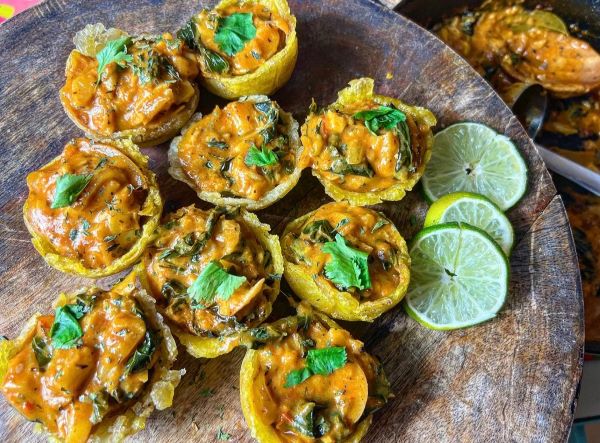
Tostones rellenos are one of those dishes that earns immediate appreciation from almost anyone who tries them. A green plantain is sliced, fried once, then pressed into a cup shape using a tostonera or a small bowl, and then fried again until the cup is crispy and holds its form. The resulting plantain cup is filled with any number of savory ingredients: seasoned ground beef, crab salad, shrimp in garlic sauce, chicken salad with avocado, or any other filling that pairs well with the salty, slightly sweet corn-adjacent flavor of fried green plantain.
The crispy cup becomes both the vessel and part of the eating experience, and when the plantain is properly fried and the filling is properly made, tostones rellenos are one of the most satisfying appetizers or snacks in Caribbean and Latin American cooking. If you have been searching for the best tostones rellenos near me, this guide helps you find kitchens that make both components with care.
What Tostones Rellenos Actually Are
Tostones rellenos are a Puerto Rican and Colombian street food and appetizer dish that takes the basic tostonera technique one step further than standard tostones. Standard tostones are flat twice-fried green plantain discs. Tostones rellenos use a small cup-shaped press to form the partially fried plantain slice into a bowl shape before the second frying, creating a vessel that can hold a filling.
The plantain preparation follows the same double-frying logic as standard tostones. Green plantain slices are fried in oil at moderate temperature until slightly golden and just cooked through. They are removed from the oil, pressed immediately while still hot and pliable into the cup shape using a tostonera or a small round cup, and then returned to hotter oil for the second frying that crisps the exterior and sets the shape. A properly made tostonet relleno cup holds its form when filled rather than collapsing, has a crispy exterior all the way to the rim, and has a slightly softer interior from the compressed plantain.
The fillings vary by restaurant and tradition but several are particularly common. Ground beef picadillo seasoned with sofrito, olives, and capers is one of the most traditional Puerto Rican fillings. Crab salad with mayonnaise and celery is another classic. Shrimp al ajillo, the garlic shrimp preparation, is a popular upscale filling. Colombian versions sometimes use hogao and avocado with chicken. The filling should be substantial enough to fill the cup generously without overflowing immediately, and should be seasoned well enough to stand on its own against the savory plantain cup.
When you search for the best tostones rellenos near me, the crispness of the plantain cup from proper double frying and the quality and seasoning of the filling are the two most important quality variables.
Where to Find Them
Puerto Rican restaurants and fondas are the most reliable source. Tostones rellenos appear on Puerto Rican restaurant menus as appetizers, and a restaurant with a comprehensive Puerto Rican menu that includes tostones, mofongo, and other plantain preparations will typically carry tostones rellenos.
Colombian restaurants sometimes carry a version called patacones rellenos, which uses the same technique under the Colombian name for tostones. A Colombian restaurant with a strong arepas and patacones program will often carry the stuffed version as an appetizer option.
Caribbean seafood restaurants carry tostones rellenos with seafood fillings, particularly shrimp and crab, as appetizers. A restaurant that already has a strong fried plantain program and a seafood menu is naturally positioned to combine both.
Puerto Rican home cooks and community vendors selling through Instagram and Facebook sometimes include tostones rellenos as a special item for events and pickup orders. Home cooks who make the tostonera cups fresh and fill them just before serving produce the freshest and crispiest version of the dish.
Puerto Rican and Latin American cultural events and festivals frequently feature tostones rellenos as a popular fried food item alongside empanadillas and alcapurrias.
How to Search More Effectively
A search for the best tostones rellenos near me will surface Puerto Rican and Caribbean restaurants in your area. Here is how to find the ones making them properly:
Search Google Maps for Puerto Rican restaurant in your city and browse menus and photo sections for tostones rellenos. A restaurant that shows photos of the distinctive cup-shaped plantain vessels with filling is making them in the proper format.
Search Yelp for Puerto Rican or Caribbean restaurants and read reviews that mention tostones rellenos. Reviewers will describe whether the plantain cup was crispy or soft, whether the filling was generous and well-seasoned, and whether the dish arrived hot enough that the filling was still warm inside the crispy cup.
Search Instagram with “tostones rellenos” plus your city name. Puerto Rican and Caribbean restaurant accounts and home cook vendors post photos regularly, and the distinctive cup-shaped crispy plantain with filling visible inside is one of the more photogenic items in Caribbean cooking.
Search Facebook for Puerto Rican community groups in your city and ask where to find the best tostones rellenos. Puerto Ricans who know this dish are specific about which local restaurant or home cook makes the crispiest cups with the most generously seasoned filling.
What Good Tostones Rellenos Should Look Like
Once you find a source, a few things confirm the quality.
The cup structure. Holding its shape firmly with upright sides that do not collapse inward when the filling is added. A properly formed and doubly fried tostonet relleno cup is rigid enough to hold the filling without the sides softening or buckling. A cup that collapses when filled was either not double fried properly or was formed from a plantain that was overcooked in the first frying.
The exterior crispness. Golden and dry to the touch, with the characteristic firmness of properly fried plantain. The exterior should produce a slight sound when tapped with a fingernail. A soft or slightly yielding exterior means the second frying was at insufficient temperature or for insufficient time.
The interior. Slightly softer than the exterior, with the compressed plantain maintaining a thin, dense layer. The interior should not be raw or gummy, indicating the first frying was sufficient to cook the plantain through before pressing.
The filling. Generous, reaching to the rim of the cup, and seasoned well enough to taste complete independently from the plantain. A stingy filling that barely covers the bottom of the cup is a disappointment regardless of how well the cup is made.
The filling temperature. Warm when the tostones rellenos are served, so the combination of hot crispy cup and warm filling is present simultaneously. Cold filling in a warm cup means the filling was prepared in advance without being warmed before serving.
Ordering and Eating Tips
Eat tostones rellenos immediately. The crispy cup softens quickly as the moisture from the filling migrates into the plantain. A tostonet relleno eaten within five minutes of being filled is significantly crispier and more satisfying than one left for ten minutes.
Order multiple varieties if the restaurant offers different fillings. The same plantain cup with picadillo filling and with shrimp al ajillo filling are quite different eating experiences, and trying both gives you a fuller sense of the dish’s range.
Ask whether the cups are made to order or in advance. A kitchen that forms and fries the cups on demand will produce a crispier product than one that pre-makes cups and holds them. The difference is immediately apparent in the texture.
Eat the plantain cup together with the filling rather than scooping the filling out separately. The crispy cup is part of the eating experience and biting through the cup to reach the filling is the intended approach.
Pricing Expectations
Tostones rellenos at a Puerto Rican or Caribbean restaurant typically run between $10 and $18 for an appetizer serving of three to six pieces depending on the filling and the market. Seafood fillings like shrimp or crab are priced higher than ground beef or chicken fillings. Home cook and community vendor versions are typically in the $8 to $14 range for a serving.
Key Takeaways
- The best tostones rellenos near me are most reliably found at Puerto Rican restaurants and fondas with comprehensive plantain menus, Colombian restaurants with a strong patacones program, and through Puerto Rican home cook vendors who form and fry the cups fresh.
- Tostones rellenos are twice-fried green plantain cups formed using a tostonera, filled with seasoned ground beef, shrimp, crab, or other savory fillings. The cup is both the vessel and part of the eating experience.
- A rigidly structured cup that holds its shape under the weight of the filling confirms proper double frying. A collapsing cup was either not fried adequately or the plantain was improperly handled between the first and second fry.
- Ask whether the cups are made to order. Fresh-formed, doubly fried cups produce noticeably crispier results than pre-made cups held in advance.
- Eat immediately. The cup softens within minutes from filling moisture and the window for maximum crispness is short.
- The filling must be generous and well-seasoned. A thin, under-seasoned filling in a well-made cup still produces a disappointing result.
- Search Instagram with “tostones rellenos” plus your city name and check Puerto Rican community Facebook groups for specific restaurant and home cook recommendations.
- Expect to pay $10 to $18 for an appetizer serving, with seafood fillings at the higher end of the range.