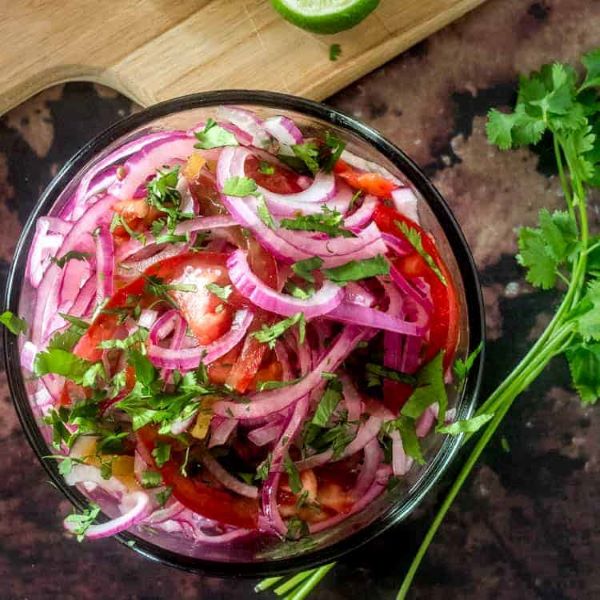
Ensalada criolla is the kind of salad that does not announce itself dramatically and then outlasts everything else on the table. It is a simple combination of sliced tomato, onion, and green or red pepper dressed with olive oil and vinegar, sometimes with fresh herbs, and it appears at virtually every Argentine, Uruguayan, and Peruvian asado or home meal as the fresh, acidic counterpoint to grilled meat and rich starchy sides. When it is made properly with ripe tomatoes, properly marinated onion, and a well-balanced dressing, it is one of the more satisfying salads in South American cooking, and its simplicity is a feature rather than a limitation.
If you have been searching for the best ensalada criolla near me and finding either nothing or generic house salads with a Spanish name attached, this guide helps you identify the right sources and evaluate what you find.
What Ensalada Criolla Actually Is
Ensalada criolla translates roughly as creole salad or native salad, and it functions as the default fresh salad across Argentine, Uruguayan, and parts of Peruvian cooking. The core ingredients are consistent: ripe tomato, thinly sliced white or red onion, and green bell pepper or chili pepper, dressed with olive oil, red wine vinegar or white wine vinegar, salt, and fresh parsley or oregano.
The preparation is more specific than the ingredient list suggests. The onion is the element that requires the most attention. Raw onion in a salad can be harsh and aggressive if not handled properly. The traditional approach is to soak the sliced onion in salted cold water for 15 to 20 minutes before adding it to the salad, which draws out some of the sulfur compounds responsible for the sharpness and produces a milder, more pleasant onion flavor that enhances the salad rather than dominating it. A properly treated onion slice in an ensalada criolla has a noticeable sweetness alongside its sharpness. An untreated onion slice in the same salad will overwhelm the tomato and pepper.
The tomato must be ripe. This sounds obvious but it matters enormously in a salad this simple. A ripe tomato brings natural sweetness, acidity, and fragrance that an underripe or out-of-season tomato completely lacks. In a four-ingredient salad, there is no complexity from technique or cooking to compensate for a flat tomato.
The dressing is simple: olive oil, vinegar in a roughly 2-to-1 or 3-to-1 oil-to-vinegar ratio, salt, and herbs. The vinegar provides the sharpness that makes the salad work as a counterpoint to rich grilled meat. Too little vinegar and the salad is flat. Too much and it overwhelms the vegetable flavors.
When you search for the best ensalada criolla near me, the ripeness of the tomato, the proper treatment of the onion, and the balance of the dressing are the three quality variables that determine whether a version is worth eating.
Where to Find It
Argentine and Uruguayan restaurants and parrillas are the most reliable source. Ensalada criolla is standard at any Argentine restaurant that serves asado, milanesa, or other traditional Argentine main courses. A parrilla that does not offer ensalada criolla as a side dish is not operating with a complete Argentine dining format.
Peruvian restaurants sometimes carry a version of ensalada criolla, particularly those with menus focused on traditional Peruvian home cooking. The Peruvian version may incorporate different herbs or a slightly different dressing approach, but the core tomato, onion, and pepper combination is consistent.
Latin American restaurants broadly carry versions of this salad under various names. A restaurant that serves grilled meats or traditional Latin American mains almost always offers a version of this fresh salad as an accompaniment.
Argentine home cook vendors selling through Instagram and Facebook sometimes include ensalada criolla as part of a prepared meal package alongside asado, empanadas, or milanesa. Home cooks who allow the onion to soak before assembling and who use ripe summer tomatoes produce versions that are noticeably better than rushed preparations.
How to Search More Effectively
A direct search for the best ensalada criolla near me may not return many specific results since this salad is typically listed as a side dish rather than a featured menu item. Here is how to search more effectively:
Search Google Maps for Argentine restaurant or parrilla in your city and browse menus for ensalada criolla in the sides section. A restaurant that lists it specifically rather than just a generic green salad or house salad is treating it as a specific traditional preparation.
Search Yelp for Argentine or Latin American restaurants and read reviews that mention the salads or side dishes. Reviewers who pay attention to the full plate will sometimes mention whether the tomato was ripe and fresh or whether the onion was properly mild.
Search Instagram with “ensalada criolla” plus your city name. Argentine and Latin American restaurant accounts sometimes post photos of their side dishes, and a bright, fresh ensalada criolla with visible tomato, onion, and pepper with the glistening dressing is identifiable in a food photo.
Ask any Argentine restaurant whether they can describe how they prepare the onion for their ensalada criolla. A kitchen that soaks the onion will mention it. A kitchen that does not will describe simply slicing and mixing.
What Good Ensalada Criolla Should Look Like
Once you find a source, a few things confirm the quality.
The tomato. Deep red, slightly soft when pressed, and fragrant when close. A ripe tomato releases juice when sliced that immediately begins mixing with the dressing. An underripe tomato is firm, pale inside, and has no noticeable fragrance.
The onion. Thin slices that have been treated to reduce sharpness, either through soaking in salted water or through marination in the vinegar for a brief period before serving. The onion should have a mild, slightly sweet sharpness rather than an aggressive bite. Overly sharp onion dominates every other ingredient.
The pepper. Thin strips of green bell pepper or a mild chili, providing a slight bitterness and crunch that contrasts with the softness of the tomato and the mildness of the treated onion.
The dressing. Balanced between oil and vinegar, with the vinegar providing a clear acid note without making the salad sour. The olive oil should have some flavor of its own rather than being a neutral fat. Herbs, if included, should be fresh and fragrant rather than dried and dusty.
The freshness. An ensalada criolla assembled recently rather than hours in advance. Tomatoes dressed with vinegar continue releasing liquid as they sit, which dilutes the dressing and makes the salad watery. The best version is assembled close to serving time.
Ordering and Eating Tips
Order ensalada criolla specifically for eating alongside grilled meat or any rich main course. Its role is to provide acid and freshness against savory, fatty food, and this is where it performs best. Eating it as a standalone salad misses the context that makes it satisfying.
If the restaurant allows it, ask for the salad to be dressed lightly so you can add more vinegar at the table to your preference. Vinegar preferences vary significantly, and controlling the ratio allows you to calibrate the salad to your taste.
Eat it throughout the meal rather than before the main arrives. A bite of ensalada criolla between bites of asado or milanesa is the intended eating rhythm, with the acid of the salad cutting through the richness of the meat.
Pricing Expectations
Ensalada criolla as a side dish at an Argentine or Latin American restaurant typically runs between $5 and $10 depending on the portion size and the market. It is often included as part of a set meal or combination plate at no additional charge.
Key Takeaways
- The best ensalada criolla near me is most reliably found at Argentine parrillas and Uruguayan restaurants as a standard side dish, and through Latin American home cook vendors who assemble it fresh with ripe tomatoes and properly treated onion.
- Ensalada criolla combines ripe tomato, thinly sliced onion, and green pepper dressed with olive oil and wine vinegar. The simplicity of the ingredient list means every element must be right.
- Properly treating the onion before mixing, either by soaking in salted water or marinating briefly in vinegar, is the step that distinguishes a great ensalada criolla from an aggressively sharp one.
- The tomato must be ripe. In a four-ingredient salad with no cooking, an underripe tomato cannot be compensated for by technique or seasoning.
- Assemble close to serving time. Tomatoes release juice when dressed, and a salad assembled hours in advance becomes watery and diluted.
- Order it specifically to eat alongside rich grilled meat or a main course rather than as a standalone salad. Its function is as a fresh, acidic counterpoint to savory food.
- Search Instagram with “ensalada criolla” plus your city name and check Argentine community Facebook groups for restaurant and home cook recommendations.
- Expect to pay $5 to $10 as a side dish at a Latin American restaurant, often included in set meal pricing.