Gandinga is one of those Puerto Rican dishes that divides people cleanly between those who grew up eating it and everyone else. It is a traditional Puerto Rican pork offal stew made from pork liver, kidneys, and heart, braised in a sofrito and tomato sauce with olives, capers, and potatoes until everything is tender and the sauce has absorbed the deep, slightly iron-rich flavor of the offal alongside the brightness of the tomato and the brine of the olives. It is not delicate food and it does not pretend to be. It is direct, deeply flavored, and filling, the kind of dish that requires confidence from the cook and an open mind from the eater. People who know it from childhood miss it specifically and seek it out with real determination when they are away from Puerto Rican cooking.
If you have been searching for the best gandinga stew near me, you are looking for one of the less visible dishes in Puerto Rican restaurant culture, and this guide helps you find it.
What Gandinga Stew Actually Is
Gandinga uses the mixed pork offal that Puerto Rican cooking has historically incorporated into traditional dishes as a practical use of the whole animal. The primary components are pork liver, kidneys, and heart, each of which has a slightly different texture and a slightly different level of iron and mineral flavor. Together they produce a stew with a depth and richness that lean muscle meat cannot match.
The preparation begins with cleaning and cutting the offal into bite-sized pieces. Each component is treated slightly differently to manage its specific properties. Pork liver can become grainy and tough if overcooked, so it is typically added later in the cooking process. Kidneys are soaked in salted water or milk before cooking to reduce their strong mineral flavor. Heart is the most forgiving, with a texture similar to lean muscle meat that responds well to the full braise.
The sofrito base is the same recao and aji dulce combination that appears throughout Puerto Rican cooking. Onion, garlic, tomato, and sometimes cumin and oregano round out the aromatics. Tomato sauce goes in with a small amount of water or stock to build the braise. Green olives and capers add brine in the way they do across Cuban and Puerto Rican cooking. Potato is added midway through the braise and absorbs the rich sauce during cooking.
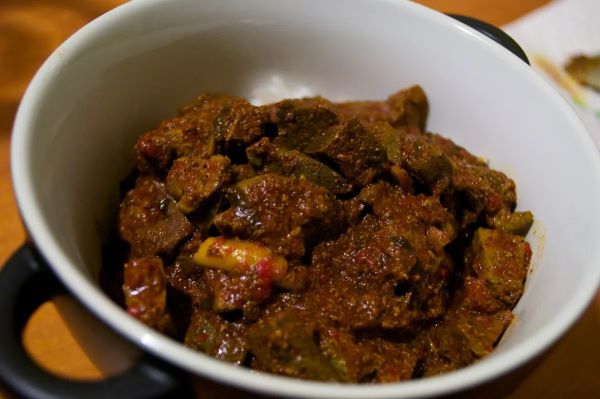
The finished gandinga stew should have a deep, slightly dark sauce from the iron in the offal mixing with the tomato and sofrito base, a complex, savory flavor that is assertive without being harsh, and tender pieces of each offal type distributed through the sauce with the potato.
When you search for the best gandinga stew near me, the quality and freshness of the offal, the proper Puerto Rican sofrito base with recao and aji dulce, and the balance of the brine from the olives and capers are the markers of a properly made version.
Where to Find It
Puerto Rican restaurants with traditional menus are the primary source. Gandinga is a traditional dish that appears less commonly on restaurant menus than mainstream Puerto Rican items like pernil and mofongo, but restaurants that specifically describe their cooking as traditional Puerto Rican home food or fondas sometimes carry it as a rotating special or weekend offering.
Puerto Rican fondas and casual home-style restaurants in cities with Puerto Rican communities are the most reliable source. These informal restaurants cook traditional dishes based on community demand, and gandinga appears in their rotation because it is specifically requested by Puerto Ricans who grew up eating it.
Puerto Rican home cooks and community vendors selling through Instagram and Facebook are the most consistently reliable source for this specific dish. Gandinga is a dish that home cooks make for community consumption because it requires ingredient sourcing and preparation technique that not every restaurant maintains. Home cooks who describe cleaning and soaking the kidneys and using fresh pork offal are producing the authentic version.
Puerto Rican cultural events and community gatherings sometimes feature gandinga as part of a traditional food spread, particularly events organized around Puerto Rican heritage and food culture where the full range of traditional dishes is celebrated rather than only the most internationally accessible ones.
How to Search More Effectively
A direct search for the best gandinga stew near me will return limited results in most cities because this is a traditional dish that appears infrequently on public-facing menus. Here is how to search more productively:
Search Facebook for Puerto Rican community groups in your city and ask directly where to find gandinga. Be specific about the dish. Puerto Rican community members will respond with knowledge about which local restaurant or home cook makes it and whether it is available regularly or only on specific days.
Search Instagram with “gandinga” plus your city name. Puerto Rican home cook vendors and the few restaurants that carry it post photos when they make gandinga, and the deep, dark sauce with visible offal pieces and potato is identifiable in a photo for those who know what they are looking for.
Call Puerto Rican restaurants in your area and ask directly whether they make gandinga and on what days. Many Puerto Rican restaurants that do not list it on a standard menu will make it as a daily or weekly special when the ingredients are available. Calling ahead is more productive than searching online for this specific dish.
Search for Puerto Rican cultural events in your city organized around Puerto Rican heritage. These events sometimes feature traditional dishes including gandinga that are not available through regular restaurant channels.
What Good Gandinga Stew Should Look Like
Once you find a source, a few things confirm the quality.
The sauce color. Deep, dark red-brown from the combination of the tomato sofrito base and the iron-rich offal cooking into it. Gandinga sauce is naturally darker than most sofrito-based stews because of the mineral character of the offal releasing into the liquid during cooking. A pale or bright red sauce indicates the offal did not cook long enough to develop this depth.
The offal texture. Each component properly cooked to its ideal doneness. Liver should be tender but not grainy or crumbling from overcooking. Kidney should be tender and mild from proper soaking treatment before cooking. Heart should be the most firm of the three and should chew similarly to lean muscle meat. All three should yield without resistance but none should be completely dissolved.
The sofrito flavor. Present throughout, with the recao and aji dulce notes running under the deeper offal flavor. The sofrito should be perceptible as a herbal and slightly sweet background that lifts the intensity of the offal rather than competing with it.
The olives and capers. Visible and present, adding brine to each spoonful that contains one. Their sharpness cuts through the richness of the pork offal and the thick sauce in a way that makes each bite more interesting than the previous one.
The potato. Fully cooked and having absorbed the dark gandinga sauce throughout, tasting of the braise rather than of plain starch. The potato is one of the best parts of a properly made gandinga because the sauce absorption gives it a complexity it would not have from any other cooking context.
Ordering and Eating Tips
Order gandinga as a main course with white rice as the traditional accompaniment. The sauce from the stew is designed to soak into the rice, and eating them together is the intended format.
Approach the dish with an open mind if this is your first time. The offal components have a mineral, slightly iron-forward flavor that is unfamiliar to people who have not eaten them before. The sofrito, olives, and capers are specifically there to balance and support that flavor, and eating a piece of offal with some sauce, rice, and olive in the same bite produces a more complete flavor than tasting each element independently.
Ask when the dish was made. Gandinga improves with time as the flavors develop and integrate. A version made the previous day and properly reheated is often better than one made the same morning.
Pricing Expectations
Gandinga stew at a Puerto Rican restaurant or fonda typically runs between $14 and $22 as a main course depending on the market and the restaurant. Home cook and community vendor versions sold by the container typically run $10 to $16 per serving.
Key Takeaways
- The best gandinga stew near me is most reliably found through Puerto Rican community Facebook groups and direct phone calls to Puerto Rican fondas, and through Puerto Rican home cook vendors on Instagram who source fresh offal and follow the traditional preparation.
- Gandinga is a Puerto Rican pork offal stew using liver, kidneys, and heart braised in a recao and aji dulce sofrito with tomato sauce, green olives, capers, and potato.
- The deep, dark red-brown sauce from the offal’s iron content mixing with the tomato base is the most immediate visual quality marker. A pale sauce indicates insufficient cooking time or fresh offal of questionable quality.
- Calling Puerto Rican restaurants directly and asking about gandinga as a special is more productive than online searches for this specific dish.
- Facebook community groups for Puerto Ricans in your city are the single most reliable search channel for finding home cooks and vendors who make gandinga regularly.
- Approach with an open mind if eating offal for the first time. The sofrito, olives, and capers are specifically designed to balance the mineral character of the offal.
- Expect to pay $14 to $22 at a Puerto Rican restaurant and $10 to $16 per portion from a home cook or community vendor.