Cacio e pepe is three ingredients and considerable technique. Pasta, Pecorino Romano, and black pepper. The dish comes from Roman cooking and its simplicity is deceptive in the way that truly refined things often are. Getting it right requires cooking the pasta to the correct point, managing the pasta water temperature and starch content precisely, emulsifying the cheese into the water without it clumping or breaking, and applying enough black pepper to make the pepper the central flavor rather than a background note. A properly made cacio e pepe produces a silky, cohesive sauce of cheese and starch that coats every strand of pasta evenly, with the sharpness of the Pecorino and the warmth of the pepper in every bite.
A poorly made version produces clumped cheese with dry pasta underneath it. Finding cacio e pepe near me that is worth ordering means knowing which Italian restaurants treat this apparently simple dish with the technical respect it demands.
What Cacio e Pepe Actually Is
The dish originates in Lazio, the region surrounding Rome, where Pecorino Romano, a hard, salty, sharp sheep’s milk cheese, was historically a staple ingredient. Cacio e pepe translates as cheese and pepper, which is precisely the dish.
The technique is where the difficulty lives. The pasta, traditionally tonnarelli, a thick Roman pasta similar to a square-cut spaghetti, or spaghetti itself, is cooked in a relatively small amount of water to build up starch concentration in the water. This starchy cooking water is the emulsification agent that allows the grated Pecorino to form a sauce rather than clumping into lumps.
The cheese is grated very finely, almost to a powder, so it melts and emulsifies quickly when it contacts the warm pasta and pasta water. It is critical that the pasta is off the heat or at very low heat when the cheese is added. Direct pan heat causes the cheese to seize and clump rather than emulsify into a sauce.
The black pepper must be freshly cracked, not pre-ground. It is typically toasted briefly in a dry pan before being added to release its volatile oils, which are what make pepper hot and aromatic. The quantity used is generous, enough that the pepper is a primary flavor rather than a seasoning accent.
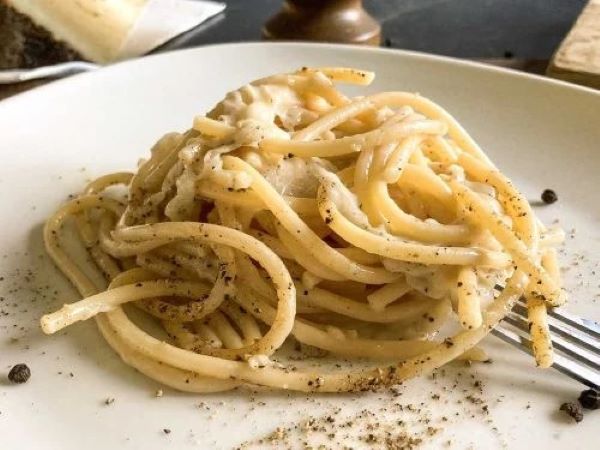
The finished dish should have a silky, pale yellow sauce coating every strand of pasta uniformly, with no pools of liquid and no clumps of unmelted cheese. The flavor should hit with the sharpness of the Pecorino and the warmth of the pepper simultaneously from the first bite.
When you search for cacio e pepe near me, asking whether the restaurant uses Pecorino Romano specifically and whether the sauce is made to order without breaking are the two most useful questions.
Where to Find It
Roman-style Italian restaurants are the most reliable source. A restaurant that specifically identifies its cooking as Roman or central Italian is more likely to carry cacio e pepe as a serious preparation than a general Italian restaurant that added it to a menu because of its current popularity.
Traditional Italian trattorias that have been serving Italian cuisine for decades and have a fixed menu approach are often the best source. A trattoria that carries cacio e pepe alongside tonnarelli, gricia, and amatriciana has a Roman pasta program worth trusting.
Pasta-focused Italian restaurants that specialize in handmade fresh pasta and sauce technique sometimes produce excellent cacio e pepe because the technical attention required for the dish is the same attention they bring to all their pasta work.
Italian restaurants with a Roman chef or significant Roman culinary influence treat cacio e pepe as a signature test of kitchen skill. Any restaurant that carries it prominently on the menu alongside other Roman pasta standards is making a statement about its technical commitment.
How to Search More Effectively
A search for cacio e pepe near me will return Italian restaurants ranging from fine dining to casual chains. Here is how to find the ones making it properly:
Search Google Maps for Italian restaurant and filter for those with Roman, trattoria, or traditional Italian in their description. Browse menus specifically for cacio e pepe alongside other Roman pasta dishes like gricia or amatriciana. A restaurant carrying the full Roman pasta canon is treating cacio e pepe as part of a tradition rather than as a trend item.
Search Yelp for Italian restaurants and read reviews that specifically describe the sauce consistency for cacio e pepe. Reviewers who know the dish will describe whether the sauce was silky and uniform or whether it was clumped and separated. This single distinction predicts quality better than almost any other detail in a review.
Search Instagram with “cacio e pepe” plus your city name. Italian restaurant accounts post pasta photos regularly, and a properly made cacio e pepe, with a uniformly pale, silky sauce coating every strand of pasta without visible clumping or separation, is immediately distinguishable from a broken, lumpy version in a close-up food photo.
Ask the restaurant whether they use Pecorino Romano specifically or a different cheese. A kitchen making traditional cacio e pepe will confirm Pecorino Romano. A kitchen making an adaptation may use Parmesan or a blend, which produces a less sharp and less complex result.
What Good Cacio e Pepe Should Look Like
Once you find a source and the pasta arrives, a few things immediately tell you whether the technique was correct.
The sauce consistency. Uniform, silky, and clinging to every strand of pasta without dripping off. When you twirl a forkful, the sauce should move with the pasta rather than staying in the bowl. The sauce should have no visible clumps of unmixed cheese and no pools of separated water at the bottom of the bowl.
The color. Pale yellow-white from the Pecorino, uniform across the entire dish. Any brown or dark areas indicate portions of cheese that overheated and separated rather than emulsifying.
The pepper. Visible as black specks throughout the sauce and on the pasta surface, present in sufficient quantity that the pepper flavor is assertive and central rather than background. Cacio e pepe with minimal visible pepper was not made with the proper quantity of freshly cracked pepper.
The pasta texture. Cooked to al dente, with a firm center that offers slight resistance when bitten. The pasta continues cooking slightly from the heat of the sauce after being removed from the water, and a skilled cook accounts for this by pulling the pasta slightly before full doneness.
The Pecorino sharpness. Present in every bite, slightly salty and acidic from the sheep’s milk. If the cheese flavor is mild and creamy without any sharpness, Parmesan was used instead of Pecorino Romano, or the ratio was wrong.
Ordering and Eating Tips
Order cacio e pepe as a pasta course rather than as a side or supplementary dish. It is rich and filling and works best as the focal point of a meal rather than as an accompaniment to other rich dishes.
Eat it immediately. Cacio e pepe continues to thicken as the pasta absorbs the sauce, and the silky consistency that is best when the dish first arrives will become thicker and stickier within a few minutes. Eating promptly is not an optional preference but a practical necessity for the best experience.
Do not add anything. Cacio e pepe is a three-ingredient dish and additions like extra olive oil, cream, or garnishes other than extra pepper change the character of the dish. If the restaurant asks whether you want anything extra, the answer for a traditional version is no.
Consider ordering it as a half portion alongside another pasta if the restaurant allows mixed portions. A smaller serving of cacio e pepe alongside a red-sauce pasta allows you to compare the kitchen’s technical range across different styles.
Pricing Expectations
Cacio e pepe at a traditional Italian trattoria or Roman-style restaurant typically runs between $18 and $32 as a pasta course depending on the market and the restaurant’s positioning. Higher-end Italian restaurants in major cities may price it above that range. Casual Italian restaurants with a current menu price it lower, though the quality at the lower end of the price range often reflects compromises in technique or cheese quality.
Key Takeaways
- Finding quality cacio e pepe near me is most reliable at Roman-style Italian restaurants, traditional trattorias, and pasta-focused Italian restaurants that treat the dish as a technical benchmark rather than a trend item.
- The dish requires only three ingredients: pasta, Pecorino Romano, and freshly cracked black pepper. Any additional ingredients indicate a departure from the traditional recipe.
- A silky, uniform sauce with no clumps and no separated liquid confirms correct emulsification technique. Clumped or separated cheese means the sauce was either overheated or the wrong ratio of pasta water to cheese was used.
- Ask specifically whether the restaurant uses Pecorino Romano. A kitchen using traditional cheese will confirm it without hesitation. Parmesan or a blend produces a milder, less sharp result.
- Eat immediately. The sauce thickens as the pasta absorbs it and the silky consistency is at its best in the first few minutes after the dish arrives.
- Search Instagram with “cacio e pepe” plus your city name. The visual difference between a silky, uniform sauce and a broken, clumped version is immediately clear in a close-up food photo.
- A restaurant carrying cacio e pepe alongside gricia and amatriciana has a Roman pasta program that is more likely to make all three correctly than one that carries cacio e pepe in isolation as a trend item.
- Expect to pay $18 to $32 at a traditional Italian restaurant for a properly made version.