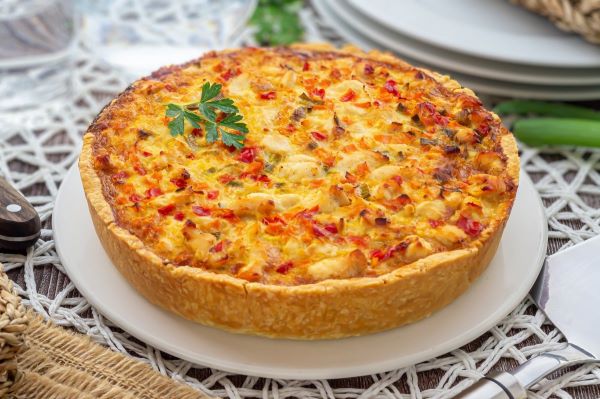
Tarta de pollo occupies a comfortable, practical space in Argentine food culture. It is bakery food, lunch food, the kind of thing that gets sliced from a large tray and eaten at room temperature with a simple salad or wrapped in paper and eaten on the go. A savory pastry shell filled with shredded chicken in a bechamel or cream sauce, seasoned with onion, garlic, and herbs, baked until the filling is set and the top develops a light golden color.
It is not complicated food, but it requires getting the filling right, the pastry right, and the proportion of sauce to chicken right, and the versions that manage all three of those things simultaneously are the ones worth seeking out. If you have been searching for the best tarta de pollo near me, this guide helps you identify the sources that take the preparation seriously.
What Tarta de Pollo Actually Is
In the Argentine bakery and home-cooking tradition, tarta refers to a savory tart baked in a deep round or rectangular pan with a pastry shell and a filling that sets firmly enough to slice and hold its shape at room temperature. The tarta de pollo fits squarely in this format, using chicken as the primary filling ingredient.
The chicken in tarta de pollo is typically poached until fully cooked, then shredded or diced and combined with a sauce that binds the filling and adds moisture and flavor. The sauce is most commonly a bechamel, the classic white sauce of butter, flour, and milk, which gives the filling a creamy, slightly rich character that holds together when sliced. Some versions use a sofrito-based sauce of cooked onion, tomato, and garlic rather than bechamel, which produces a lighter filling with more vegetable flavor. Some versions use a combination of the two.
Additional vegetables commonly added to the filling include corn kernels, roasted red pepper, peas, and sometimes olives or hard-boiled egg, which add texture, color, and flavor complexity to what would otherwise be a straightforward chicken and cream preparation. These additions vary by bakery and by household tradition.
The pastry shell is typically a short, slightly flaky crust made from flour, fat, and water or egg, pressed into the pan and pre-baked before the filling is added. The bottom and sides of the shell provide structural support for the filling and the crust texture contrast against the creamy interior is part of what makes the tarta format satisfying.
When you search for the best tarta de pollo near me, the moisture balance of the filling, the quality of the pastry, and the proper seasoning throughout are the three most important variables.
Where to Find It
Argentine bakeries and panaderias are the most reliable source. Tarta de pollo is a standard prepared food item in Argentine bakeries, typically made daily and displayed in the cold case alongside other tartas, facturas, and savory pastries. A bakery that rotates its tarta offerings daily and uses freshly poached chicken rather than a commercial chicken base will produce a significantly better version.
Argentine restaurants with lunch menus carry tarta de pollo as a daily special or a permanent offering. A restaurant that serves rotating home-style lunch plates will include tarta de pollo as a standard option because it is practical to make in quantity and has broad appeal.
Latin American delis and prepared food counters in cities with South American communities carry tarta de pollo as a cold case item sold by weight or by slice. Quality at these counters depends on the freshness of the preparation and the quality of the chicken.
Argentine home cook vendors selling through Instagram and Facebook batch orders regularly include tarta de pollo because it is one of the most requested items from Argentine expat communities. Home cooks who poach their own chicken and make the filling from scratch will produce a result that often surpasses commercial bakery versions.
How to Search More Effectively
A direct search for the best tarta de pollo near me will surface Argentine bakeries and Latin American restaurants. Here is how to find the ones making it properly:
Search Google Maps for Argentine bakery in your city and contact them directly to ask whether they carry tarta de pollo and when it is typically freshest. A bakery that makes its tartas in the morning will have the best versions available between 10am and early afternoon.
Search Instagram with “tarta de pollo” plus your city name. Argentine bakery accounts and home cook vendors post photos of their daily prepared food selections, and a tarta de pollo with a golden top, visible chicken and vegetable filling, and a fully baked pastry base is identifiable in a photo.
Search Facebook for Argentine community groups in your city and ask where to find the best tarta de pollo. Argentine community members who regularly buy prepared food will point you to the bakery or home cook that uses freshly poached chicken and makes the filling with proper seasoning.
Ask any Argentine bakery or restaurant what goes into their tarta de pollo filling. A kitchen making it properly will describe the poached chicken, the bechamel or sofrito sauce, and the specific vegetable additions. A kitchen using a commercial chicken base or a pre-made filling will give a less detailed answer.
What Good Tarta de Pollo Should Look Like
Once you find a source, a few things confirm the quality.
The pastry base. Golden and fully baked through, with enough structure to hold the slice together when lifted and no softness at the bottom. A properly baked tart base resists when pressed on the bottom and does not bend. A pale or soft base was either underbaked or received a wet filling that soaked through during cooking.
The filling surface. Lightly golden on top, set firmly throughout, with no visible liquid pooling at the edges. The surface should feel firm when pressed gently and the filling should not jiggle significantly when the tart pan is moved.
The chicken. Visible as distinct, moist pieces distributed evenly through the filling. The chicken should taste of the seasoning used during poaching and should be clearly discernible from the sauce that surrounds it. If the filling is a uniform paste without distinct chicken pieces, the chicken was over-processed.
The sauce moisture. Moist and slightly creamy inside the filling but not wet enough to run when the tarta is sliced. A filling that releases liquid when cut was either too wet before baking or the pastry did not absorb the excess moisture during baking.
The seasoning. Present throughout the filling, not just at the surface. The chicken, the sauce, and the vegetable additions should all taste seasoned rather than bland. A flat-tasting filling indicates insufficient seasoning during preparation.
Ordering and Eating Tips
Eat tarta de pollo warm or at room temperature rather than directly from refrigeration. Cold tarta has muted flavors and the pastry becomes slightly harder than ideal when chilled. Allowing 15 to 20 minutes at room temperature before eating improves both the flavor and the pastry texture.
Ask when the tarta was made. A freshly baked tarta de pollo has better pastry texture and a more fragrant filling than one that has been sitting for two days. Most Argentine bakeries make their tartas in the morning and the best versions are available before early afternoon.
Pair with a simple green salad dressed with olive oil and lemon. The slightly rich, creamy filling of tarta de pollo works well against something light and acidic.
Order a full tray for a group rather than individual slices if you are feeding several people. Argentine bakeries typically sell whole tartas at a better per-serving price than individual slices, and the format holds its quality better as a whole tray than as cut slices that expose the filling to air.
Pricing Expectations
A slice of tarta de pollo at an Argentine bakery typically runs between $5 and $9 depending on the size and market. A full tray for sharing or catering runs between $22 and $38. Restaurant versions served as a main course are typically $12 to $18. Home cook and vendor versions are priced similarly to bakery rates per slice.
Key Takeaways
- The best tarta de pollo near me is most reliably found at Argentine bakeries that make their tartas fresh daily using poached chicken and either bechamel or sofrito-based filling, and at home cook vendors who describe making the filling from scratch.
- Tarta de pollo is a savory Argentine tart with a short pastry shell and a filling of shredded chicken in bechamel or sofrito sauce, often with corn, peas, roasted pepper, or olive additions for texture and flavor.
- A golden, firm pastry base and a set filling with no wet patches or liquid pooling when cut are the two most immediate quality markers.
- Ask when the tarta was made. A same-day preparation has better pastry texture and fresher filling than one sitting in a cold case for multiple days.
- Eat at room temperature, not cold. Cold suppresses the filling flavor and hardens the pastry.
- Search Instagram with “tarta de pollo” plus your city name and check Argentine community Facebook groups for bakery and home cook recommendations.
- Expect to pay $5 to $9 per slice at a bakery, $12 to $18 at a restaurant, or $22 to $38 for a full tray.