Ropa vieja venezolana is one of those dishes that reveals a lot about the relationship between Venezuelan and Cuban cooking. The two countries share the dish name and the core concept, shredded beef in a tomato-based sauce, but the Venezuelan version has its own character and its own specific preparation that distinguishes it from the Cuban preparation that has become better known internationally.
Understanding the difference between the two versions is part of finding the best ropa vieja venezolana near me, because searching for ropa vieja without the Venezuelan specification will typically return Cuban restaurants rather than Venezuelan ones.
What Ropa Vieja Venezolana Actually Is
Both the Cuban and Venezuelan ropa vieja use shredded beef as the foundation, and both use a sofrito-based tomato sauce. The differences lie in the specific sofrito components, the spice profile, and several additions that are characteristic of Venezuelan cooking.
The beef cut. Venezuelan ropa vieja traditionally uses falda, which is flank steak, boiled until completely tender and then shredded along the grain into thin, irregular strands. The boiling liquid is seasoned with onion, garlic, and aromatic herbs, and the resulting beef broth is sometimes used as the base for the sauce, adding depth from the collagen and beef flavor released during the boiling process.
The sofrito. Venezuelan sofrito uses a combination of onion, garlic, aji dulce, sweet bell pepper, tomato, and sometimes leek or celery. The aji dulce, a small, round, sweet chili pepper with no heat, is a specifically Venezuelan ingredient that adds a gentle sweetness and a flavor note not found in Cuban cooking. This aji dulce in the sofrito is one of the clearest flavor signatures that distinguishes Venezuelan ropa vieja from the Cuban version.
The spice profile. Venezuelan ropa vieja uses cumin and paprika alongside the sofrito base, similar to Cuban ropa vieja, but the overall flavor tends to be slightly lighter and less aggressively seasoned, reflecting Venezuelan cooking’s general preference for softer spice profiles compared to the more boldly seasoned Cuban tradition.
Additional vegetables. Venezuelan ropa vieja sometimes includes additional vegetables cooked into the sauce alongside the shredded beef, such as sliced green olives, capers, or green beans, which vary by regional tradition and household preference.
The accompaniments. Venezuelan ropa vieja is typically served with caraotas negras, Venezuelan black beans cooked with papelón and spices in a slightly sweet preparation, white rice, and tajadas, fried ripe plantains. This combination forms the pabellón criollo, Venezuela’s national dish, of which ropa vieja is one traditional meat component.
When you search for the best ropa vieja venezolana near me, the aji dulce in the sofrito, the lighter overall seasoning profile, and the Venezuelan accompaniments of caraotas and tajadas are the markers that distinguish the authentic Venezuelan preparation.
Where to Find It
Venezuelan restaurants are the primary source. A restaurant with a comprehensive Venezuelan menu will carry ropa vieja venezolana as a component of pabellón criollo or as a standalone main course. A restaurant that specifically identifies Venezuelan cooking rather than a generic Latin American menu is worth prioritizing.
Venezuelan areperas and casual restaurants in cities with Venezuelan communities, including Miami, Doral in Florida, Houston, and parts of New York and New Jersey, carry ropa vieja as a standard pabellón component. These casual Venezuelan restaurants treat ropa vieja as an everyday preparation and make it with the consistency of a frequently repeated dish.
Venezuelan home cooks and community vendors selling through Instagram and Facebook are a strong source in cities where dedicated Venezuelan restaurants are scarce. Venezuelan home cooks who describe their sofrito using aji dulce and who mention caraotas as the accompanying beans are following the Venezuelan preparation specifically.
Latin American restaurants with broad menus that include Venezuelan dishes sometimes carry ropa vieja venezolana. The key is whether the restaurant uses aji dulce in its Venezuelan preparations and whether it distinguishes the Venezuelan version from the Cuban one in its menu.
How to Search More Effectively
A search for the best ropa vieja venezolana near me will surface Venezuelan restaurants in your area. Here is how to identify the ones making it properly:
Search Google Maps for Venezuelan restaurant in your city and browse menus for ropa vieja or pabellón criollo. A menu that lists pabellón criollo with ropa vieja as one of the meat components is indicating a restaurant following the Venezuelan plate format.
Search Yelp for Venezuelan restaurants and read reviews that mention ropa vieja. Reviewers familiar with the Venezuelan version will describe whether the beef was properly shredded and tender, whether the sauce had the characteristic aji dulce softness, and whether the caraotas negras alongside were properly made. These details distinguish a Venezuelan kitchen from a Cuban one making the same dish name.
Search Instagram with “ropa vieja venezolana” plus your city name. Venezuelan restaurant accounts and home cook vendors post photos of ropa vieja, and the Venezuelan version alongside caraotas, white rice, and tajadas on the same plate is visually distinct from a standalone Cuban ropa vieja presentation.
Ask any Venezuelan restaurant or vendor directly what goes into their sofrito for ropa vieja. A kitchen following the Venezuelan preparation will mention aji dulce specifically. A kitchen following the Cuban preparation will not include this ingredient.
What Good Ropa Vieja Venezolana Should Look Like
Once you find a source, a few things confirm the quality.
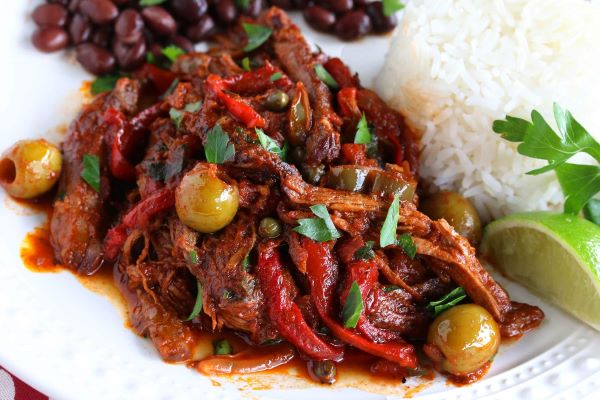
The beef texture. Long, thin, irregular strands of shredded flank steak, fully tender throughout, with no pieces that are still firm or resistant. The strands should separate easily when pressed with a fork and should be distributed evenly through the sauce. Chunks of beef rather than pulled strands indicate the beef was cut rather than properly shredded after boiling.
The sauce. Slightly thick, uniformly orange-red from the tomato and sofrito base, coating the beef strands rather than pooling separately. The sauce should taste of the sofrito aromatics, including the slight sweetness from the aji dulce, the tomato, and the garlic, without any one element dominating.
The aji dulce influence. A gentle, slightly sweet aromatics note in the sauce that distinguishes it from the more aggressively seasoned Cuban version. This is subtle but perceptible once you know to look for it.
The caraotas negras. For a full pabellón plate, the black beans should be dark, fully cooked, slightly thick in their sauce, and seasoned with the papelón sweetness and spice that characterize Venezuelan caraotas. Unsweetened, plain black beans are not the Venezuelan preparation.
The tajadas. Fully ripe, caramelized sweet plantains sliced on the diagonal and fried until deep golden on both sides. Underripe or barely caramelized plantains lack the sweetness that makes them work as the sweet contrast to the savory ropa vieja on the plate.
Ordering and Eating Tips
Order ropa vieja venezolana as part of a pabellón criollo plate if the restaurant offers it. Eating the shredded beef alongside the sweet caraotas, white rice, and tajadas in the same bite provides the complete flavor balance that the Venezuelan national plate is designed to deliver.
Ask whether the sofrito uses aji dulce. A confident answer confirms the Venezuelan preparation. Any uncertainty about this ingredient suggests the kitchen may be following a different tradition.
The dish holds and reheats well. A home cook or vendor version from the previous day will often have a more developed sauce flavor than a same-day version because the shredded beef continues absorbing the sauce as it rests.
Eat with white rice to soak up the sauce. The sauce from ropa vieja venezolana is one of its best parts and rice is the most practical vehicle for ensuring none of it is left on the plate.
Pricing Expectations
A pabellón criollo plate with ropa vieja venezolana at a Venezuelan restaurant typically runs between $16 and $26 depending on the market and the restaurant. Ropa vieja as a standalone main course is typically in the $14 to $22 range. Home cook and vendor versions sold by the portion are typically in the $12 to $18 range.
Key Takeaways
- The best ropa vieja venezolana near me is most reliably found at dedicated Venezuelan restaurants, Venezuelan areperas, and through Venezuelan home cook vendors on Instagram and Facebook who specifically describe aji dulce in their sofrito.
- Venezuelan ropa vieja uses aji dulce, a small sweet chili pepper, in the sofrito alongside tomato, onion, and garlic. This aji dulce is the clearest flavor signature distinguishing Venezuelan ropa vieja from the Cuban version.
- Long, thin, tender strands of shredded flank steak in an orange-red sofrito sauce is the correct texture and appearance. Chunks rather than strands indicate the beef was not properly boiled and shredded.
- Ask directly whether the sofrito uses aji dulce. A confident answer confirms the Venezuelan preparation.
- Order as part of a pabellón criollo with caraotas negras, white rice, and tajadas for the complete Venezuelan national plate experience.
- The Venezuelan caraotas negras should be slightly sweet from papelón, distinguishing them from unsweetened black beans.
- Expect to pay $16 to $26 for a full pabellón plate and $14 to $22 for a standalone ropa vieja main course at a Venezuelan restaurant.