Arepa santandereana is among the most distinct and most misunderstood regional arepas in Colombia. While the Paisa and antioquena arepas from Medellin’s broader region have received international attention, the arepa santandereana from the Santander and Norte de Santander departments of northeastern Colombia remains largely unknown outside of its home region and the diaspora communities that carry it with them. It is made from a combination of cooked corn and fermented pork lard called manteca de cerdo, which gives it a specific savory richness and a depth of flavor that plain corn arepas do not have, and it is typically much smaller than other Colombian arepa styles.
If you have been searching for the best arepa santandereana near me, you are looking for one of the most regionally specific and least exported items in Colombian food culture, and this guide gives you the most direct path to finding it.
What Arepa Santandereana Actually Is
The Santander region of Colombia, which includes the cities of Bucaramanga and Cucuta, has a distinct food culture built around cuajada cheese, hormiga culona ants, and a range of corn and pork-based preparations that reflect the region’s agricultural and culinary history. The arepa santandereana is one of the most representative products of this tradition.
The dough for arepa santandereana uses corn that has been cooked and ground, similar to the process used in other Colombian arepas, but the defining addition is manteca de cerdo, rendered pork lard that is sometimes fermented or salted. This lard is mixed directly into the corn masa, giving the dough a yellowish color, a distinctly savory richness, and a slightly porky aroma that is completely unlike a plain white corn arepa. The combination of corn and pork fat in the dough produces a flavor that is more substantial and more complex than any vegetable-fat arepa.
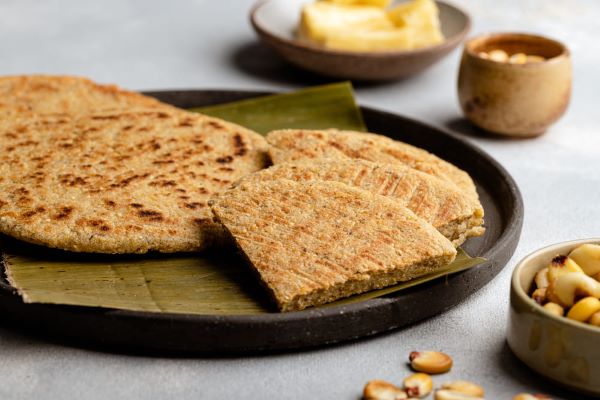
The arepa santandereana is small, typically about seven to eight centimeters across and slightly thicker than a paisa arepa. The small size and the lard in the dough make it practical as a snack or accompaniment rather than as the large flatbread that serves as bread for an entire Paisa meal.
Cooked on a dry griddle, the arepa santandereana develops golden spots from the lard rendering out of the dough and creating contact with the hot griddle surface. The lard also causes the exterior to be slightly more golden and slightly crispier in the griddle contact areas than a plain corn arepa would be.
Some versions of arepa santandereana also include cheese mixed into the dough alongside the pork lard, producing an even richer result with both dairy and pork fat contributing to the flavor and texture.
When you search for the best arepa santandereana near me, the pork lard in the dough, the small size, and the slightly richer, more savory flavor profile compared to a plain corn arepa are the defining characteristics to look for.
Where to Find It
Colombian bakeries and restaurants from the Santander region are the primary source. A bakery or restaurant serving a clientele specifically from Bucaramanga, Cucuta, or the broader Santander region is the most likely to carry arepa santandereana as part of their regular offerings. This is a much smaller community than the Paisa diaspora, which makes finding this specific arepa more challenging.
Colombian restaurants with broad regional menus occasionally carry multiple regional arepa styles and may include the santandereana alongside more widely known varieties. A restaurant that distinguishes between regional arepa styles and labels them by province of origin is operating with a level of culinary specificity worth investigating.
Colombian home cooks from Santander are often the most reliable source outside of the Santander region itself. Home cooks who grew up in Bucaramanga or Cucuta and make arepa santandereana using pork lard in the dough will produce the authentic version that distinguishes this regional style from any substitution.
Latin American food markets and festivals with Colombian representation sometimes feature vendors from different Colombian regions, and a Santanderean vendor selling regional specialties including the small pork-lard arepa is worth seeking out at these events.
How to Search More Effectively
A direct search for the best arepa santandereana near me will return very limited results in most cities. Here is how to search more productively:
Search Facebook for Colombian community groups in your city, specifically asking about arepa santandereana or Santander regional food. Ask whether anyone from Bucaramanga or Cucuta is in the group and makes or sells traditional Santandereana food. This specific geographic question surfaces the most relevant community members.
Search Instagram with “arepa santandereana” broadly to understand what the authentic version looks like, then add your city name to see whether any local posts exist. The small, slightly yellowish arepa with golden griddle spots is visually distinguishable from other Colombian arepa styles in a photo.
Contact Colombian cultural organizations in your city and ask specifically about Santandereana food culture. Even if they cannot point you directly to a source, they may know community members from that region who make traditional food.
Ask at any Colombian bakery or restaurant whether they carry or know where to find arepa santandereana specifically. Mentioning Bucaramanga or the manteca de cerdo in the dough will immediately communicate what you are looking for to anyone familiar with Colombian regional food.
What Good Arepa Santandereana Should Look Like
Once you find a source, a few things confirm the authenticity and quality.
The color. Slightly yellowish or ivory rather than the pure white of a plain white corn arepa, reflecting the pork lard mixed into the dough. The color is not dramatic but it is distinct from a plain corn arepa held beside it.
The size. Small, roughly seven to eight centimeters across. The santandereana is not a large flatbread but a compact, snack-sized arepa. A larger version may have been made by a cook adapting the style to a different format.
The aroma. A faint savory, slightly porky note when the arepa is warm from the griddle. The pork lard in the dough contributes a background richness that is perceptible without being aggressive. A plain corn aroma without any pork fat note means the lard was not used.
The exterior griddle spots. Golden, slightly more pronounced than on a plain corn arepa because the pork fat in the dough renders onto the griddle surface and creates more contact caramelization. The griddle spots on a santandereana should be slightly richer in color than on a plain white corn arepa of the same size.
The flavor. Savory, slightly richer than a plain arepa, with the corn flavor accompanied by a background of pork fat. The santandereana should taste noticeably more substantial than a paisa or plain corn arepa even without any toppings applied.
Ordering and Eating Tips
Eat arepa santandereana warm from the griddle with a thin application of butter, similar to the paisa tradition. The pork lard already in the dough means the arepa is richer than most, and butter adds to this rather than replacing any missing fat.
Pair with hogao, the Colombian cooked tomato and onion sauce, or with fresh white cheese. Both are traditional Santandereana accompaniments that work specifically well against the savory pork lard flavor of the arepa.
Order alongside other Santandereana specialties if the vendor or restaurant offers them, such as mute santanderiano, the regional chickpea and tripe soup, or cabro asado, the roasted goat that is a regional specialty. Eating the arepa santandereana in context with other Santandereana dishes gives you a fuller picture of the regional culinary tradition.
Pricing Expectations
Individual arepa santandereana from a Colombian bakery or home cook vendor typically runs between $2 and $5 depending on size and market. As a component of a set meal at a Colombian restaurant, it may be included in the plate price of $14 to $22. Home cook and vendor versions from batch orders are typically priced similarly to individual bakery rates.
Key Takeaways
- The best arepa santandereana near me is most reliably found through Colombian community Facebook groups specifically targeting members from Bucaramanga, Cucuta, and the Santander region, and at Colombian food events with Santandereana regional representation.
- Arepa santandereana uses pork lard mixed directly into the corn masa, giving it a slightly yellowish color, a savory richness, and a background pork fat flavor that distinguishes it from all other Colombian arepa styles.
- The pork lard in the dough, the small compact size, and the slightly richer griddle coloring are the three defining characteristics that confirm authentic Santandereana preparation.
- Ask specifically about the manteca de cerdo in the dough. Any source making the authentic version will know exactly what you mean.
- Eat warm with butter or hogao for the traditional Santandereana serving context.
- Search Instagram with “arepa santandereana” broadly to understand what the authentic version looks like before searching locally, since substitutions and approximations are common given how rarely this specific style appears outside the region.
- Expect to pay $2 to $5 per arepa from a bakery or home cook vendor.