Ajiaco boliviano is a dish that consistently surprises people who encounter it expecting the Colombian version they may have heard of. While Colombian ajiaco is a creamy chicken and potato soup with guascas and corn, the Bolivian ajiaco is a completely different preparation: a saucy, intensely spiced potato dish made with multiple varieties of potato, dried and fresh chili, and rendered pork fat that produces a thick, deeply flavored stew that sits somewhere between a potato side dish and a complete meal.
It is one of the most specifically Bolivian preparations in a cuisine that does not receive the international attention it deserves, and finding the best ajiaco boliviano near me outside of Bolivia requires the same targeted searching that most Bolivian dishes demand.
What Ajiaco Boliviano Actually Is
The Bolivian ajiaco is centered on potato, which makes sense given that Bolivia and Peru are where potato was first domesticated and where the greatest variety of native potato species still exists. The preparation uses multiple potato varieties, including fresh potatoes and sometimes chuño, the freeze-dried Andean potato that contributes a different texture and a concentrated earthy flavor to the dish.
The sauce is built from a generous amount of dried and fresh chili, typically locoto and aji colorado, cooked down with onion, garlic, and tomato into a thick, deeply red sauce that is simultaneously spiced with heat and complex with the layered flavors of the different chili varieties. Rendered pork fat goes into the cooking at multiple stages, first for cooking the aromatics and then as a finishing element that adds richness and a specifically Bolivian flavor profile.
The potatoes cook directly in the chili sauce rather than being cooked separately and combined afterward. This means each potato piece absorbs the chili, pork fat, and aromatic flavors during cooking, becoming flavored throughout rather than simply coated. The sauce thickens as the potatoes release starch during cooking, producing a final consistency that is thick enough to hold its shape on a spoon but fluid enough to coat each potato piece completely.
Some versions add additional protein alongside the potatoes, typically pieces of pork or chicken that cook in the same chili sauce and absorb the same flavors. The protein versions function more clearly as a main course while the potato-only version is typically a side dish or a light meal.
The heat level in ajiaco boliviano is significant. This is not a mildly spiced dish. The locoto provides genuine heat that builds over the course of eating, and the quantity of chili used is not modest. A version that lacks heat is either using insufficient chili or has been adapted for an audience that cannot tolerate the traditional spice level.
When you search for the best ajiaco boliviano near me, the multi-chili sauce, the pork fat enrichment, and the genuine heat level are the markers of an authentic Bolivian preparation rather than a generic potato dish with chili added.
Where to Find It
Bolivian restaurants are the primary source, concentrated in cities with established Bolivian communities including Washington D.C., Arlington, Providence, and parts of New York and New Jersey. A Bolivian restaurant with a comprehensive traditional menu is likely to carry ajiaco as a side dish or as part of a set meal.
Bolivian home cooks and community vendors are often the most reliable source for ajiaco boliviano outside of Bolivia itself. The dish is practical for home production because it improves with time, holds well for reheating, and the components are available at Latin American grocery stores in most cities. Instagram and Facebook groups for Bolivian expats in your city are the most productive search channels.
Bolivian cultural events and community gatherings around national holidays and festivals sometimes feature ajiaco as part of a broader traditional food spread. Events organized by Bolivian cultural associations are worth attending specifically for dishes like ajiaco that rarely appear on standard restaurant menus.
Latin American grocery stores with Andean or Bolivian specialty sections sometimes stock frozen prepared ajiaco boliviano or the specific chili varieties and chuño needed to make it at home. These stores are worth checking in cities with South American communities.
How to Search More Effectively
A direct search for the best ajiaco boliviano near me will return limited results in most cities. Here is how to search more productively:
Search Facebook for Bolivian community groups in your city. Ask directly whether anyone makes or sells ajiaco boliviano. Be specific about the Bolivian version rather than the Colombian, since the two are completely different dishes and the distinction matters for finding the right source.
Search Instagram with “ajiaco boliviano” plus your city name. Bolivian home cooks who sell traditional food post photos when they make ajiaco, and the deep red color of the chili sauce coating multiple potato types is visually distinctive and identifiable.
Contact Bolivian cultural organizations in your region. These groups know home cooks who make traditional Bolivian food and can connect you with sources for ajiaco and other Bolivian preparations.
Search online for Bolivian restaurants within a reasonable driving distance from your location. A single dedicated Bolivian restaurant in a neighboring city may carry ajiaco and is worth the trip for a dish this specific.
What Good Ajiaco Boliviano Should Look Like
Once you find a source, a few things confirm the quality.
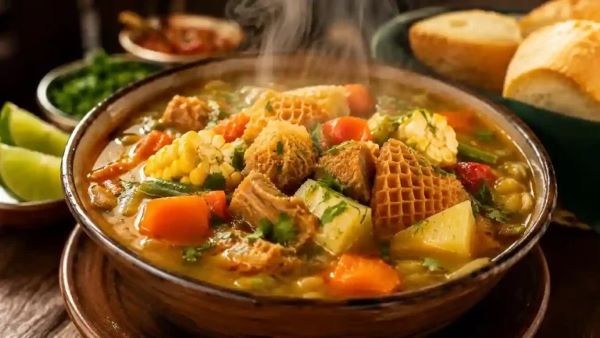
The sauce color. Deep red to dark orange from the dried and fresh chili, thick enough to fully coat each potato piece. The color should be rich and saturated rather than pale or orange-red. A pale sauce means insufficient chili was used.
The potato variety. Multiple types visible in the finished dish, with different textures reflecting different varieties. Fresh potato pieces should be fully cooked through and tender. Chuño, if included, should be rehydrated and soft but still slightly chewier and darker in color than fresh potato.
The sauce consistency. Thick from the potato starch released during cooking, coating each piece rather than pooling thinly around them. A watery sauce means the cooking time was insufficient for the starches to thicken the liquid.
The heat level. Genuine and present from the first bite. Ajiaco boliviano should have a warmth that builds as you eat. A mild version has compromised the defining characteristic of the dish.
The pork fat enrichment. A slight richness and sheen in the sauce from the rendered pork fat that was used in the preparation. The pork fat should be perceptible as a background richness rather than as visible pools of grease.
Ordering and Eating Tips
Order ajiaco boliviano alongside rice and a simple salad if it is available as a side dish at a Bolivian restaurant. The heat from the chili sauce and the starchiness of the potato work well against the neutral white rice.
Ask about the heat level before ordering. Ajiaco boliviano is traditionally spicy enough to be challenging for people not accustomed to locoto heat. Asking allows you to set expectations or request a slightly moderated version if needed.
The dish reheats well because the potato starch stabilizes the sauce as it cools. A home cook or vendor version that has been made in advance and reheated will have a slightly thicker sauce than a same-day version, which is acceptable and often preferable.
Pricing Expectations
Ajiaco boliviano at a Bolivian restaurant as a side dish typically runs between $8 and $14. As a main course with protein added, it runs between $16 and $24. Home cook and community vendor versions sold by the container typically run $10 to $18 per portion.
Key Takeaways
- The best ajiaco boliviano near me is most reliably found through Bolivian community Facebook groups and home cook vendors on Instagram, and at dedicated Bolivian restaurants in cities like Washington D.C., Arlington, and Providence.
- Bolivian ajiaco is a completely different dish from Colombian ajiaco. The Bolivian version is a thick, chili-sauced potato dish enriched with pork fat and genuine heat from locoto and aji colorado. It is not a soup.
- The deep red chili sauce coating multiple potato varieties and the genuine heat level are the primary quality markers. A pale sauce or mild flavor indicates shortcuts in preparation.
- Be specific about the Bolivian version when searching. Mentioning locoto chili, chuño, and pork fat in the dough immediately communicates what you are looking for to any Bolivian source.
- Facebook community groups for Bolivian expats are the single most productive search channel for this dish in most cities outside of those with dedicated Bolivian restaurants.
- Expect to pay $8 to $14 as a side dish and $16 to $24 as a main course at a Bolivian restaurant.