Puerto Rican sancocho is one of those dishes that exists at the center of the cuisine’s identity, the kind of food that appears at every family gathering, every rainy day meal, and every occasion that calls for something warm, substantial, and made with care. It is a long-simmered meat and root vegetable soup that absorbs the sofrito flavors of Puerto Rican cooking into every component, producing a broth that is deeply savory and herbal, with a variety of meats that each contribute something different to the overall character of the pot.
Finding the best sancocho puerto rican near me requires knowing what makes the Puerto Rican version distinct from the Colombian, Dominican, or Venezuelan sancochos that might appear in nearby search results, and knowing which kitchens make it with enough time and proper ingredients to produce the real thing.
What Sancocho Puerto Rican Actually Is
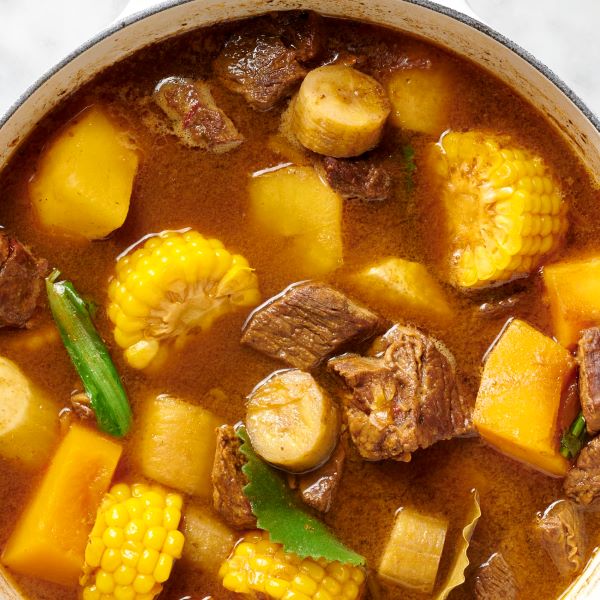
Puerto Rican sancocho is a robust stew-soup made with several types of meat and a variety of starchy root vegetables, all long-simmered together in a sofrito-based broth until everything is completely tender and the broth has absorbed the collective flavors of every ingredient in the pot.
The meats in a traditional Puerto Rican sancocho typically include bone-in beef, pork ribs or pork chops, chicken, and sometimes ham hock or cured pork. The variety of meats is important because each type contributes a different flavor to the broth. Beef adds depth and collagen. Pork adds richness. Chicken adds a lighter, more delicate note. Together they produce a broth more complex than any single meat would create alone.
The sofrito base is the defining Puerto Rican element that distinguishes this sancocho from other Caribbean versions. Recao, also called culantro, aji dulce, garlic, onion, and tomato blended into a fresh paste form the sofrito that goes in at the beginning of cooking and permeates the entire broth with its herbal, slightly sweet, aromatic character. This recao-forward sofrito is specific to Puerto Rican cooking and is the flavor that makes a Puerto Rican sancocho immediately identifiable to anyone who grew up eating it.
The root vegetables include yuca, name, ñame, batata, apio, green banana, and often corn on the cob cut into rounds. This variety of starchy vegetables, many of them specific to the Caribbean, absorbs the broth during the long simmer and becomes intensely flavored. Each vegetable has a slightly different starch structure that produces a different texture in the finished dish, from the slightly waxy chewiness of yuca to the earthy sweetness of batata.
Adobo, the dry spice rub of garlic, oregano, and black pepper, seasons the meats before they go into the pot, and additional garlic and sazon go into the broth during cooking. The cumulative seasoning from the adobo on the meat, the sofrito in the broth, and the sazon throughout produces a bowl that is fully seasoned at every level.
When you search for the best sancocho puerto rican near me, the recao-based sofrito flavor, the variety of both meats and tropical root vegetables, and the depth of the long-simmered broth are the three markers that confirm you are looking at the Puerto Rican preparation.
Where to Find It
Puerto Rican restaurants are the primary source. Any restaurant with a comprehensive Puerto Rican menu will carry sancocho as a main course or as a rotating weekend special. A restaurant that lists sancocho alongside arroz con gandules, pernil, and mofongo is operating with a full traditional Puerto Rican kitchen.
Puerto Rican fondas and casual home-style restaurants in cities with Puerto Rican communities are often the best source. These informal restaurants, particularly common in New York, New Jersey, Connecticut, and Florida, treat sancocho as a regular offering because the community expects it and the restaurants have the experience and ingredient sourcing to make it properly. Many Puerto Rican fondas make sancocho specifically on weekends when the longer cooking time is more practical.
Puerto Rican home cooks and community vendors selling through Instagram and Facebook are a strong source in cities where dedicated Puerto Rican restaurants are less common. Home cooks who grew up making sancocho in Puerto Rican households follow the multi-meat, multi-root vegetable preparation with the recao sofrito and produce versions that are often more authentic than restaurant adaptations.
Latin American restaurants with Caribbean menus sometimes carry a version of sancocho. The critical distinction is whether the kitchen uses the recao-based Puerto Rican sofrito or a different sofrito base. Ask specifically about the sofrito and the root vegetables to confirm you are getting the Puerto Rican preparation rather than a generic Caribbean stew.
How to Search More Effectively
A search for the best sancocho puerto rican near me will surface Puerto Rican restaurants in your area. Here is how to identify the ones making it with proper Puerto Rican technique:
Search Google Maps for Puerto Rican restaurant in your city and browse menus for sancocho. A menu that describes the meats included or lists the tropical root vegetables used is indicating a kitchen that thinks about the dish in its complete traditional form rather than as a generic label.
Search Yelp for Puerto Rican restaurants and read reviews that mention sancocho specifically. Reviewers who know the Puerto Rican version will describe whether the recao sofrito flavor was present in the broth, whether the root vegetables included yuca and name, and whether the multiple meats were all present and properly cooked. These details distinguish a kitchen following the traditional preparation from one making a simplified version.
Search Instagram with “sancocho puertorriqueno” or “sancocho PR” plus your city name. Puerto Rican restaurant accounts and home cook vendors post photos of sancocho regularly, and the variety of root vegetables and meats visible in the bowl alongside the deeply colored sofrito broth is identifiable in a photo.
Search Facebook for Puerto Rican community groups in your city and ask where to find the best sancocho puertorriqueno. Puerto Ricans are specific about this dish and will give you direct, recent recommendations for which local restaurant or home cook makes it most authentically.
Ask any restaurant or home cook directly what sofrito they use and what root vegetables are in their sancocho. A kitchen making the Puerto Rican version will mention recao or culantro as a sofrito component and will list yuca, name, or other specific tropical root vegetables among the starchy components.
What Good Puerto Rican Sancocho Should Look Like
Once you find a source and the bowl arrives, a few things confirm the quality.
The broth. Deep golden to orange from the sofrito and sazon, slightly cloudy from the starch released by the root vegetables and the collagen from the multiple meats, and intensely aromatic when the bowl is placed in front of you. The recao and aji dulce from the sofrito should be immediately perceptible as an herbal, slightly sweet fragrance. A pale or clear broth means the sofrito was insufficient or the cooking time was too short.
The root vegetables. Fully cooked through and tender, having absorbed the broth flavor during the long simmer. Yuca should be soft enough to cut with a spoon. Name and batata should be completely tender without resistance. Each vegetable should taste of the broth rather than of plain boiled starch. Firm or undercooked root vegetables mean the sancocho was not given enough cooking time.
The meats. Multiple types visible and identifiable in the bowl. Each piece should be fully tender, releasing from the bone with gentle pressure. The chicken pieces should be completely cooked through and the beef and pork should pull apart without resistance. The variety of meats should be detectable in the flavor of the broth, each having contributed its character during the long simmer.
The corn. Rounds of corn on the cob, fully cooked and slightly sweet, present as a starchy and slightly sweet counterpoint to the savory broth. Corn in Puerto Rican sancocho is not a garnish but a structural vegetable component.
The seasoning. Complete and fully developed throughout the broth rather than concentrated at the surface. Every spoonful should taste equally savory, herbal, and complex. A front-loaded seasoning that fades as you work through the bowl means the seasoning was added late rather than built throughout the cooking process.
Ordering and Eating Tips
Order Puerto Rican sancocho as a main course. It is a complete meal and does not need supplementary dishes beyond perhaps a side of white rice and avocado, which are traditional accompaniments in Puerto Rican sancocho culture.
Ask whether the sancocho was made that day or the previous day. Like all long-simmered soups and stews, Puerto Rican sancocho improves with a day of rest as the flavors continue to develop and integrate. A well-made sancocho from the previous day, properly reheated, can be better than a same-day version that has not had time to fully develop.
Eat the root vegetables together with the meats in the same spoonful. The contrast between the savory meat, the starchy yuca or name, and the slightly sweet corn in the same bite with the herbal broth is the complete Puerto Rican sancocho experience.
Add a squeeze of fresh lime if available. The acidity brightens the sofrito flavors and cuts through the richness of the multiple meats in a way that feels specifically right for a recao-forward broth.
Pricing Expectations
A full bowl of the best sancocho puerto rican near me at a Puerto Rican restaurant typically runs between $14 and $24 depending on the market, the variety of meats included, and the restaurant format. Puerto Rican fondas at the lower end of that range often produce the most traditional and satisfying versions. Home cook and community vendor versions sold by the container are typically in the $10 to $18 range per serving.
Key Takeaways
- The best sancocho puerto rican near me is most reliably found at Puerto Rican fondas and traditional restaurants in cities with Puerto Rican communities, and through Puerto Rican home cook vendors who use recao-based sofrito and multiple types of meat and tropical root vegetables.
- Puerto Rican sancocho uses a recao and aji dulce sofrito base that gives the broth its distinctive herbal, slightly sweet flavor that distinguishes it from Colombian, Dominican, or Venezuelan sancochos.
- The variety of meats, typically beef, pork, and chicken together, and the variety of tropical root vegetables including yuca, name, batata, and corn are what define the Puerto Rican preparation as distinct from simplified versions.
- Ask about the sofrito components. A kitchen using recao or culantro confirms the Puerto Rican preparation. A kitchen that cannot describe its sofrito components is likely making a simplified version.
- Deep, aromatic golden broth with the recao fragrance perceptible immediately when the bowl arrives confirms proper sofrito and cooking time.
- Sancocho improves with a day of rest. A properly made previous-day version can be better than a rushed same-day preparation.
- Add a squeeze of fresh lime if available. The acidity brightens the recao sofrito flavors and cuts through the richness of the multi-meat broth.
- Expect to pay $14 to $24 at a sit-down Puerto Rican restaurant and $10 to $18 per portion from a home cook or community vendor.