Lechon asado cubano is roasted whole suckling pig or pork shoulder in the Cuban tradition, and when it is made correctly it is one of the most deeply flavored pork preparations in any culinary tradition. The pork marinates for at least 24 hours in mojo, a Cuban citrus and garlic sauce made from sour orange juice, garlic crushed into a paste, oregano, cumin, and olive oil, then roasts slowly until the skin becomes crackling and the interior pulls apart in long, tender strands saturated with the marinade flavor.
It is celebration food in Cuba, the centerpiece of Nochebuena, the Christmas Eve feast, and the kind of dish that requires advance preparation and a commitment of time that reflects its importance. Finding the best lechon asado cubano near me means understanding what the real thing involves and which kitchens have the commitment to produce it properly.
What Lechon Asado Cubano Actually Is
The Cuban lechon asado tradition centers on the mojo marinade, which is the defining flavor of the dish and the element that most specifically marks it as Cuban rather than Puerto Rican pernil or any other Latin American roast pork preparation.
Mojo cubano, the marinade used for lechon asado, uses sour orange, called naranja agria, as its acid base. Sour orange, also known as bitter orange, is a different variety from sweet navel or Valencia oranges and is not interchangeable with them. Its juice has a more complex acid profile with a slight bitterness and a floral note from the peel oils that sweet orange juice does not have. Mojo made with sour orange has a specific brightness and complexity that mojo made with a lime and orange juice substitute, while acceptable, does not fully replicate.
The garlic is used in extraordinary quantity, multiple heads rather than a few cloves, crushed into a paste with salt using a mortar and pestle or a food processor. The garlic paste goes into the marinade along with the sour orange juice, dried oregano, cumin, and olive oil. The pork, either a whole suckling pig or a bone-in shoulder, is perforated deeply with a knife or a sharp skewer and the mojo is worked into every cut so the marinade reaches the interior of the meat rather than remaining only at the surface.
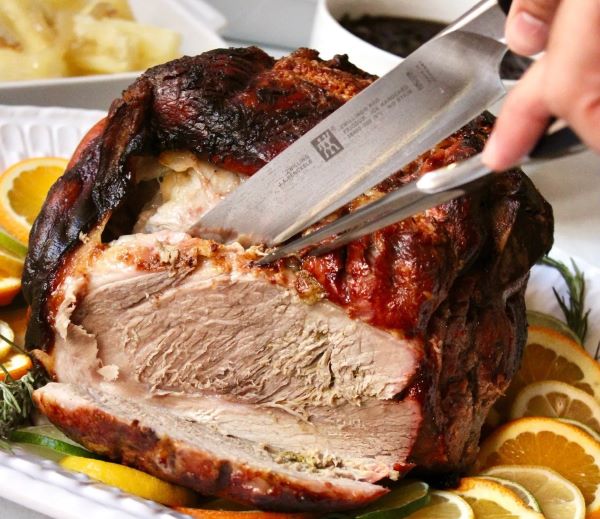
After the long marinade, the pork roasts at low temperature for several hours, then finishes at high heat to develop the crackling on the skin. The skin, called cuero, should blister and become rigid, similar to what happens with Puerto Rican pernil. The internal meat should pull apart in long, juicy strands saturated with the garlic and sour orange character of the mojo.
When you search for the best lechon asado cubano near me, the presence of sour orange in the mojo, the properly developed crackling, and the mojo flavor running through the interior meat rather than just the surface are the three most important quality markers.
Where to Find It
Cuban restaurants are the primary source. Lechon asado cubano appears on Cuban restaurant menus year-round but is most prominently featured during the holiday season and at restaurants that take their Cuban home-cooking menu seriously. A restaurant that carries lechon alongside ropa vieja, picadillo, and vaca frita is operating with a full traditional Cuban menu.
Cuban fondas and casual home-style restaurants in cities with Cuban communities, particularly in Miami, Hialeah, Tampa, and parts of New Jersey and New York, carry lechon asado as a regular menu item. These informal restaurants treat lechon with the same everyday seriousness that Cuban home cooks do, and the quality at a good fonda is often better than at a more formal restaurant because the dish is made for the community rather than for a tourist audience.
Cuban restaurants during Nochebuena and the holiday season are worth seeking out specifically at Christmas, when lechon asado is at its most prominent and many Cuban restaurants that do not carry it regularly will make a whole pig roast as a holiday special. Calling ahead in November or early December to ask about holiday lechon service is a productive approach.
Cuban home cooks and community vendors are a strong source throughout the year. Cuban home cooks who sell through Instagram and Facebook frequently offer lechon asado for weekend pickup, made in the traditional mojo marinade and roasted properly at home. A home cook from Cuba who describes their mojo recipe in terms of sour orange and large quantities of garlic is following the authentic preparation.
How to Search More Effectively
A search for the best lechon asado cubano near me will surface Cuban restaurants in your area. Here is how to find the ones making it properly:
Search Google Maps for Cuban restaurant in your city and browse photo sections for lechon asado photos. A properly made lechon asado photo shows deeply golden to dark brown meat that is visibly juicy, with some crackling visible, and has a pulled or shredded texture that reflects proper cooking time. A photo of pale, uniformly sliced pork with no visible crackling indicates a shortcut preparation.
Search Yelp for Cuban restaurants and read reviews that mention lechon asado specifically. Reviewers who know the dish will describe whether the mojo flavor was present throughout the meat, whether the garlic and sour orange were detectable, and whether the skin had developed into proper crackling. These details confirm a kitchen following the traditional preparation.
Search Instagram with “lechon asado cubano” plus your city name. Cuban restaurant accounts and home cook vendors post photos of lechon around holidays and for weekend specials, and the characteristic pulled, golden meat alongside crackling is immediately recognizable.
Ask any Cuban restaurant whether their mojo uses sour orange or a substitute. A kitchen using genuine sour orange will confirm it without hesitation and may describe where they source it. A kitchen using sweet orange juice or a commercial substitute will either confirm it or give a vague answer about their mojo recipe.
What Good Lechon Asado Cubano Should Look Like
Once you find a source, a few things confirm the quality.
The skin or crackling. Blistered, rigid, and shattering when pressed. Lechon asado with properly developed crackling breaks with an audible snap. A soft, chewy, or rubbery skin was either not roasted at sufficient high heat for the finishing stage or was covered during roasting in a way that prevented the skin from drying and crisping. The crackling should be a dark amber to mahogany color.
The meat color and texture. Deeply golden to dark brown on the exterior where the mojo caramelized during the long roast, with a lighter interior that is moist and pulling apart in long strands. The meat should shred with minimal effort and should not require cutting. Dry, fibrous meat that resists shredding was either overcooked beyond the collagen conversion point or was not given enough time in the marinade to break down the muscle structure.
The mojo flavor throughout. Garlic, sour orange, and oregano present in every bite of interior meat, not just on the surface. The proper overnight or 24-hour marinade penetrates into the deep slits cut into the meat, distributing the mojo flavor throughout. Meat that tastes of plain roast pork without mojo character at the center was not properly marinated.
The garlic. Assertively present. Lechon asado cubano is aggressively garlic-flavored by design. The garlic should be noticeable in the first bite and present throughout the meal. A subtle garlic note indicates insufficient garlic in the mojo.
The juiciness. The interior meat should be moist and slightly glistening from the rendered pork fat and the mojo that has soaked into the muscle fibers during the long braise. Dry interior meat indicates overcooking or an insufficient marinade period.
Ordering and Eating Tips
Order lechon asado cubano with white rice, black beans, and maduros, which is the traditional Cuban plate. The black beans alongside the garlicky pork, the sweet plantain against the savory meat, and the white rice to absorb the mojo-flavored juices is the complete Cuban meal and the context in which lechon asado makes the most sense.
Ask for a serving that includes crackling. Not every portion automatically includes the crispy skin and asking specifically ensures you receive this component, which many people consider the best part of the dish.
Eat the crackling immediately. Pork skin crispness diminishes within minutes as moisture from the surrounding meat works into it. Eating the crackling first while it is at peak crispness is the right approach.
Call ahead if visiting specifically for lechon asado during the holiday season. Many Cuban restaurants make lechon available in limited quantities and reservations or advance orders are sometimes required for holiday service.
Pricing Expectations
A plate of the best lechon asado cubano near me at a Cuban restaurant typically runs between $16 and $28 depending on the market and what is included. Cuban fondas at the lower end of that range often produce the most traditional and satisfying versions. Home cook versions sold by the pound run between $12 and $20 per pound, which is practical for groups. Holiday whole pig roasts at Cuban restaurants or catering operations are priced per person or per pound of finished meat.
Key Takeaways
- The best lechon asado cubano near me is most reliably found at Cuban fondas and traditional restaurants that prepare it as a regular menu item, and through Cuban home cook vendors who describe their mojo in terms of sour orange and large quantities of garlic.
- The mojo marinade with sour orange, crushed garlic paste, oregano, and cumin is the defining preparation element of lechon asado cubano. Sour orange is not interchangeable with sweet orange and its presence confirms an authentic Cuban mojo.
- Properly developed blistered and rigid crackling, deeply golden pulled meat, and mojo flavor throughout the interior are the three primary quality markers.
- Ask directly whether the mojo uses sour orange. A confident answer confirms authentic preparation.
- Eat the crackling immediately. It loses its crispness within minutes from moisture migrating from the surrounding meat.
- The traditional plate accompaniment is white rice, black beans, and maduros. Eating the lechon in this context provides the intended flavor balance.
- Call ahead for holiday service, especially around Nochebuena in December when lechon demand is highest and limited quantities are common.
- Expect to pay $16 to $28 at a sit-down Cuban restaurant and $12 to $20 per pound from a home cook or catering vendor.