Ensalada caprese con palta takes the Italian caprese salad and adds avocado, which is a modification that sounds minor but changes the dish in a meaningful way. The original caprese uses fresh mozzarella, ripe tomato, and basil with olive oil and salt, relying entirely on the quality of three ingredients to carry the plate. The version with palta, which is the South American term for avocado, adds a fourth element that brings creaminess, mild fat, and a neutral backdrop that makes the tomato and mozzarella flavors stand out more clearly against it.
When all four ingredients are at their best, this salad is genuinely excellent. When any one of them is off, the whole plate is diminished. If you have been searching for the best ensalada caprese con palta near me, this guide helps you find a kitchen that sources all four components with enough care to make the dish worth ordering.
What Ensalada Caprese con Palta Actually Is
The standard caprese salad originates from the Italian island of Capri and uses three ingredients: fresh buffalo mozzarella or fior di latte, ripe tomato, and fresh basil, dressed with good olive oil and finished with salt and sometimes a few drops of aged balsamic vinegar. It is a salad built entirely on ingredient quality rather than technique.
The Latin American addition of avocado, called palta in Argentina, Chile, Peru, and Uruguay, and aguacate in other countries, creates an ensalada caprese con palta that has become a standard offering on restaurant lunch menus across Latin America and in Latin American restaurants abroad. The avocado typically replaces or supplements the basil in the arrangement and adds a richness and creaminess that makes the salad more substantial without making it heavy.
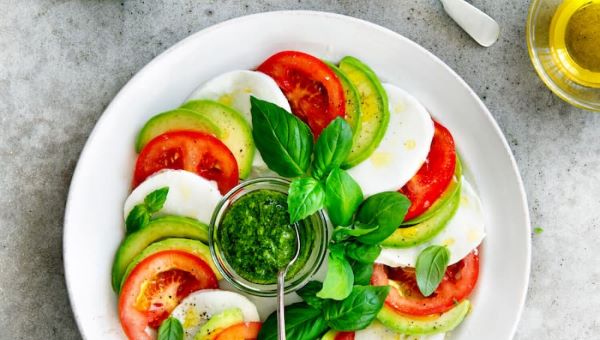
The arrangement of the salad matters. Traditional caprese is presented with alternating slices of tomato and mozzarella, layered together on the plate, with the other elements placed around or between. The palta version adds avocado slices to the alternating sequence, creating a three-element rotation that presents each ingredient with equal prominence.
The dressing is simple and should stay simple. Good extra virgin olive oil, salt, and either fresh basil or a light balsamic reduction are all the salad needs. A kitchen that adds a complex dressing with multiple ingredients to an ensalada caprese con palta is working against the dish rather than with it.
When you search for the best ensalada caprese con palta near me, the ripeness and quality of all four main ingredients are the primary quality indicators, and the restraint of the dressing confirms whether the kitchen understands the dish.
Where to Find It
Italian restaurants and trattorie in cities with a significant Latin American clientele sometimes carry ensalada caprese con palta as an adaptation of their standard caprese. A restaurant that already makes classic caprese with quality mozzarella is well-positioned to add avocado and produce a good result.
Argentine and Latin American restaurants with contemporary or modern menus frequently carry ensalada caprese con palta as a starter. A restaurant that takes its cold starters seriously and sources good produce will treat this salad as a product of its ingredient selection.
Mediterranean restaurants broadly that carry caprese as a standard item sometimes offer an avocado variation. Any restaurant that already invests in quality fresh mozzarella and ripe tomatoes will produce a good ensalada caprese con palta if avocado is added to the mix.
Farm-to-table and produce-forward restaurants that change their menu based on seasonal availability are reliable sources for this salad when tomatoes are in season. A restaurant that lists the origin of its tomatoes or describes them as heirloom or seasonal is signaling the ingredient quality that makes caprese-style salads work.
Latin American home cook vendors sometimes include ensalada caprese con palta as a prepared starter item in their batch orders, particularly during summer when tomatoes and avocados are both at their best.
How to Search More Effectively
A direct search for the best ensalada caprese con palta near me will return Italian, Mediterranean, and Latin American restaurants in your area. Here is how to identify the ones making it properly:
Search Google Maps for Italian restaurant or Argentine restaurant and look specifically at menu descriptions for caprese or ensalada caprese. A menu description that specifies fresh mozzarella, the tomato variety, or the olive oil used is indicating attention to ingredient quality.
Search Yelp for Italian or Latin American restaurants and read reviews that mention caprese or mozzarella quality. Reviewers who care about this salad will describe whether the mozzarella was fresh and milky, whether the tomato was ripe and fragrant, and whether the avocado was properly ripe. These three details tell you the most important things about ingredient selection.
Search Instagram with “caprese palta” or “ensalada caprese aguacate” plus your city name. Restaurants that produce a beautiful ensalada caprese con palta post photos, and the visual quality of sliced fresh mozzarella, ripe red tomato, and green avocado on a plate tells you immediately whether the kitchen is sourcing quality ingredients.
Ask any restaurant directly what type of mozzarella they use. Fresh buffalo mozzarella or fresh fior di latte, both of which are sold in water-packed containers, produce a completely different result from low-moisture packaged mozzarella. A kitchen that specifies fresh mozzarella packed in liquid is taking the most important ingredient seriously.
What Good Ensalada Caprese con Palta Should Look Like
Once you find a source and the plate arrives, a few things immediately confirm the quality of the preparation.
The tomato. Deep red, fragrant, and slightly warm from being at room temperature rather than cold from refrigeration. A ripe tomato has a smell that is present before you taste it. It yields to gentle pressure without being mushy and releases juice when sliced. A pale, firm, odorless tomato was either underripe or has been in refrigeration long enough to destroy its texture and flavor.
The mozzarella. White, slightly wet from the packing liquid, soft enough to compress slightly when pressed, and tearing rather than cutting cleanly. Fresh mozzarella should taste milky, slightly salty, and have a gentle elasticity rather than being rubbery or firm. Pre-packaged low-moisture mozzarella that has been stored in the refrigerator is firmer, less milky, and does not pull apart in the same way.
The avocado. Deep green to slightly blackened exterior at the point of perfect ripeness, yielding to gentle pressure without being mushy. The flesh should be smooth, pale green, and slightly creamy when sliced. An underripe avocado has a firm, slightly fibrous texture and a muted flavor. An overripe avocado has brown patches and an off taste.
The olive oil. Fragrant, green to golden in color, and present in a visible drizzle rather than a pool at the bottom of the plate. Good extra virgin olive oil has a peppery finish and a grass or fruit aroma that is perceptible when the plate is brought close. Neutral oil with no aroma is not the right product for this salad.
The presentation. Clean, with the alternating slices of tomato, mozzarella, and avocado arranged with enough space between them that each element is visible and accessible. A salad where everything is stacked or crowded prevents you from assembling each bite with the intended combination.
Ordering and Eating Tips
Order ensalada caprese con palta as a starter rather than a shared plate. The proportions are designed for one person and sharing requires halving portions that are already balanced for a single serving.
Eat it at room temperature, not cold. All three main ingredients taste significantly better at room temperature than when cold from a refrigerator. Tomato loses fragrance when cold. Mozzarella becomes firm and rubbery. Avocado loses its creaminess. A restaurant that serves this salad at room temperature is either making it fresh to order or allowing it to rest before serving.
Season each bite yourself with olive oil and a pinch of salt rather than relying on whatever was applied in the kitchen. The salt on a caprese-style salad should be added close to eating time, not long before, because salt draws moisture from the tomato and can make the salad watery if applied too early.
Use fresh basil if provided. Tear it rather than cutting it with a knife, which bruises the leaves and causes them to darken quickly. The torn basil should go on top of the assembled slice rather than underneath the other ingredients.
Pricing Expectations
Ensalada caprese con palta at an Italian or Latin American restaurant as a starter typically runs between $12 and $22 depending on the quality of the mozzarella sourced and the market. Restaurants using buffalo mozzarella tend to be at the higher end of that range. More casual Latin American lunch restaurants price it lower, in the $10 to $15 range.
Key Takeaways
- The best ensalada caprese con palta near me is most reliably found at Italian restaurants that use fresh packed mozzarella, Latin American restaurants with produce-forward menus, and farm-to-table spots that source seasonal ripe tomatoes.
- The quality of all four ingredients, ripe tomato, fresh mozzarella, properly ripe avocado, and good extra virgin olive oil, determines the dish entirely. Technique is minimal. Ingredient selection is everything.
- Ask what type of mozzarella the kitchen uses. Fresh mozzarella packed in liquid is the correct product. Low-moisture packaged mozzarella produces a noticeably inferior result.
- All three main ingredients should be at room temperature. Cold tomato loses fragrance, cold mozzarella becomes rubbery, and cold avocado loses its creaminess.
- The tomato must be ripe. A fragrant, deep red tomato that yields to pressure is the baseline. A pale, firm, odorless tomato will make the salad taste flat regardless of the other ingredients.
- Search Instagram with “caprese palta” plus your city name. The visual quality of the ingredients in a well-composed caprese photo tells you more than any menu description.
- Season each bite individually with olive oil and salt rather than relying entirely on kitchen seasoning applied in advance.
- Expect to pay $12 to $22 as a starter, with buffalo mozzarella versions at the higher end of the range.